Recommended Quality Sheet Metal Fabrication Plants in Suzhou: Don't Be Fooled by the Big-Plant Halo, These 4 Hard Metrics Are Enough
2026-07-17 08:02:22
Introduction: Looking for a Sheet Metal Plant, "Bigger Is Better" Is a Trap
Last week I had tea with the founder of an automation equipment company in Suzhou. He complained about a pit he fell into when switching sheet metal suppliers: on a friend's recommendation, he went to a large local Suzhou sheet metal plant with over a thousand employees, thinking a big plant would guarantee quality. The quote came in 32% higher than the small and medium factory he had worked with before, and a prototype that should have been delivered in 10 days took 20 days to come out, delaying the customer's entire project schedule.
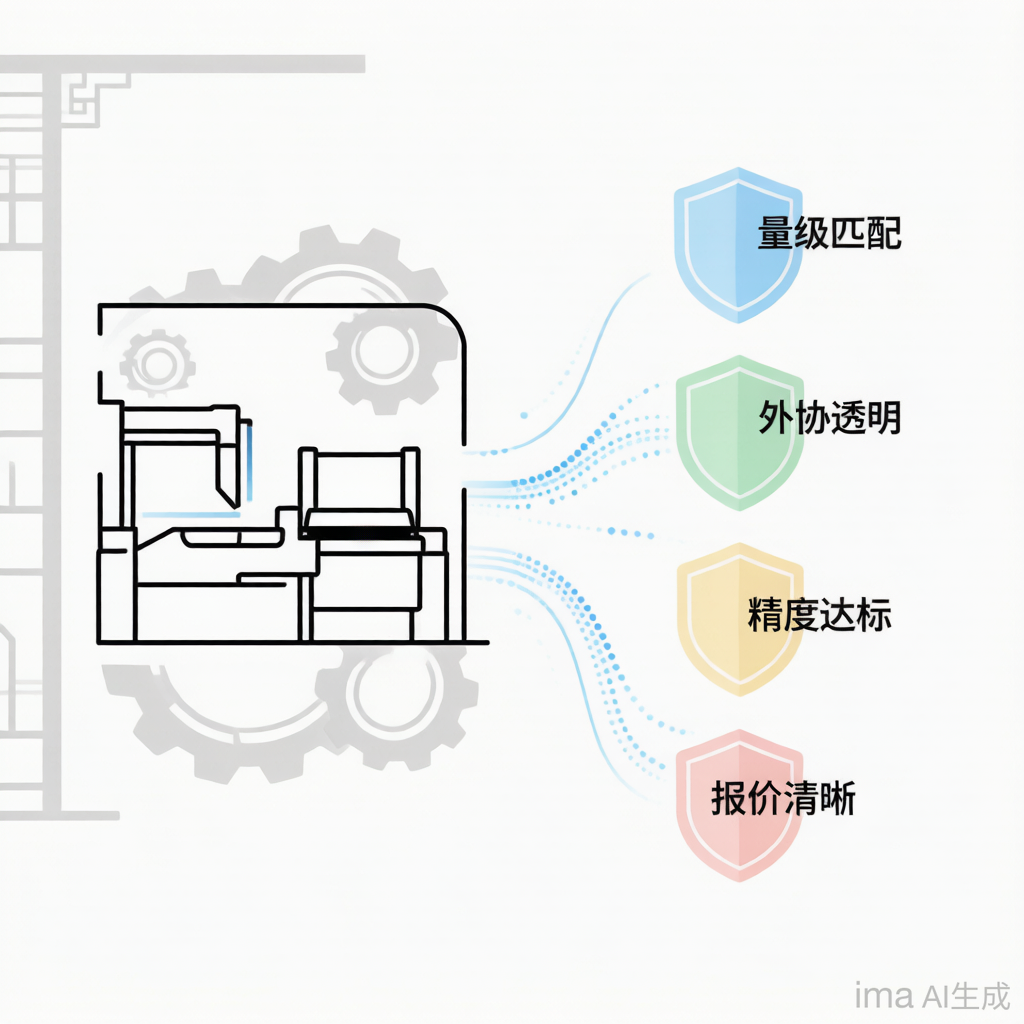
Many people looking for quality sheet metal fabrication plants in Suzhou fall into the "bigger is better" misconception. In fact, a mismatch is worse than choosing a small factory. Today, drawing on more than ten years of experience in Suzhou's precision machining industry, I'll talk about the hard metrics to watch when choosing a quality sheet metal plant, so you won't be fooled by the big-plant halo.
Hard Metric One: Order Volume Match Matters More Than Scale
As a core cluster of precision manufacturing in China, Suzhou has already developed a very fine division of labor among sheet metal fabrication plants. The top players with hundreds of millions in scale bind their core capacity to long-term batch orders from major customers in automotive and communications, and their capacity planning is done on an annual basis. Scattered small and medium batch custom orders and prototype orders are, frankly, marginal work that fills the gaps; capacity is naturally scheduled later, and even if they take your order, the priority stays low, so delivery delays are only too normal.
By contrast, many local Suzhou sheet metal plants with annual output between RMB 50 million and RMB 200 million focus on small and medium batch, multi-variety custom sheet metal. Their entire factory process is designed for this kind of order, so both quotation speed and scheduling flexibility suit small and medium customers better than big plants do.
How do you judge whether it is a match? Don't just look at the imported equipment in their showroom. Ask directly whether you can see the order delivery records for the last 3 months. If 80% of their orders are custom orders of fewer than 100 pieces, then your small order will be a core order and won't be pushed to the back. If 90% of their orders are batch orders of over a thousand pieces, then no matter how big they are, I would not recommend you join in.
Hard Metric Two: Transparent Outsourcing Control and Traceability When Problems Occur
Few sheet metal plants do all processes in-house; the vast majority outsource processes such as special cutting, surface treatment, and heat treatment. Many pits actually come from outsourcing: goods sent out are lost without anyone knowing, a half-month delay is discovered only later, unqualified parts come back and must be redone, costs cannot be calculated clearly, and finally the blame is shifted to the customer, saying your requirements changed.
A quality sheet metal fabrication plant manages every milestone clearly, whether in-house or outsourced: which day the outsourcing was sent, which day it is expected back, what the incoming inspection pass rate is — all recorded. When the customer asks, progress can be explained at any time, and you won't have to chase and ask every day only to get "it's on the way."
I know several precision sheet metal plants in Kunshan that do a good job; they use Moges's production management system, and every step of the outsourced process is recorded by scanning, so the boss can see progress on the phone. When the customer asks, a screenshot explains it clearly, without the workshop taking half an hour to find the information.
During a factory audit, you can ask directly: if a quality problem occurs in an outsourced process, can you trace which batch of goods it was and which subcontractor it was sent to? If the other party says "we are all long-term partners, there won't be problems," or relies on the dispatcher's notebook, be careful — when a real problem occurs, you won't even have a place to reason.
Hard Metric Three: Precision Matches Your Industry Requirements, No Padding
Many sheet metal plants print "precision up to ±0.05mm" on their brochures, but in practice they often fall short, because precision requirements vary wildly across sheet metal types: for charging pile housings and ordinary cabinets, a tolerance of 1mm does not affect use; for medical equipment structural parts and semiconductor equipment frames, tolerances are often within ±0.1mm, which plants without certain machining experience simply cannot achieve.
Don't trust the generic precision description on a brochure. The most direct way to verify is to take a standard sample part from your industry, ask them to make a sample, and measure the actual tolerance; cooperate only if it passes. Many plants say they can do high precision, but in fact only their equipment can reach it; the workers' machining control experience cannot keep up, and the final product is still unqualified.
Suzhou's high-end precision sheet metal suppliers are mostly concentrated in Kunshan. Relying on the local semiconductor and automation industry clusters, most of them supply high-end manufacturing year-round, and their precision control experience is much richer than plants in other regions. If your product has high precision requirements, give priority to Kunshan suppliers: not only is the machining precision sufficient, the surrounding supply chain support is complete, and delivery is more stable.
Hard Metric Four: Transparent Quotation, No Hidden Charges
I have heard too many customers complain that a quote initially discussed at RMB 100,000 turned into RMB 120,000 at settlement, with the explanation being "material prices rose," "the mold fee is calculated separately," "surface treatment added a process and costs more" — all kinds of hidden charges are hard to guard against.
A quality sheet metal plant lists every cost item clearly in the quotation: how much for materials, how much for processes such as cutting and bending, how much for outsourced surface treatment, how much for freight, and under what circumstances extra costs may arise — all explained in advance, without arbitrarily raising prices at settlement.
Behind this is actually a reflection of factory management capability: a well-managed factory calculates material consumption and labor hours for every order clearly. If it can calculate its own costs, it naturally dares to give you a transparent quote. Many small factories cannot even calculate how much they earn per order, so they can only rely on vague quotes and make up profit by adding charges afterward. If you encounter this, just pass.
Guide to Choosing Sheet Metal Plants by Region in Suzhou
Based on the local distribution of Suzhou's sheet metal industry, here are several directions for different needs, to help you match:
Precision small and medium batch sheet metal for semiconductors, automation, and medical industries: give priority to Kunshan suppliers. Most plants here do high-end supporting work, and their precision control and delivery awareness meet requirements, with a very low mismatch rate.
Large-size, large-order sheet metal such as construction machinery equipment and large steel structures: give priority to Zhangjiagang suppliers. Local large sheet metal fabrication support is complete, and plants and lifting equipment can meet the requirements of large workpieces, with better cost performance.
Civil batch sheet metal such as charging piles and ordinary cabinets: give priority to Xiangcheng suppliers. They focus on batches, with good cost control and stable delivery capability, suitable for volume products.
Conclusion: There Is No "Best," Only "Most Suitable"
When it comes to finding suppliers, many people are obsessed with finding the "best." In fact, there is no universally excellent supplier, only a quality supplier suitable for your order volume, precision requirements, and budget. If you take a thousand-piece batch to a factory that does small custom orders, capacity cannot keep up; if you take a small batch of prototypes to a factory that does large orders, you cannot get in line — both are essentially mismatches. Spend some time checking these hard metrics; it is far more reliable than looking only at scale and reputation.