Non-standard automation procurement management: Why do bosses always chase after materials? A comprehensive analysis of the root causes and solutions.
2026-07-18 10:01:41
A typical day for a non-standard factory owner: Arriving at the factory, immediately faced with urgent problem-solving.
As soon as I opened the office door this morning, the procurement, engineering, and production teams all came in, each with their own specific issues:
According to Engineering, the BOM for the 3C testing equipment was changed three times last week. The originally requested camera model was discontinued, so no further orders should be placed.
Procurement said that the supplier only informed them yesterday that the delivery date for the servo motor has been delayed by one week. They asked if they should switch to a different brand.
The warehouse staff mentioned that two remaining cameras of the same model, which were part of a previous project, were still sitting in a corner, occupying half of the shelf, and hadn't been touched or used by anyone.
This is a common scenario for many owners of non-standard automation equipment manufacturers. Procurement issues consume profits every day, but few people can clearly identify the root cause. While many complain that procurement is careless, the real problem lies in the inherent customization of non-standard equipment. Effective procurement management for non-standard automation is the key to recovering profits lost due to disputes and shortages.
Non-standard procurement issues are not simply due to poor procurement capabilities.
Many business owners' first reaction is that procurement is not being handled with care, either blaming the procurement staff for missing materials or complaining about poor supplier cooperation. In reality, non-standard automation in procurement is fundamentally different from batch production, and inherently prone to causing chaos.
For mass production, the BOM is fixed, with several thousand units using the same BOM each year. The procurement process can be repeated using this BOM. However, for non-standard products, each device is customized, and the BOM needs to be modified for almost every project. This includes everything from sensor models to machine frame sizes. Modifying the design is a common practice.
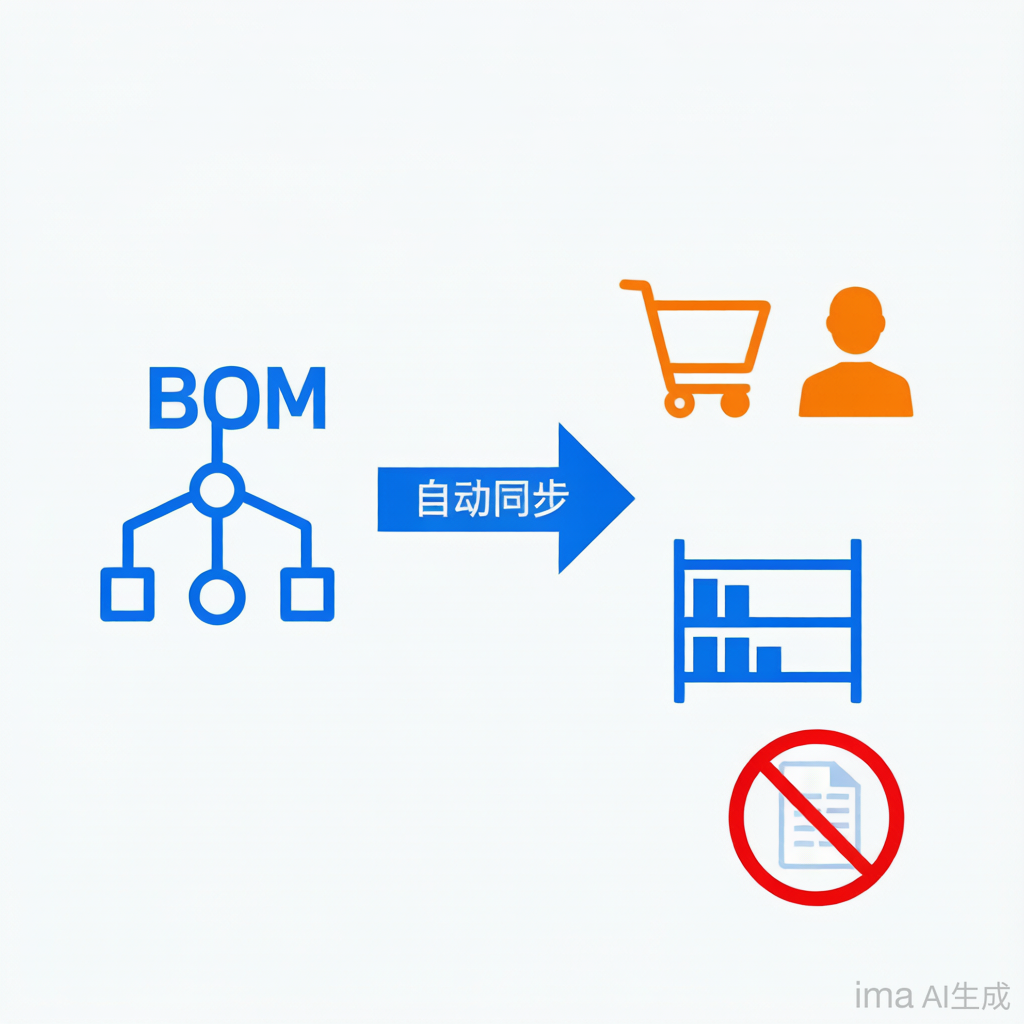
Many small and medium-sized non-standard manufacturing companies are still using Excel to manage Bills of Materials (BOM). When engineering changes are made, the BOM is not synchronized with purchasing, resulting in purchasing using outdated BOMs to order materials, which are then unusable. This leads to a backlog of inventory. Another issue is the splitting of BOMs. For a non-standard device, the BOM can range from a few hundred to over a thousand items, requiring splitting across three categories: in-house processing, outsourcing, and purchasing. Purchasing must then extract the required standard parts from hundreds of items and organize them by supplier. Simply organizing this information can take half a day, and even a slight lapse in concentration can result in missing items. When assembly begins, the missing parts are discovered, forcing a halt to production while waiting for delivery, which delays project completion.
The three core root causes of non-standard procurement chaos.
We have worked with dozens of different-sized custom manufacturing companies, and our analysis reveals that the root cause of procurement chaos lies in the failure to address three core issues:
Root Cause 1: BOM and Purchase Requisitions are not synchronized.
Design changes to the BOM are common, but purchase orders cannot automatically update. Manual synchronization is required, which inevitably leads to errors. I have seen a 30-person non-standard manufacturing company that made a mistake of purchasing $120,000 worth of materials due to BOM discrepancies last year. This resulted in all materials becoming idle inventory, effectively wasting the effort on two small projects.
Root Cause 2: Lack of standardized materials.
Many factories lack their own material coding system. Different engineers refer to the same material differently, and the specifications are written differently, resulting in two different materials being stored in the system. This leads to separate procurement, separate inventory management, and the inability to negotiate prices centrally, ultimately resulting in double the inventory.
For example, for the same SMC cylinder, one person might write "cylinder CJ2B10 -50Z", while another might write "SMC pen-type cylinder 50 travel". The procurement system cannot find existing records, so the only option is to re-order from a supplier, which wastes time and increases the risk of inventory buildup.
Root Cause 3: Lack of synchronization between procurement and inventory management.
When placing orders, the current warehouse inventory is not visible, and it is also unknown whether there are any remaining items of the same model in other projects. Even if there are idle items in the warehouse, it is still necessary to reorder and purchase, which consumes working capital. Over time, these items become useless and stagnant.
These three issues are all at the process level. No matter how many procurement specialists you hire, they cannot solve these problems. The processes must be fundamentally redesigned.
BOM-driven procurement: Suitable for non-standard procurement processes.
Currently, an increasing number of custom manufacturing companies are adopting project-driven procurement management, without implementing standalone, heavy-duty ERP systems. This approach aligns with the specific processes of custom manufacturing businesses, with the core logic being BOM-driven procurement.
In simple terms, it starts with placing an order based on the Bill of Materials (BOM) and automatically generates all the required standard parts details for procurement. This eliminates the need for manual procurement data organization. When the BOM is updated, the corresponding purchase details are automatically updated, preventing the situation where incorrect materials are ordered due to outdated BOMs. For scenarios requiring phased procurement of materials, it is also possible to consolidate materials from the same supplier onto a single purchase order, saving time on procurement data organization. What used to take half a day can now be completed in about ten minutes.
Implementing BOM-driven procurement also requires strengthening the three core modules.
| Core Modules | Core Functionality | Problems Solved |
|---|---|---|
| Unified Material Archive | All materials are classified and coded, with standardized specifications and units. | Prevent one-to-many coding and duplicate procurement from the source. |
| Supplier Information Database | Unified maintenance of supply categories and historical ratings. | Find suppliers and compare quotes without having to sift through chat logs. |
| Real-time integration with inventory management | Upon receipt, items are automatically added to inventory. Current stock levels are automatically displayed when placing an order. | Avoid duplicate purchases and reduce excess inventory. |
Currently, the implementation results are quite stable, providing a management tool that aligns with non-standard, full-project processes. For example, Moges PMS9 integrates the procurement process into the entire lifecycle, from BOM to delivery, eliminating the need to transfer data between multiple systems. This makes it directly usable for small and medium-sized enterprises.
Invisible procurement waste is the real killer of profits.
Many business owners implement non-standard automation for procurement management, focusing solely on negotiating prices with suppliers. They believe that reducing prices by a few percentage points will result in significant savings. However, in most cases, the hidden, intangible costs are much higher than those few percentage points.
Downtime and material costs: The cost of stopping a project assembly line for one day, including the labor costs of five to six assembly workers plus the penalty for delayed delivery, ranges from several thousand to over ten thousand. This is significantly higher than the difference in price for ten materials.
Stagnant Inventory Occupancy: We have observed that a significant portion of non-standard manufacturing facilities that lack standardized procurement processes experience 10% to 20% of their total inventory being stagnant. For a factory with annual revenue of 50 million, the capital tied up in stagnant procurement items could be several hundred thousand, and it might be more beneficial to use this capital to launch two new projects.
Manual labor inefficiency: Approximately half of a procurement employee's workday is spent on data entry and order processing, resulting in a significant waste of labor costs on non-value-added tasks.
Therefore, for non-standard manufacturers, the first step in effective procurement management is not to negotiate prices, but to eliminate these hidden costs. Most manufacturers, once they have established standard processes, can reduce losses from idle inventory and downtime by approximately 15%. This return on investment is significantly higher than simply reducing procurement costs.
Summary: From "Tracking Materials" to "Managing Processes"
Many owners of non-standard manufacturing businesses focus their energy on securing new projects and negotiating with clients, and they often neglect internal procurement, which they consider a "minor" matter. They believe that as long as they can deliver the goods, it's sufficient. However, if you calculate the actual figures, the profit lost in the procurement process each year may be more than the profit earned from taking on three new projects.
To effectively manage non-standard automation procurement, the key is to focus on these three points:
BOM-driven procurement – Eliminate manual synchronization and eliminate errors at the source.
Standardized Materials – One Material, One Code: Eliminate duplicate purchases and inventory buildup.
Real-time inventory synchronization – View inventory status before placing an order, and optimize the utilization of idle materials.
Why not dedicate half a day to auditing your own warehouse and identifying the amount of unused purchased materials? Eliminating these hidden costs is the most direct way to increase profits.