Equipment History Management for Non-Standard Automation Equipment: Work Out the Hidden After-Sales Costs You Never Noticed
2026-07-22 10:02:01
The Confusion of Non-Standard Factory Owners: Thin Margins — Where Exactly Is the Money Going?
Last month I had tea with the owner of a non-standard equipment company in Suzhou that makes automotive welding lines. He complained that this year's labor cost for the after-sales team alone was RMB 320,000 more than last year, and the team still said every day that they were overwhelmed. Setting aside the growth in business volume, nearly one-third of the cost was spent on finding documents: when old equipment delivered more than 3 years ago breaks down, the design engineer has left, the original records are on a personal hard drive, the BOM version is wrong, and the assembly and commissioning records cannot be found. The after-sales engineer has to spend an extra two or three days just diagnosing the problem on site, and may need two or three trips back and forth to solve it, while the customer keeps deducting line-stop penalties.
Most non-standard factories are like this owner: they have never done a clear accounting of history management, thinking it is extra work after completion and optional. In fact, this hidden cost can easily eat more than RMB 100,000 of profit a year.
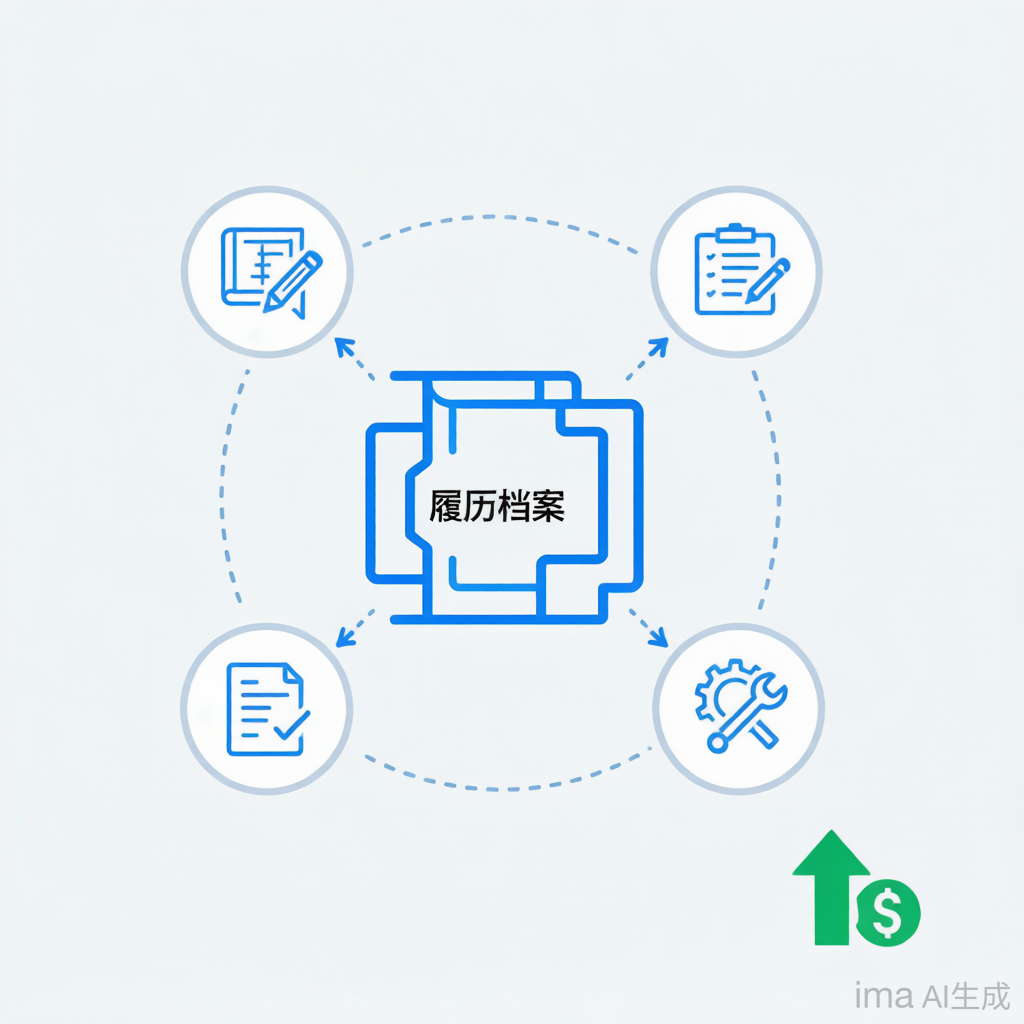
How Much Does Chaotic History Management in Non-Standard Factories Actually Cost? Three Accounts, Clearly Calculated
I helped that owner work out a detailed account, and you can calculate your own company's situation along with it:
Account One: Direct Hidden After-Sales Costs
Based on delivering 40 units a year and a 15% after-sales rate, that is 6 after-sales cases a year. On average, each unit takes an extra 2.5 days to find documents and repeat diagnosis. At an after-sales engineer's daily rate of RMB 350, plus travel, each unit costs an extra RMB 1,200 on average, which is RMB 7,200 a year.
When a major problem requires tracing the source of parts and delays the customer's line, a single penalty ranges from thousands to tens of thousands of yuan. Last year this owner paid RMB 8,000 in line-stop losses to a customer because of incomplete documents leading to the wrong part replacement. If a company has hundreds of units in the field, this cost alone can exceed RMB 100,000 a year.
Account Two: Trial-and-Error Costs for New Projects
In the non-standard industry, more than 60% of new orders are variant designs of the same type. If the machining and commissioning records of the original equipment of the same type cannot be found, the new project has to step into the same old pits again. The cost of adjusting parameters and trial-making parts alone is at least several thousand and at most tens of thousands of yuan, equivalent to doing a small half of the project for nothing.
Account Three: Information Loss Costs
Staff turnover in non-standard factories is not small. When design and commissioning engineers leave, they take away not only experience but also the project documents stored in their own hands. If all the documents of a custom piece of equipment are lost, even a single small problem afterward can cost more than half a month's salary of a new engineer.
Truly Useful Equipment History Is Not Just Storing Drawings
I have encountered many non-standard factories that have done digitalization but still understand history management as "uploading PDF drawings to cloud storage and calling it done." This is actually the biggest misconception.
Non-standard equipment is customized. Even for two units of the same type, if the final design drawing differs by only one shim thickness, the actual assembly and commissioning details will be completely different, and these details are never written on the final drawings. I have seen many factories where drawings are stored in cloud drives, BOMs in Excel, assembly records in paper project notebooks, and commissioning defects in engineers' personal phone notes. When information is really needed, the four places cannot be pieced together, which is as good as having no history at all.
A usable equipment history for non-standard automation equipment must cover the full-process information from design to delivery, with four core parts:
| History Module | Core Content | Problem Solved |
|---|---|---|
| Design side | Design drawings of each version, final BOM, part supplier sources | Avoid using the wrong old drawings and buying the wrong parts |
| Production side | Process quality inspection records for in-house parts, acceptance records for outsourced parts, batch information for purchased parts | Quality traceability with evidence |
| Assembly and commissioning side | Assembly owner, process notes, defect descriptions from multiple commissioning rounds, rectification results, parameter adjustment records | Quickly locate the root cause in after-sales |
| Delivery side | Final acceptance documents, customer confirmation records | Evidence for payment collection and dispute handling |
Only when this information is linked together can you directly locate the cause when a problem occurs, instead of guessing.
History Management Needs No Extra Staff; It Can Be Completed Automatically During the Process
Many owners have also tried manual history compilation, assigning a project specialist to collect and bind all documents after delivery. It turned out that compiling one unit took most of a day, and delivering 10 units a month took the specialist 5 days of labor, adding cost in itself. Over time the specialist left, and the compiled documents could not be found again — all that work was wasted.
In fact, as long as the whole project process is under digital control, the equipment history is generated automatically during the process, with no need for after-the-fact rework.
For example, in Moges PMS9, starting from design uploading drawings, every step of procurement, machining, assembly, and commissioning is completed within the system, and all records are automatically collected under the corresponding equipment. Once delivery acceptance is completed, the complete history is generated directly, with no need for anyone to spend time compiling and summarizing. When it needs to be reviewed, enter the equipment number or project number and all information can be retrieved in seconds. No matter which year the equipment was delivered, or whether the original person in charge is still at the company, the information will not be lost.
The Extra Benefit of History Management: Experience Reuse Is the Greatest Value
Beyond saving after-sales costs, the greatest value of history management for non-standard enterprises is actually experience reuse.
I have worked with a manufacturer of lithium battery inspection equipment. Last year it took a variant order of the same type. The designer pulled up the complete history of the same type of equipment from 3 years earlier and directly saw what pitfalls the original design had stepped into during commissioning: what pressure parameter threshold would cause electrode sheet deformation, and which brand of sensor could not meet the service life requirement. Applying this experience directly to the new project saved 4 days of commissioning time and more than RMB 20,000 in trial-and-error material costs, and the project was ultimately delivered early, earning a RMB 12,000 early acceptance bonus.
In addition, if a quality dispute really occurs, the complete history is the most direct evidence: which step met the requirements and which step was confirmed by the customer are all recorded in black and white, so there is no need for each side to argue endlessly.
Summary: Don't Haggle on Procurement While Losing Money on History
Profit margins in the non-standard automation industry are already thin. Many owners are used to haggling penny by penny on raw material procurement and calculating every minute of labor in production, yet few stop to calculate: the hidden costs caused by chaotic history management eat more profit in a year than what is saved on raw materials.
To do equipment history management for non-standard automation equipment well, the core is three sentences:
History is more than drawings — the four parts of design, production, assembly and commissioning, and delivery are all indispensable
Generate automatically during the process — don't rework and compile afterward; digital control lets history settle naturally
Experience reuse creates value — saving after-sales costs is only the foundation; reusing historical experience is the profit growth point
Why not take 10 minutes to calculate how much time and money your company spent last year looking for documents on old equipment? Once this account is clear, you will know whether to act.