Out-of-Control Outsourcing Progress in Non-Standard Automation? With the Right Tracking Software, Say Goodbye to Delay Penalties and Information Black Holes
2026-07-29 10:01:46
Real Pain Point: Outsourced Parts Held Up Progress, Discovered Only at Assembly, and Nearly RMB 100,000 in Penalties Paid
Last month I had tea with an old friend who makes non-standard equipment. He took out his phone and showed me the chat history: three projects were rushing to meet delivery dates at the same time, and two key outsourced parts were both stuck. One was a module base; the supplier said the milling machine broke down and delayed it by a week. The other was sheet metal sent out to a factory that made the dimensions wrong and required rework. Just these two parts delayed the whole project by 8 days, and he paid the customer a penalty of five points — nearly RMB 100,000 gone.
What annoyed him most, he said, was that he only found out the parts were not ready when assembly was due to start. Had he known earlier, he could have found a backup supplier in advance and this would not have happened. This is a problem most non-standard factories run into with outsourcing.
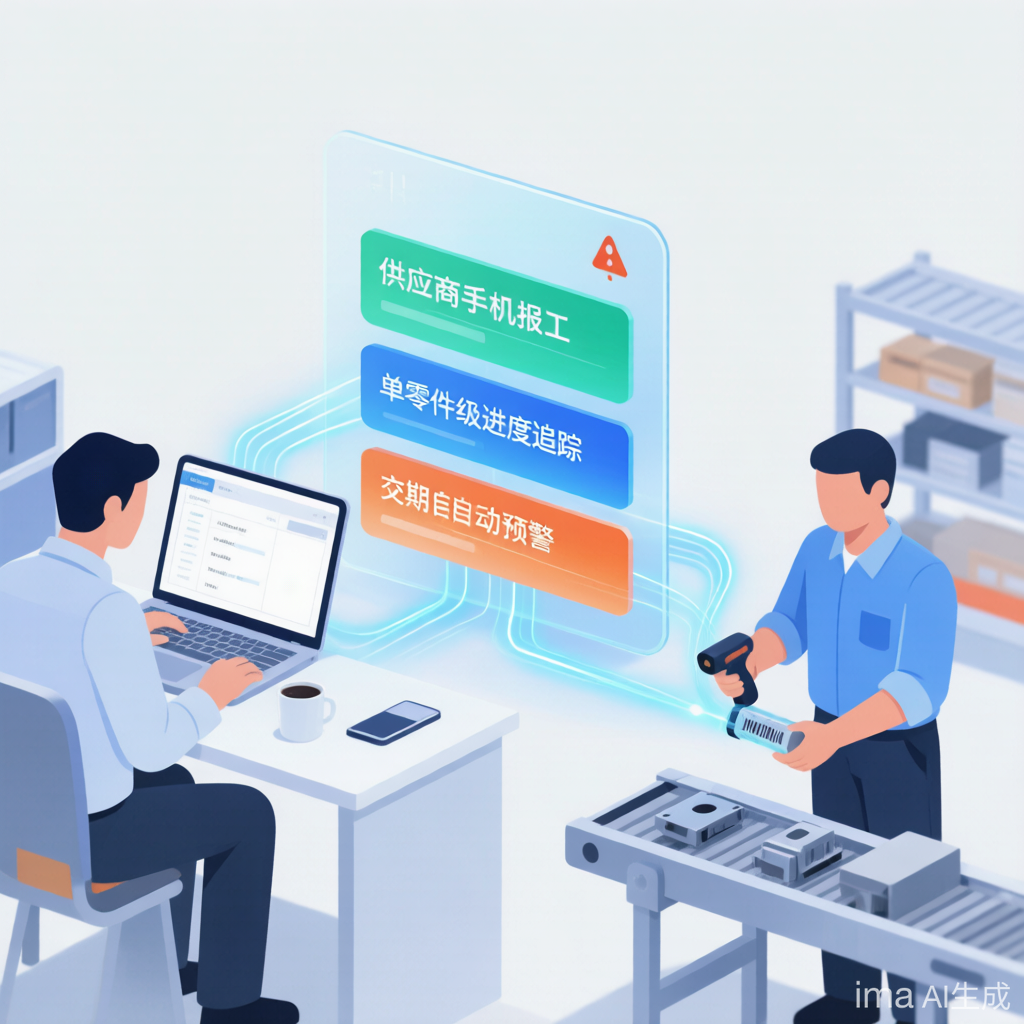
When Outsourcing in Non-Standard Work Gets Stuck, the Problem Is Mostly Poor Information Flow, Not Suppliers Deliberately Delaying
Many bosses start cursing suppliers as unreliable the moment outsourcing is late, but in most cases it is their own internal tracking that cannot keep up. Non-standard automation projects are characterized by many varieties and small batches: one piece of equipment may have dozens or even a hundred outsourced parts, and each part may go to a different supplier. The old management method was always:
Design produces the BOM; procurement manually picks out outsourced parts and copies them into Excel to make outsourcing orders; copying the wrong model or missing requirements is common
Progress relies entirely on the project manager asking one by one on WeChat; a project manager handling four or five projects at once simply cannot remember which part is due on which day and which step it has reached
I have seen the hardest-working project manager carry a small notebook in his pocket every day, filled with the progress of various suppliers. Finding one part takes three to five minutes; if the supplier is busy and does not reply, all he can do is wait — until assembly is due and he discovers the part was never made, by which time it is too late. In this situation, even if the supplier is not deliberately delaying, the information gap alone can kill the project.
A Usable Outsourced Machining Progress Tracking Software Must Solve These 3 Core Problems
Just finding any software to record supplier contact information is not progress tracking. What can truly be used in the non-standard industry must fit the business processes of non-standard factories and solve three core problems:
Problem One: Automatically Split Outsourced Parts from the BOM, No Manual Copying or Mistakes
All parts in non-standard work revolve around the BOM. A good tool automatically distinguishes standard parts, in-house machined parts, and outsourced parts at the order placement stage and directly generates the outsourced machining details, so procurement does not have to copy row by row from the BOM. It saves time and avoids wrong dimensions and missing requirements. The Moges PMS9 I have encountered is built on this logic; once the process is smooth, the first step will not go wrong.
Problem Two: Part-Level Progress Tracking with Due-Date Alerts, No Need to Chase Every Day
Many tools only track at the outsourcing order level. If one outsourcing order has five parts and three are done while two are not, you simply cannot tell. A truly usable tracking tool must show the current machining status of each part: just cut, in finish machining, shipped, or received — all clear at a glance. As the due date approaches, it can automatically remind you, so a week in advance you know which part may be late and can prepare a backup supplier instead of being caught off guard at assembly.
Problem Three: Full-Chain Integration of Acceptance, Receiving, and Reconciliation, No Repeated Checking
After outsourced parts return to the factory, acceptance is checked against the outsourcing order and received with one click; qualified parts automatically sync to inventory, and unqualified parts are returned directly, so the warehouse keeper does not have to check against paper orders. By the reconciliation stage, all outsourcing and acceptance records are already stored in the system; export the reconciliation statement directly and check it with the supplier. Finance no longer has to add up an Excel sheet line by line for half a day, and unmatched accounts basically no longer happen.
Don't Step into Pitfalls When Choosing a Tool — Not Every Management Software Can Do Outsourcing Tracking Well
Many factories easily step into two pitfalls when looking for outsourcing tools:
| Pitfall Type | Specific Symptoms | Consequences |
|---|---|---|
| Buying generic project management software | Adding custom fields yourself without understanding non-standard BOM logic | Cannot sort out the correspondence between parts, projects, and the BOM, so you end up relying on manual records — essentially buying a spreadsheet |
| Implementing a generic ERP | The outsourcing module configuration is complex and takes one or two months to change processes | Small and medium factories cannot afford the time; it cannot be used, or only the order creation part is used and progress tracking stays the same |
In fact, non-standard factories do not need so many flashy features for outsourcing. The core is to follow the BOM, make each part's progress visible, and make acceptance and reconciliation simple. Doing these three things well already solves 80% of the problems.
How Much Hidden Cost Can Be Saved by Straightening Out Outsourcing Tracking
I have done the math: a non-standard factory with about 30 people does about 30 projects a year, with an average of 50 outsourced parts per project:
Labor cost savings: originally procurement plus the project manager, two people, had to spend at least a full day a week following progress and matching documents. With a tracking tool, most of this work can be automated and takes only half a day a week. Isn't the time saved worth taking on one more project?
Delay cost savings: about 30% of project delays in the industry are caused by outsourced parts; each project is delayed by a week on average, and labor costs plus penalties are at least tens of thousands and at most over RMB 100,000. If the delay rate can be brought below 10%, the money saved in a year far exceeds the cost of the tool.
This is not some empty grand concept; it is real cost reduction.
Summary: The More Inconspicuous the Link, the More It Accumulates Hidden Costs
Many non-standard factory owners are used to spending money on equipment and expanding the plant, but rarely pay attention to small things like outsourcing tracking. In fact, the smaller the link, the more hidden cost it can accumulate.
Why not flip through last year's project records and see how many projects failed on inconspicuous outsourced parts. Choose an outsourced machining progress tracking software that fits non-standard business, let information flow replace manual chasing, let data travel instead of WeChat follow-ups, intercept delay risks in advance, and automate the hassle of reconciliation — this is the "small money" that non-standard factories should truly spend, in exchange for "big returns."