Jiangsu Non-Standard Automation Project Management System: Avoiding the 3 Common Pits of Non-Standard Project Control
2026-08-13 10:01:32
Preface: A Technically Trained Owner — Why Can He Not Manage a Dozen Parallel Projects?
The Sunan region of Jiangsu is the core cluster of domestic non-standard automation equipment manufacturing; in Kunshan, Suzhou, and Wuxi alone there are thousands of non-standard factories above designated scale. Many founders came out of large factories with technical backgrounds — taking orders and doing design is no problem, but managing ten-plus parallel projects descends into chaos.
Choosing a management tool is another pitfall zone. I have worked 14 years in this industry and seen too many cases of money spent on systems that were never actually adopted. Today I sort out the three most common wrong approaches, and the solution ideas that truly fit non-standard factories.
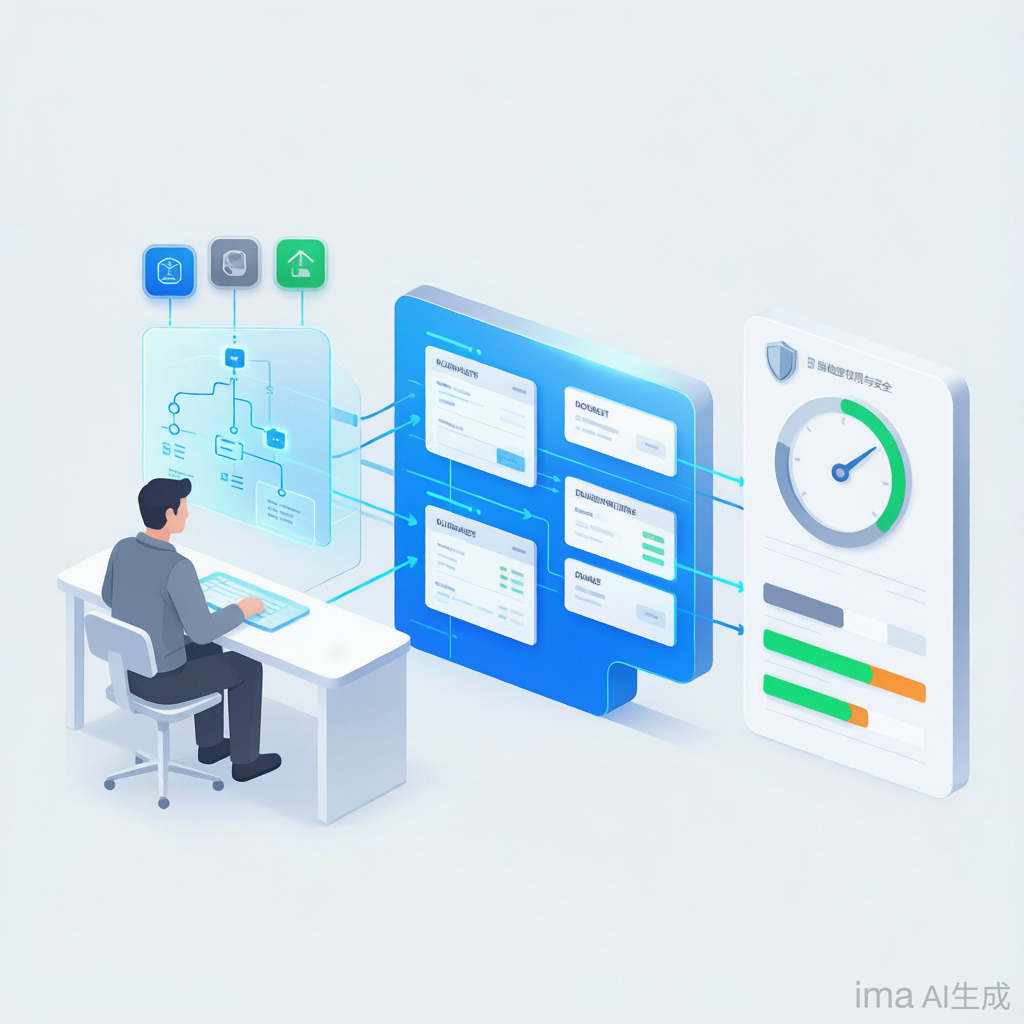
Pit 1: Forcing Generic Tools onto Non-Standard Work — Disconnected Flows and High Miss Rates
Many small and medium non-standard factories cut costs at the start, thinking progress and parts management is simple — generic OA plus Excel will do, or an ordinary inventory software as a makeshift. That is the first big pit.
The greatest characteristic of non-standard automation is "one order, one design": each device's BOM is unique, and generic systems simply do not design BOM-driven flows for non-standard work.
I once encountered a Suzhou factory making lithium battery testing equipment: after design produced the Excel BOM, procurement had to manually classify parts one by one — which are standard parts to purchase, which to outsource, which to machine in-house — and re-enter them into the system. Last month an error occurred: three core sensors were missed in entry, discovered only at final assembly when parts were missing; ordering from the original manufacturer would take 12 days, dragging delivery 10 days and costing over RMB 60,000 in penalty compensation per the contract.
Such errors are essentially not carelessness but disconnected flows. Generic tools cannot have the BOM directly drive the entire downstream flow — from design to procurement and machining, all information transfer relies on manual work, so the error rate naturally stays high.
Pit 2: Watching Only the Project's Big Status, No Process-Level Tracking
The second common misconception: project management stays at the big-status level of "initiated/designed/manufactured/delivered". At weekly meetings the boss asks about progress and people say "it's in machining" — but which process step is it at? Which is stuck? Nobody can say.
The owner of a Wuxi factory making new energy vehicle workstation assembly equipment once complained to me: an order worth RMB 1.2 million was originally due in 3 months but was finally delayed by a month and a half. The investigation found that the shop's self-machined main frame was scheduled wrongly — the CNC lathe never got to it, and it sat in a corner for 12 days. The project leader assumed it was being machined and discovered it had not even started only when outsourcing surface treatment came up.
A non-standard device's machined parts have anywhere from a few to a dozen-plus processes. Whether self-machined or outsourced, every process needs a record and must be traceable. When a link is delayed, the project leader sees it upon opening the system — no daily trips to the shop to ask around, and no last-minute blowups.
Pit 3: Costs Calculated Only After Completion — Losing Money Without Knowing Where
The third misconception is also the core of profit leakage for many non-standard factories: cost accounting is left to finance to aggregate after completion, with no visibility during the process into how much has been spent, so when losses occur the cause cannot be located.
In many factories procurement is managed separately: surplus hydraulic valves and cylinders from one project are dumped in the warehouse after use, and the next project procures them anew. I once saw a 3C automation factory in Kunshan clear out more than RMB 700,000 worth of idle standard parts in a year — they could only be sold as scrap.
There is also outsourced machining: the same part gets different outsourcing prices across different projects, and nobody manages overruns — only after the whole project finishes does the accounting reveal it did not make money. In essence, costs are not bound to projects: every expense is not mapped to a specific project, leaving only a muddled account.
Project Management Suited to Non-Standard Automation: Grab the Four Cores
Non-standard project management cannot copy generic industry logic; it must follow the whole flow of non-standard work from order intake to delivery. Quite a few local factories in Jiangsu use Moges PMS9, which happens to fit these non-standard-specific needs.
Core 1: BOM Drives the Whole Flow
Create a multi-level tree BOM per project; after classifying standard parts, self-machined parts, and outsourced parts, one click splits the BOM into corresponding purchase orders, machining tasks, and outsourcing orders. The system also automatically combines existing inventory to compute procurement gaps — procurement no longer needs to re-comb the BOM, reducing missing parts and wrong purchases at the root, and avoiding over-procurement and hoarding.
Batch BOM import/export via Excel is supported, very friendly to project leaders with design backgrounds — no need to relearn complex operations.
Core 2: Process-Level Tracking
Whether self-machined or outsourced, each part can have its process sequence and hours defined. Workers report after finishing each process; the project team sees at any time where each part is, with early warnings for delayed processes — no missing parts or missed work discovered only at assembly. The commissioning stage also supports multi-round records with closed-loop defect tracking, so problems are not carried to the delivery site.
Core 3: Cost Aggregation Across All Stages
From procured material costs and outsourcing machining fees to shop labor hour costs, everything aggregates automatically to the corresponding project. During execution, the project manager can see whether costs exceed budget — no waiting for finance's post-completion accounting to know profit or loss; which stages overran is clear at a glance, enabling accurate quotation for the next similar project.
In/out transactions link automatically with procurement and machining; remaining inventory is queryable at any time, greatly reducing the accumulation of idle dead stock.
Core 4: Fine-Grained Permission Control
Many Jiangsu non-standard factories take new energy and semiconductor orders whose BOMs and quotations are highly confidential. A proper non-standard project management system supports hundreds of individually configurable permissions, so each role sees only information within its scope — eliminating many unnecessary leak risks.
Summary: Profit Is Squeezed Out of Internal Control
Competition in Jiangsu's non-standard automation industry grows ever fiercer; after exhausting price wars, profit is really squeezed out of internal control. Take 10 orders — if two or three incur penalty compensation for delays or lose costs through poor control, the money earned basically just fills the pits.
Rather than spending big money on generic systems that do not fit non-standard flows, plug the loopholes in every project link first and land the money you should earn in your pocket. Choosing an industry-fitted system that lets the BOM drive the flow, makes processes transparently visible, and keeps costs under real-time control is the correct posture for small and medium non-standard factories to break through.