Project Management Software Selection Guide for the Automation Industry: Pitfall Avoidance and Core Needs for Small and Medium Non-Standard Factories
2026-08-14 08:02:15
Preface: Selection Pitfalls Are Not Bad Software — They Are Not Knowing What You Want
Last month at a Kunshan machining industry salon I met Mr. Zhang, who runs an automation supporting-mold factory with 20-odd people and an annual output of over RMB 30 million. As soon as we sat down he complained: his selection had gone into a pit.
Two years ago, on a friend's recommendation, he bought a generic project management software for the automation industry for just under RMB 50,000. He had hoped it would clarify project progress; after half a year of use, nobody in the shop was willing to use it, and it still only serves the office for entering customer information. How much money each mold actually made still requires finance to calculate for half a month over a pile of documents — and a single slip means a wrong calculation.
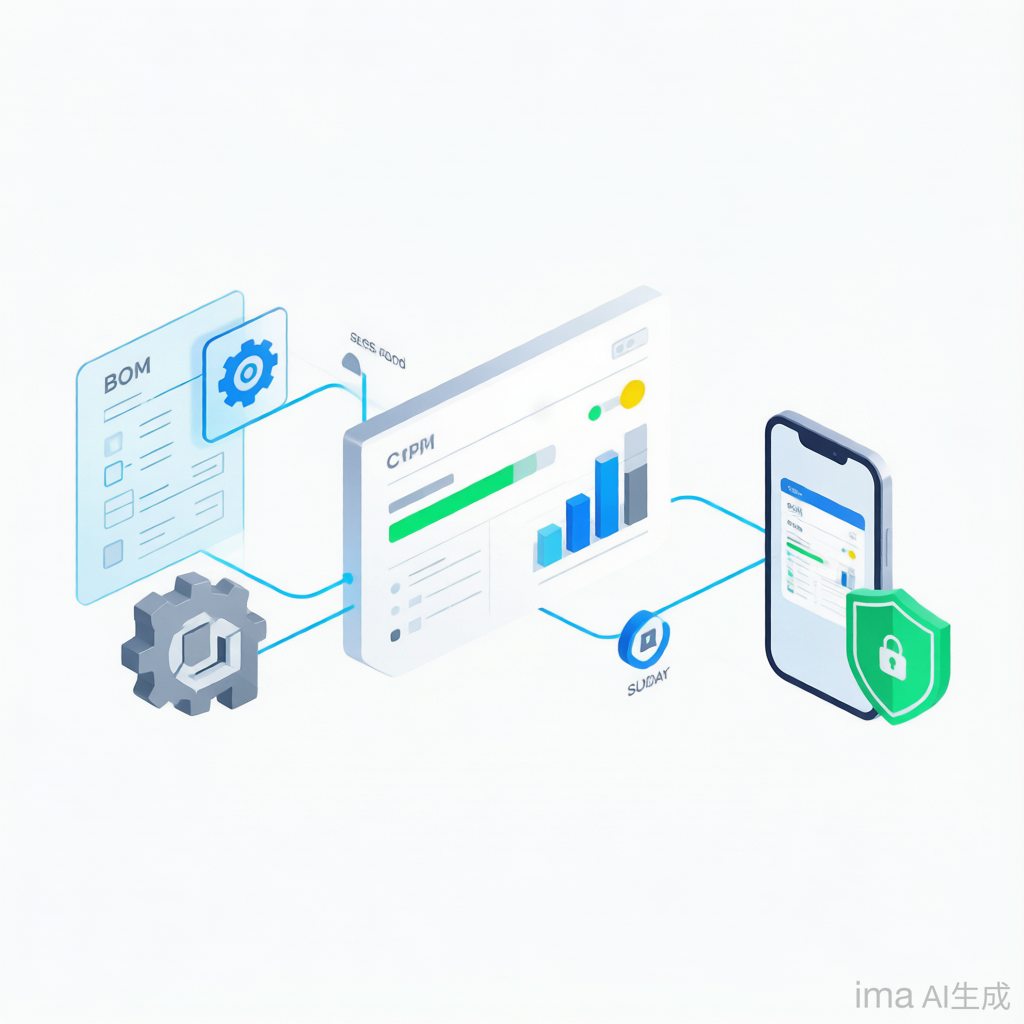
Today let us say plainly: for project management software selection in the automation industry, how exactly should small and medium factories avoid the pits?
1. Automation Projects Are Inherently Ill-Suited to Generic Management Software
Many people's first instinct in selection is to find a cheap generic project management tool — good enough is fine. But the automation industry does custom projects, especially non-standard molds and precision parts, whose needs differ completely from ordinary Internet projects or construction projects.
| Comparison dimension | Generic project management software | Automation/mold-specific system |
|---|---|---|
| Progress granularity | Milestone level (design completed, machining started) | Process level (CNC roughing, EDM, wire cutting, heat treatment...) |
| Cost accounting | Mainly labor hours | Materials + hours + outsourcing + allocations, accurate to the individual mold |
| Outsourcing management | None or simple records | Full-flow traceability of dispatch, return, acceptance, and reconciliation |
| Design changes | Manual notification | BOM changes auto-synced to downstream documents |
Just like the one Mr. Zhang used before: it could only mark big stages like "design completed" or "machining started" — which process was delayed or which outsourced item had not returned was simply invisible. Sales had to run to the shop three times a day to answer customers about progress; exhausting, and often wrong, so customer satisfaction actually dropped.
2. List Core Needs First; Do Not Be Fooled by "Big and All-Inclusive"
I have dealt with more than 200 factory owners in automation supporting businesses, and most open with "is your feature set complete?" That is in fact the most common mismatch.
80% of the value of mold project management comes from 20% of the core functions. Master that 20% and you have already solved 80% of the problems. The rest is icing on the cake — and may even make implementation harder and frontline adoption impossible.
For projects in the automation industry, the core needs are just four:
Production progress fully queryable: which process each mold is at, who made it, whether it is delayed — clear at a glance on opening the system, with no daily trips to the shop;
Cost accounting accurate to the single job: how much material each mold used, how many hours, how much outsourcing cost, and how much was earned — exportable directly, with finance no longer assembling numbers from a pile of documents;
Outsourcing fully traceable: which processes were outsourced, when dispatched, machining fees, whether return acceptance had problems — reconciliation without digging through chat records and delivery notes;
Simple frontline operation: process reporting done with a scan — no making operators enter piles of complex parameters; only with zero resistance can it actually be adopted.
Do not be fooled. Many vendors open by demonstrating intelligent dashboards and full-chain digitalization claiming to solve a hundred problems, while you cannot even do the most basic per-mold cost accounting accurately. Those dashboards are for visitors to look at — of no use at all to your own production management.
3. Three Common Selection Misconceptions to Avoid
Misconception 1: More Expensive Is Better; Bigger Brands Are Better
Large vendors' software is indeed comprehensive, but one set costs hundreds of thousands. For small and medium factories with annual output of RMB 10 million-500 million, the investment is high, implementation takes long, many functions are never used — pure waste of money.
What fits your industry and scale is what is best. Digitalization is not a large factory's privilege; small and medium factories need lightweight, landable systems even more.
Misconception 2: Pure IT Companies Have Good Technology, So Their Products Must Be Great
In automation supporting-project management, knowing the industry matters more than knowing technology. Without understanding how mold factories run projects, no matter how elegant the code, it is useless.
For example, in costing, you must know how cost items like mold bases, electrodes, and heat treatment are allocated to a single mold, and how outsourced processes map to specific projects — no generic cost formula gets that right.
Misconception 3: Valuing Software over Implementation — "Buy and It Works"
The industry knows well: 30% software, 70% implementation. Finding an implementation team that knows the industry matters more than the software's functional details.
I have seen too many factories buy decent software only for the seller to hand over an installation package, run two remote training sessions, and disappear — the system gradually ends up idle. One more important point: adopting a system is an owner-led project; if the boss does not push it, the frontline will certainly resist — 9 out of 10 fail.
Kunshan Moges has maintained an implementation success rate above 95% for years precisely by not doing big all-inclusive launches: pilot one workshop and one process first, roll out company-wide once smooth, adopt only core modules, with implementation consultants on site — core functions in use within 3 months.
4. Several Easily Overlooked Selection Details
1. System Architecture: Linux-Native Beats Windows
Many small and medium factories still use Windows-architecture systems: virus-prone, unstable, and laggy when many shop users log in simultaneously. Linux-native systems have fewer viruses, are stable and high-performing, sparing you daily calls to IT for repairs — far less hassle over the long run.
2. Dual-Mode Architecture: Custom Projects + Batch Orders in One System
Many factories doing automation supporting work now run hybrid mode — taking custom mold projects on one side and batch machining orders on the other. Buy two systems and the data does not connect, making reconciliation and statistics troublesome. One system with dual-mode architecture handles both production modes without back-and-forth switching.
3. Mobile Support: The Boss Checks Progress Anytime
Owners spend most of their time out visiting customers and suppliers; pulling out the phone shows each project's progress and which is delayed — no waiting for the office to send weekly reports. This small feature actually solves a big communication problem.
4. AI Features: Judge by Landing Maturity, Do Not Blindly Chase Concepts
Many vendors now use AI as a marketing gimmick. AI is not omnipotent, but do not reject it outright either. When selecting, check whether it is genuinely mature and usable — for example, AI intelligent scheduling and quality warnings: if they have already landed, you can use them upon adoption, instead of replacing the system and re-implementing in two or three years.
Summary: Getting It Running Matters More Than Getting Everything in One Step
Many owners want to solve all problems in one step when selecting. For small and medium factories, getting it running first — solving the most troubling progress and cost problems first — matters more than anything.
Many selection pitfalls are not bad software, but not knowing what you want from the start and choosing an unsuitable direction.
Think about it now: for the projects on your plate, has every cent of cost really been accounted for? Can you really grasp progress without running to the shop? If the answer is no, perhaps it is time to re-examine your selection criteria.