I. The 3 Hidden Costs in Your Assembly Workshop You Never Noticed
2026-08-21 08:01:35
A couple of months ago I chatted with an owner doing precision mold assembly. He tallied for me: 15 assemblers in the workshop, less than 120,000 yuan of pure profit a month — wages and materials alone take 90% — where's the money for digital software?
I tallied a different account for him: your team lead spends half of every day camped at workstations asking progress, hunting outsourced parts, reconciling with suppliers — at 8,000 yuan a month, that's half the salary down the drain, 48,000 a year; on average one shortage/mis-shipment delay a month at 1,500 docked from the customer each time — another 18,000 a year; at year-end you only know the whole plant's profit — whether each mold's assembly made or lost money is unsayable, so new quotes are guesses: take three to five losing orders a year and that's nearly a hundred thousand more. Over a hundred thousand is already gone — which is dearer?
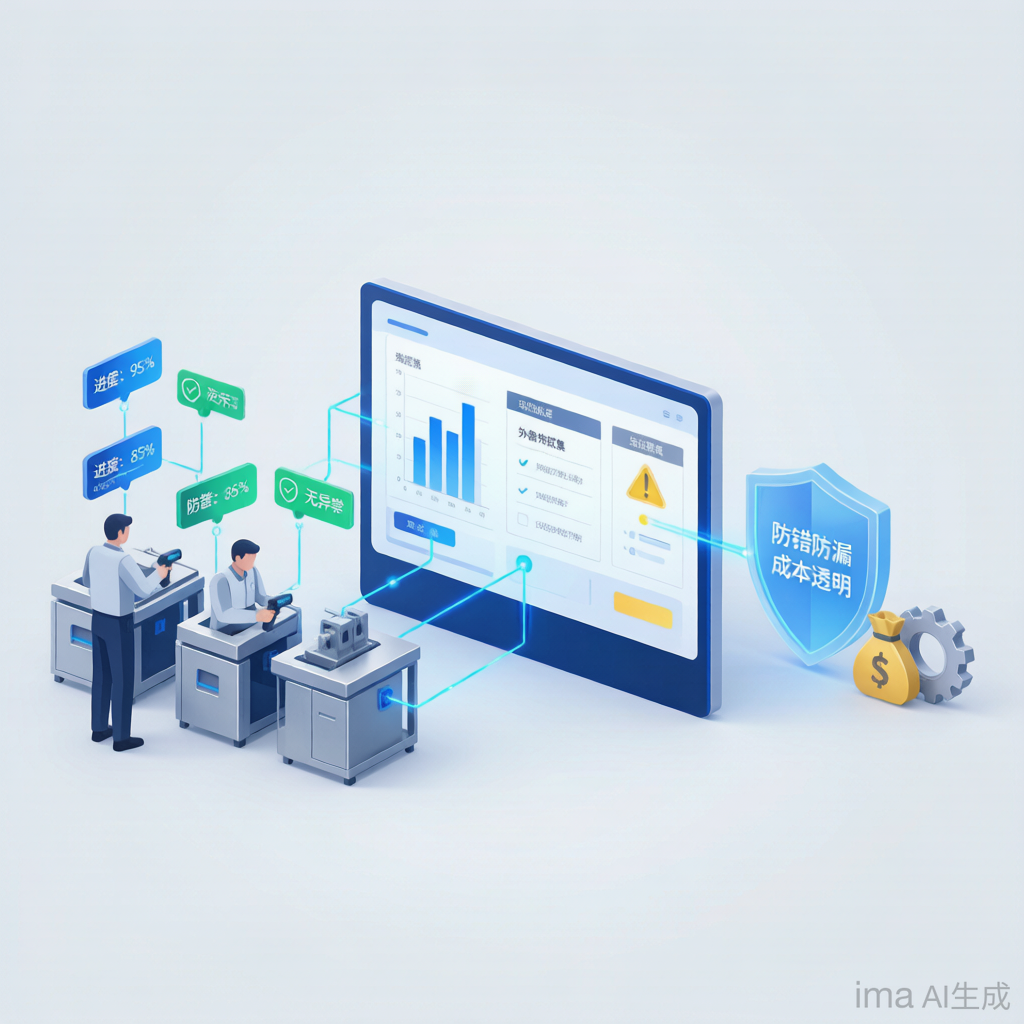
I. The 3 Hidden Costs in Your Assembly Workshop You Never Noticed
Many owners count only the visible costs: materials, wages, equipment depreciation. But what the assembly workshop burns most is precisely the invisible hidden costs:
| Hidden Cost Type | Typical Manifestation | Estimated Annual Loss |
|---|---|---|
| Wasted labor on progress tracking | Team lead asks progress station by station and coordinates shortages daily — a 10-person shop burns 6,000 yuan+ a month | 70,000+ |
| Errors and omissions waste | Mis-shipped parts, unclear outsourcing reconciliation causing delay penalties or overpaid fees | 30,000+ |
| Losses from muddled costing | Assembly costs never accounted separately; quotes by experience run low — one order, one loss | 70,000+ |
Outsourcing reconciliation is the worst zone: how much went out, how much the fees, what was returned as failed — all in notebooks and Excel. When numbers mismatch, everyone tells their own story; overpaying thousands or under-collecting tens of thousands a year is routine. And it buries a landmine in future quotes — underquote the next similar order, and each one loses.
II. Don't Be Fooled: For Assembly Digitalization, Price Isn't Quality
Mention adopting a system and sales push full-flow solutions at hundreds of thousands. For a small-mid precision machining factory with annual output of 10 million to 500 million yuan, it's entirely unnecessary. What does an assembly shop of a dozen-twenty people need with all those dead features? In the end you pay big money and use under 20% of the functions — cash down the drain.
We at Moges have spent 14 years deep in the mold and precision machining industries alone, and seen plenty of cases: owners spend hundreds of thousands on generic big systems that, however adapted, never fit the assembly shop's mixed production mode — a good number were abandoned. Actually, for a small-mid assembly shop, grasping a few core points in choosing software is enough:
Support for mixed production modes. Many factories have both mold project assembly and batch machined-part assembly — one system handles both modes, no need to buy two, saving money and integration headaches.
Simple operation. Frontline assemblers won't use complex systems — scan to report, data entry under a minute, or it won't take hold.
Complete core functions. Progress tracking, cost accounting, outsourcing management, quality traceability must all work; flashy big-screen displays and unrelated industry modules can be skipped entirely.
Three parts software, seven parts implementation — finding an implementation team that understands molds and precision assembly matters more than how many features the software has. Long-established vertical teams in this industry reach 95%+ implementation success and 90%+ customer renewal — far above the generic software average.
III. Run the Numbers: How Much Pure Profit the Right Software Saves a Year
We once served an 18-person assembly shop doing precision mold supporting assembly. We compared costs before and after adopting:
Labor saved: the team lead used to spend 12 days a month chasing progress and reconciling outsourcing. After go-live, operations scan to update progress on completion; outsourcing send-out, receiving, and acceptance all on record, reconciliation exports with one click — at least half the labor cost saved, 50,000 a year.
Error losses down: previously 1.5 shortage delays a month at 1,800 yuan each; after go-live, scan-checked material issue and automatic shortage alerts cut losses 80% — 26,000 a year saved.
Quote accuracy up: per-mold assembly costs used to be unfigurable — 3-4 losing orders a year, about 70,000. After go-live, labor, consumables, and outsourcing fees precisely accounted; quoting accuracy improved — 50,000 more earned a year.
All told, over a hundred thousand saved a year, while the software investment is under a third of that — effectively free software plus a profit. Following Moges' five-step implementation method — pilot first, then roll out — the whole workshop runs within three months, no production disruption, low risk.
IV. Think Through These Before Adopting — Avoid the Detours
Many owners think digitalization is a big-factory privilege and small shops earning hard money needn't join the crowd. Quite the opposite: small-mid shops run thin margins, so hidden costs eat a higher proportion of profit — saving tens of thousands is pure profit, more effective than taking two more small orders.
Second, adoption must be led by the owner. If the owner doesn't take it seriously, frontline workers find scanning troublesome and refuse — the system will never take off. The trade saying "if the boss doesn't lead, nine of ten fail" is no exaggeration.
Finally, don't chase big-and-complete: get the core modules of progress, cost, and outsourcing running to solve 80% of problems — enough. AI intelligent scheduling and quality alerting are now mature; if your workshop scheduling is chaotic or rework heavy, choose a system with these — but don't pay for concepts. Useless features, however many, are still useless.
Final Word: Tally the Hidden Account to See the Value of Optimization
Many owners habitually calculate how much software costs to buy, but never calculate how much hidden cost they bleed each year without it. Spend half a day tallying your workshop's monthly error losses, wasted labor, and muddled-account losses, and whether to adopt assembly digitalization will already be clear.
When every part assembled is traceable on record, every cent of outsourcing spend is clear and traceable, and every mold's cost is precisely visible — the profit that once drained away through chaos is truly held in your hands.