Non-standard Automation Cost Overrun Control in Practice: Three Core Methods from 14 Years of Experience
2026-09-06 10:02:19
Preface: 72% of Projects Overrun, and a 15% Overrun Devours the Entire Profit
Based on what I have seen across more than 200 non-standard automation companies, over 72% of projects overrun their budget to some degree, and nearly 30% of projects overrun by more than 15%. Margins in the non-standard industry mostly run between 10% and 20%, so a 15-point overrun essentially swallows the profit on that project and can even turn it into a loss. Many bosses spend every day pressing purchasing for lower prices and watching the workshop for material savings, and still end up over budget. Where exactly does the problem come from?
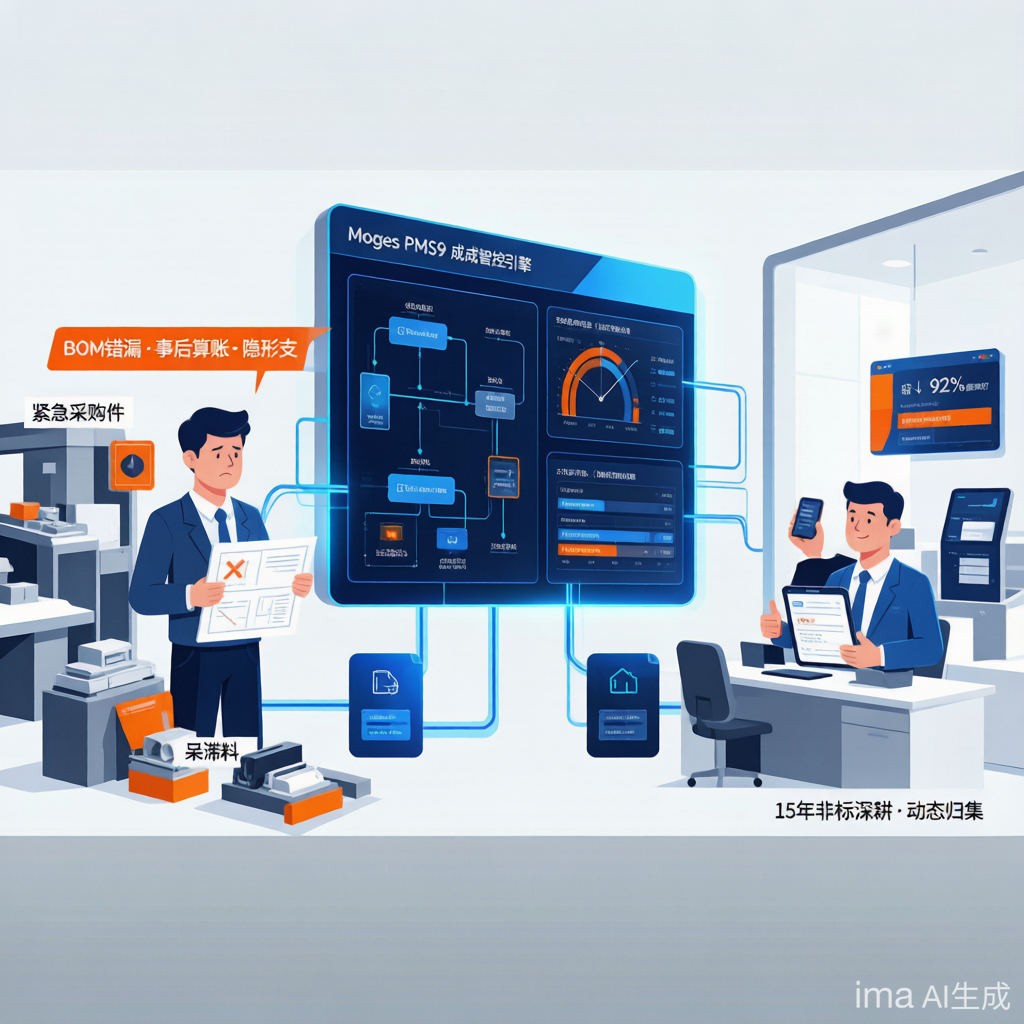
I. First, Get It Straight: Cost Overruns Are Mostly Not Purchasing's or the Workshop's Fault
I have seen many bosses blame purchasing for being poor negotiators and the workshop for wasting material the moment a cost overrun appears, yet the vast majority of overruns originate in the upstream process and the way it is controlled. Non-standard work is all custom orders, and the configuration of every machine differs; these are the problems I see most often:
Design BOM errors and omissions: it is common for engineers to miss a proximity switch or drop a linear guide while compiling the BOM after finishing the drawings. The shortage turns up at assembly, and emergency purchasing not only adds freight but may not even get a discounted price from the supplier; this one item alone costs an extra several thousand yuan per project on average.
Disconnected processes: design issues the BOM, purchasing buys against it, the warehouse receives the material and puts it aside, and nobody records which project it belongs to when the material is drawn. At the end there is a pile of slow-moving stock left at the stock take and the cost is spread across projects, so of course they overrun.
After-the-fact accounting: many companies only total up costs once the project is delivered, by which time the overrun is already fixed and cannot be corrected. Even if this project lost money, they cannot find where the problem was and keep losing on the next one.
II. Control Errors at the Source: BOM-Driven Beats Haggling After the Fact
The core of non-standard cost control is to stop errors at the source rather than fight fires after they happen. The most effective method is to drive the whole process automatically from the BOM as the core: starting from the design breakdown, every step maps to the BOM, so errors and omissions are avoided.
Once the BOM is finalized, it automatically splits into standard parts, outsourced parts and in-house machined parts:
Standard parts → purchase orders generated directly and pushed to purchasing
Outsourced parts → outsourcing orders generated automatically for the matching supplier
In-house machined parts → machining tasks generated automatically and issued to the workshop
There is no manual re-entry of orders, so the chance of human error falls. What is more, receipts and issues at every step are linked automatically to the project and the BOM: the system syncs in real time what material was drawn from the warehouse and how much it cost into the project cost, so material is never drawn against the wrong project and costs are never spread arbitrarily.
One company making 3C inspection equipment used to manage BOMs in Excel and averaged more than 10 missed or wrong parts per project, spending over RMB 300,000 a year on extra emergency purchasing alone. After adopting the BOM-driven process in Moges PMS9, its error rate fell by 92% and it saved more than RMB 200,000 in profit within a single year.
III. Consolidate Costs Dynamically: Catch the Overrun While It Is Still Happening
In many companies cost accounting means pulling out all the documents at month end or after the project closes and adding them up, and by then it is too late even if the overrun is spotted. Good cost control means seeing at any point during the project how much has been spent, how much budget remains, and where the overrun is, so it can be corrected immediately.
Concretely, costs must be consolidated dynamically across multiple dimensions:
| Cost Dimension | Traditional After-the-Fact Accounting | Dynamic Consolidation (e.g. Moges PMS9) | Improvement |
|---|---|---|---|
| Material cost | Manual summary at month end, projects easily confused | Purchase orders link to projects automatically; unit price, freight and tax counted in real time | Material attribution accuracy up to 99% |
| Machining cost | Labor hours estimated, allocation by guesswork | Operation reporting counts labor cost automatically; outsourcing fees consolidated directly | Labor cost deviation down to within 5% |
| Period expenses | Reimbursements not linked to projects, hard to trace later | Project selected at reimbursement, system consolidates automatically | Missed miscellaneous costs down 90%+ |
| Alerting | Overrun known only at project close, beyond recovery | Automatic alerts pushed near the budget line | Overruns detected 7-15 days earlier |
At any time you can total the current project cost with one click and compare it against the budget. If some part is already close to the warning line, you can adjust right away — switch to a more suitable supplier for later purchases, for example, or optimize a machining step — instead of discovering only at the end that the whole project lost money.
I have seen many companies store material for several projects mixed together in the warehouse and record no project when material is drawn, leaving cost allocation to whatever the boss guesses; after a year they still did not know whether they had made money. With fine-grained control, how much each project earned or lost is immediately clear, and the steps prone to overrun can be summed up as experience to avoid next time.
IV. The Hidden Overrun Traps: Do Not Overlook Prepayments and Invoices
Many people focus only on visible material and machining costs and overlook the invisible leakage in financial steps such as prepayments and invoices.
Take prepayments to suppliers: many companies simply book them without tracking the prepayment ratio or the write-off status, so as time passes and orders multiply, duplicate or excess payments easily occur, and only at reconciliation do they discover the money is already out and hard to recover. The same goes for invoice management: in many companies invoices are not matched to the right project and their status is unclear, so input VAT that should have been deducted is not deducted in time and tax is paid needlessly — which is a real cost overrun.
These steps need not be complicated; simple tracking is enough:
Prepayments: record the prepaid amount, the ratio and the write-off status, so every payment is clearly tied to the right order and project
Invoices: track the whole path from issuance to verification, match them to the right project and avoid missed or incorrect deductions
Do not dismiss these details: one company I worked with saved nearly RMB 100,000 in avoidable losses in a single year simply by getting its prepayments and invoices straight.
Conclusion: At the End of the Day, Fine-Grained Control Is What Wins
In non-standard automation you earn your money order by order; there is no volume business with thin margins to fall back on, so in the end fine-grained control is what wins. Many bosses say business is tough and orders are plentiful yet still unprofitable, but in most cases each project quietly leaks tens of thousands of yuan, and together they drain the profit.
Have you ever worked out how much your company overspends each year because of errors and omissions, broken processes and financial carelessness? If the answer makes you feel it is time for a change, then perhaps it is time to talk to Moges about Moges PMS9 — so that every bit of profit is safely banked.