I. The Three Common Pits of Custom In-House Machining
2026-09-17 10:02:38
Many custom automation equipment owners feel the machining workshop only makes in-house parts — single-piece small-batch, frequent job changes — so a production management system is pure decoration. Better to note things in Excel and assign work verbally: simpler.
In a custom factory of a few dozen people, the machining workshop looks free-running but is actually a tangled mess. At assembly time parts go missing and deadlines slip; tracing the cause reveals machining tasks buried in a machinist's drawer — urgent or not decided purely by memory. A defect occurs and the root cause can't be found; the same mistake repeats next time. At project end, costing for in-house parts rests entirely on gut feel — profit or loss unknown either way.
Many attribute this to custom projects' inherent uncertainty — when in fact it's the opposite. The more single-piece small-batch the in-house work, the more it needs fine-grained control. What looks like saved management effort actually loses money in invisible places.
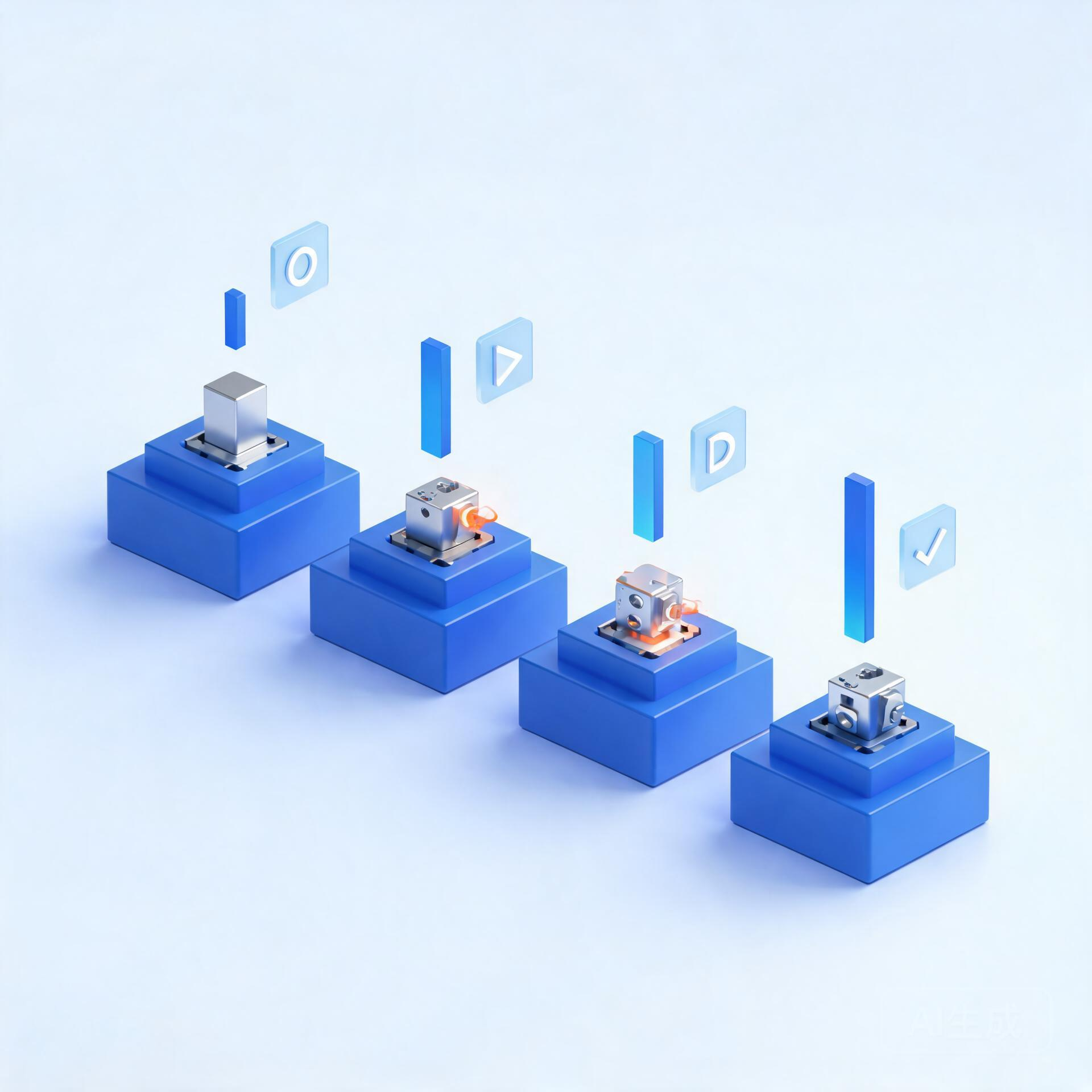
I. The Three Common Pits of Custom In-House Machining
Most custom equipment factories keep their own machining workshop to produce core parts in-house — controlling quality on one hand, shortening delivery on the other. But many factories' machining management steps in the same pits.
Task information opaque; progress depends on human watching. After a project splits out in-house tasks, work assignment rests on the supervisor's verbal arrangements, and progress requires walking the workshop daily. When processes change, engineering revised the design but the machinist never heard — machining to the old drawing, straight to scrap. Discovered only when assembly schedules are already hurt. I dealt with a customer who, from one such slip, paid a 5% contractual penalty — roughly the whole project's profit gone.
Process data never retained; problems untraceable. When rework or scrap occurs, most just toss and redo with no cause recorded. Tool wear? Wrong process parameters? Operator error? With no data accumulation, the same problems recur with no path to improvement.
Costing by gut feel; profitability invisible. In-house part costs count only raw material — actual allocated labor and equipment wear never tallied — so quoting goes wrong. A high-price order that looks like a win turns out to lose money at settlement.
These problems are essentially not the custom project's fault — they come from management granularity too coarse, with no capture of information from every machining link.
II. The Core of Machining Management Is Getting Every Operation Under Control
Many feel adopting a system means adding process steps. Actually a good machining production management system simplifies repetitive work and locks down the links that need watching. The core is operation-level management: clarify every operation of every in-house part.
Once machining tasks generate, task numbers assign automatically — no hand-numbering errors. From to-machine, in-process, to complete, operation progress displays visually. Project managers and workshop dispatchers alike open the system and see all tasks' status — no daily workshop rounds. The enterprise can maintain its standard operation library ahead of time: numbers, names, and standard hours of common operations all recorded; when needed, batch-copy or import/export directly — no re-creating operations for every new task, fitting the flexibility of custom small-batch production. Operation-to-operator mappings can be configured ahead too, so dispatch matches by skill — no more newcomers on complex operations causing problems.
Next: simplify frontline reporting — no extra burden on machinists. A qualified system's machining reporting records only each operation's actual hours, operator, and qualified quantity; steps are simple, submittable from a phone. It also auto-supports workshop piece-rate wage statistics — finance exports data directly, saving plenty of manual tallying.
Anomalies during machining — rework, scrap — need proper record management: cause, handling measures, responsible party all recorded. Over time patterns emerge: which part types fail at which operations, whether to adjust process or change tools — targeted optimization raises the yield rate. When operations need changing, an application and approval flow leaves change history, preventing machining errors from information asymmetry.
This truly tests a system's fit for the custom industry. Quite a few generic systems complicate simple things. Moges' PMS9 fits custom factories' real needs well here: every operation trackable, reportable, inspectable — without piling extra work onto the frontline.
III. Machining Must Link With the Full Flow to Deliver Maximum Value
Machining isn't an isolated workshop link — it must connect with upstream design and procurement, and downstream inventory, cost, and the full project flow to truly solve problems.
Well-built systems today are all BOM-driven: after in-house parts split from the project BOM, machining tasks auto-generate — no manual second entry, less error probability. Split standard parts auto-convert to purchase orders, outsourced parts to outsourcing orders, in-house parts to machining tasks — the whole flow in one continuous stroke.
After machining completes and passes acceptance, inbound operations auto-link to inventory updates. Whether for subsequent assembly drawing or stock counts, data is real-time and accurate — books never diverge, and you never discover at draw-time that a part wasn't machined.
On cost accounting: with every operation's hours, personnel, and material consumption recorded, the system auto-performs multi-dimensional cost collection and analysis. Over a project, how much in-house parts cost is plain at a glance. Quoting and cost control rest on data, not gut feel.
Finally, permissions. Many small-mid factories neglect them, but fine-grained permission control is necessary. RBAC-based control ensures each post sees and operates only within its own scope: administrators can configure over a hundred and eighty permission items, while ordinary frontline machinists hold only twenty-odd matching their own work — no accidental data edits, no unauthorized views of sensitive data. Secure and worry-free.
Summary:
Many custom factory owners hear "adopt a system" and imagine heavy money and effort. Not so. Manage every machining operation well, store the big data of the machining process, connect the upstream and downstream flows — that solves the custom factory's most practical problems. No need for big-and-complete: a machining production management system that fits your factory's scale and production traits, helping you err less, idle less, and account clearly — that's a good system.
Many say small factories don't need systems. Have you ever had project delivery delayed by chaotic machining management? Actually, any machining workshop with 3 or more people will gradually surface these problems — sorting it out early costs far less than firefighting after things break.