Improve mold production efficiency management tool: Moges mold production management system's six efficiency engines.
2026-09-22 08:37:40
In the WeChat group for mold factory owners, the most frequently discussed topics, besides orders and quotes, are "how to improve production efficiency."
One owner stated that his workshop had 20 CNC machines, but during peak periods, the machines were fully booked for up to three days, while during off-peak periods, they were only operating at half capacity. Someone mentioned that the cost of cutting tools consumed 8% of the production value annually, but they were unsure where the money was being spent. Another person reported that a mold project was halfway complete when they discovered that the materials were specified incorrectly, resulting in a three-week rework and almost losing the customer.
These issues may seem unrelated, but the root cause lies in the same area: production data within the factory is not being collected and utilized in a structured manner. Management relies on intuition, and the factory relies on experience-based scheduling. This results in wasted time and materials when problems arise.
To achieve this, a management tool is needed that can pull real-time data from the factory and display it on the owner's mobile phone.
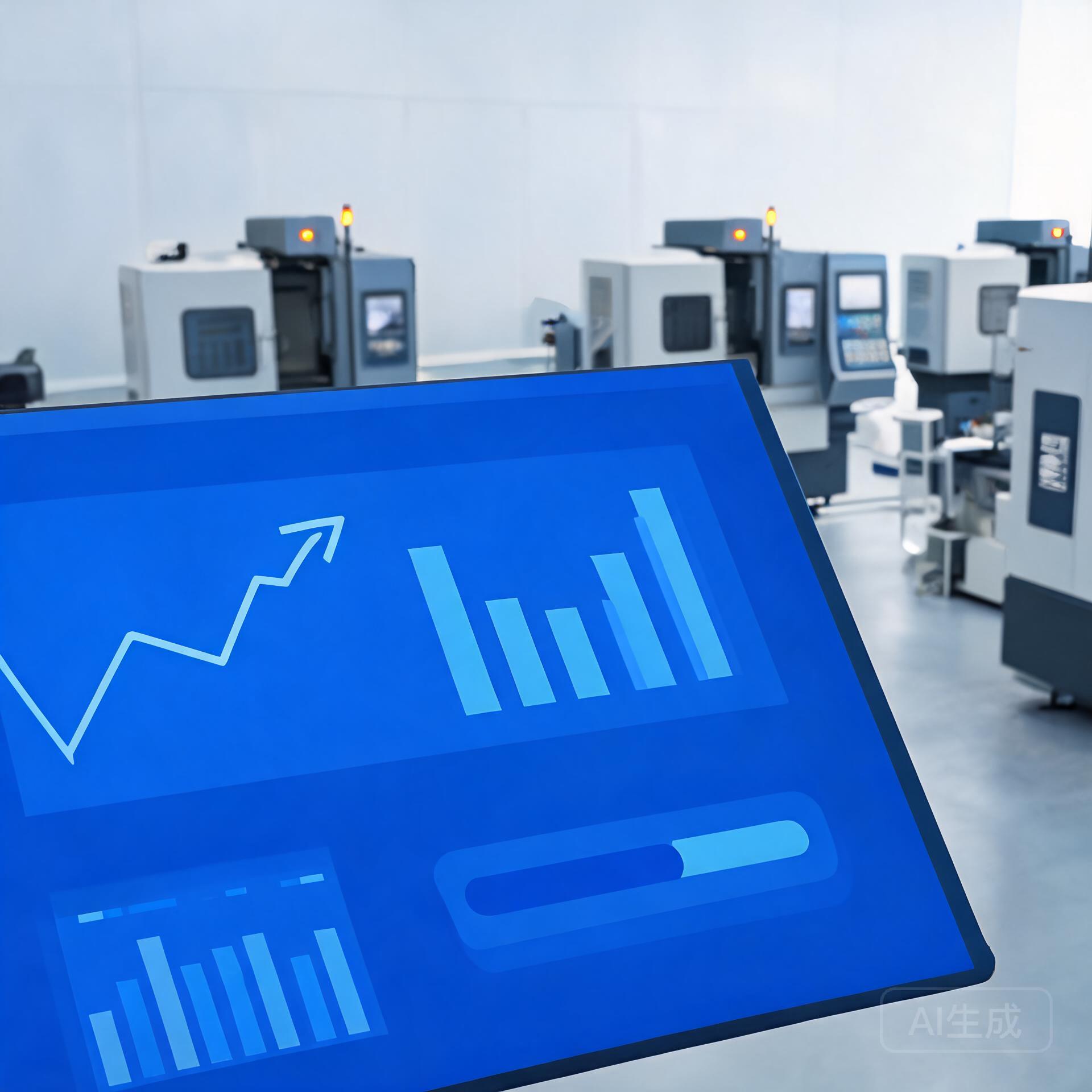
1. What are the efficiency bottlenecks in mold factories? Five common "hidden killers"
Let's break down the term "efficiency" first. For a mold factory, efficiency isn't simply "producing more parts per day." Instead, it's about optimizing the entire process, from receiving an order to delivering the mold, ensuring that every stage is executed "at the right time, with the right resources, and doing the right thing."
The first bottleneck is manual scheduling. Most small and medium-sized mold factories lack specialized production scheduling software. Instead, owners or workshop managers use a computer and an Excel spreadsheet to manually create production schedules based on experience. The problem is that once the schedule is printed, it becomes static. If a machine suddenly malfunctions, a worker is absent, or a batch of materials is delayed, the entire schedule is disrupted. However, these issues are not addressed in a timely manner, and the owner only discovers the problems when they have to reconcile the schedule late at night.
The second bottleneck is the reliance on manual inquiries. The manager wants to know the progress of a specific mold, requiring three phone calls: to the workshop supervisor, the responsible technician, and the quality control inspector. The answers from these three individuals may not align. After gathering the information, it takes a significant amount of time. This "information gap" is the biggest enemy of efficiency.
The third bottleneck is uncontrolled material and tooling costs. A mid-range, complex mold requires ten or more different materials, ranging from steel to copper to inserts. And don't even mention the tooling – milling cutters, drills, and taps – which are consumed daily on each machine. Without a system to track these costs, finance can only see that total costs are increasing at the end of the month, but they won't know which specific mold, which machine, or which shift exceeded its budget.
The fourth bottleneck is low equipment utilization. A mold factory in the Yangtze River Delta conducted a survey: there are 18 CNC machines, but the actual utilization rate is only 42%. Where did the remaining time go? Waiting for orders, waiting for materials, waiting for tool changes, and waiting for technicians to return from lunch. These small interruptions accumulate, resulting in a loss of over 200 days of production capacity per year.
The fifth bottleneck is discovering problems at the end of the mold project. Lack of thorough DFM reviews, skipping acceptance of certain processes, and incorrect surface treatment specifications, all of which were not recorded during production, are revealed during assembly or prototype testing. This results in rework costs that are ten times or even higher than the original process.
II. What management tools can solve these problems? The six efficiency engines of Moges mold MES.
Moges mold MES is not a standalone tool, but a complete production execution system. It integrates six modules – order scheduling, workshop reporting, material receipt and return, tool management, quality traceability, and cost accounting – into a closed-loop system.
Intelligent Scheduling (APS) is the starting point for efficiency improvements. The system utilizes the Google OR-Tools constraint solving engine, taking as input real-world data such as work orders, machine operating times, personnel skills, tool life, and external processing capabilities, to automatically generate the optimal schedule. For example, a CNC machine is expected to have a 20-minute tool change in the afternoon, and the system will schedule the next operation during this window. The average increase in production efficiency is above 35%, based on data from over 200 customers.
PDA scanning and reporting eliminates the "progress-dependent" problem. Each mold work order is affixed with a QR code, and the worker scans it after completing a task. The system automatically records the time, machine, number of good products, and number of defective products. The boss has a dashboard on their phone that allows them to see the current status of each mold set, including which workstation it is in and the estimated start time for the next stage. No need to call or wait for WeChat replies.
Tracking the entire lifecycle of materials and tools solves the problem of cost overruns. The system records every piece of round steel from receiving, usage, cutting, and scrap recovery. The tool tracking is also precise, including each tool's number, model, location on the machine, usage hours, and remaining lifespan. A precision mold factory in Shanghai used this system, and their tool consumption cost decreased from 9% of production value to 4.6%.
The equipment availability dashboard makes "hidden downtime" visible data. The system automatically collects CNC machine startup signals and spindle speeds, and displays the running/idle/fault status of each machine in green/yellow/red on the factory's main screen. Continuous operation exceeding the set time will remind the operator to change the blade, and automatic SMS messages will be sent to the maintenance team if the machine is shut down due to a fault for more than 10 minutes. Equipment availability increased from 42% to 71%, which is another significant improvement for this customer.
Process-level quality traceability intercepts issues within the production process. After each process, the quality inspector scans a code to record the inspection data, including dimensional deviations, surface roughness, and the presence of cracks. If five consecutive pieces from a particular process are defective, the system automatically triggers a production line shutdown warning. The operator and quality inspector then jointly inspect to determine whether the issue is due to tool wear or a problem with the program parameters. This prevents the entire batch of parts from being scrapped after twenty processes.
Automatic mold cost accounting completes the entire cycle. The system automatically aggregates labor hours, material consumption, tool depreciation, and external processing costs for each mold into its cost account. When the mold is delivered, the boss can view on their phone: how many labor hours, how much material, and how much tool cost were actually used, and where the difference is compared to the quote. This provides the most reliable basis for quoting similar molds in the future.
3. Comparison of Efficiency Improvement Effects: Real data for three management methods
| Comparison Dimensions | Paper and Excel | Moges mold MES | Improved performance |
|---|---|---|---|
| Production efficiency | Workshop supervisor spends 1-2 hours per day manually scheduling. | The system automatically schedules tasks in 5 minutes, with support for dynamic adjustments. | Reduced production time by 90% |
| Progress Tracking | The boss called and asked about 3 to 5 stages. | Mobile dashboard for real-time viewing | Information latency has been reduced from hourly to second-level. |
| Equipment Utilization Rate | Average of 35-45% | Average of 65-75% | Capacity utilization: 60-100% |
| Knife Costs | Represents 7-10% of the total value, and the full impact will not be known until the end of the month. | Accounts for 4-6% of revenue, with real-time monitoring. | Knife tool costs reduced by 30-40% |
| On-time delivery rate | Average of 60-70% | Average of 90-95% | Significant improvement in customer satisfaction. |
| End-of-month cost accounting | Financial overtime: 3-5 days | The system automatically generates, and can be completed in 30 minutes. | Reduce accounting labor time by 80% |
| Rework Rate | Average of 8-12% | Average of 3-5% | Reduce rework costs by 60-70% |
The data in the table comes from actual statistics of over 200 Moges customers. The fastest results are seen in production efficiency and availability, with these metrics often showing significant changes within the first month of implementation. A reduction in tool costs and rework rates requires continuous optimization over three to six months, as this involves changes in operator habits and iterative adjustments to process parameters.
IV. Core Capability Selection Checklist: Four core capabilities are essential.
There are many management tools available on the market for the mold industry, ranging from small tools costing several thousand yuan to large-scale ERP systems costing millions. How to choose? Remember these four questions, and they will help you quickly eliminate most unsuitable products.
First, does it understand the mold industry? This industry has three key characteristics: molds are one-time products, each set of molds has a unique process route, and quality requirements are very high. If a system simply rebrands a generic MES and sells it to you, you will encounter problems everywhere, such as mismatched process templates, insufficient quality fields, and incorrect cost accounting logic. The Moges founding team comes from the mold industry and has over ten years of experience developing molds at Foxconn. Every module in the product is refined through repeated experience in mold workshops.
Second, can the operators use it? Even the best system is useless if the frontline operators don't want to use it or can't use it. The interface should be simple, and the operation should be direct. Scanning to record work should not exceed three steps. Operators should not be required to fill out complex forms, and they should not be responsible for maintaining process parameters. The Moges PDA application has been designed with a minimalist approach, with only four core buttons: Scan, Complete, Good, and Bad. There are many operators in the Yangtze River Delta who are over 50 years old; they can independently operate the system after seeing the demonstration.
Third, can it integrate with existing systems? Many factories are already using Youlian, Jintie, or SAP for finance and procurement. The new tool should not require a complete overhaul; it needs to be able to synchronize work orders, BOMs, and master data from the ERP system via API, and also synchronize work order records and finished goods inventory back. Moges has standard integration interfaces, and integration with Youlian or Jintie can typically be completed within one to two weeks.
Fourth, does the vendor have genuine implementation capabilities? While purchasing software is easy, getting the entire workshop to adopt it can be challenging. The implementation team needs to understand molds, workshop processes, and the concerns of frontline workers. Moges boasts an implementation success rate exceeding 95%, and a renewal rate exceeding 90%. These figures are more convincing than any sales pitch.
V. Final Remarks
Improving mold production efficiency is not simply a matter of acquiring a few new machines or increasing the wages of technicians. It requires a comprehensive management system that enables data flow, allowing managers to monitor operations in real-time, supervisors to adjust schedules promptly, and technicians to easily record their work through scanning, eliminating the need for manual overtime for the finance department at the end of each month.
This solution doesn't have to be expensive or overly complex. Moges mold MES has customers ranging from small workshops with annual revenues of 500,000 to large groups with annual revenues of 300 million. Small workshops only need to scan codes for reporting, progress dashboards, and simple cost accounting. Large groups only enable the production execution layer, while finance and procurement continue to use SAP or Kingdee. A single system, two modes, with on-demand activation.
Kunshan Moges has been deeply involved in the mold and machining industry for fifteen years, serving over 200 manufacturing companies in the surrounding regions. If you'd like to discuss specific selection and implementation details, we can talk about it. We're not just selling products; we're here to help you understand the financial implications.