2026 Mold Rapid Quotation Tool: A Comprehensive Overview: How to Calculate CNC/EDM/Material Costs
2026-09-26 08:45:42
What is the biggest headache for mold factory owners? Eight out of ten will say: pricing. Customers send over drawings, delivery deadlines are tight, and you need to calculate material costs, mold fabrication costs, EDM discharge, CNC programming, trial mold runs, and a whole host of other management costs that are difficult to understand.Reported losses, resulting in a decline in order fulfillment.
The pricing logic in the mold industry has changed dramatically since 2026 compared to five years ago. Previously, pricing relied on the experience of sales staff, with errors potentially reaching ±20%. However, leading mold factories in areas like Jiangsu Kunshan and Suzhou are now using software to automatically calculate pricing, from importing CAD drawings to generating detailed quotes in as little as 5 minutes. Today, we will break down the underlying factors in mold pricing, including the costs of mold cavity processing, EDM, and CNC, and explain why these costs can vary so significantly. Finally, we will provide you with several tips to avoid common pitfalls.
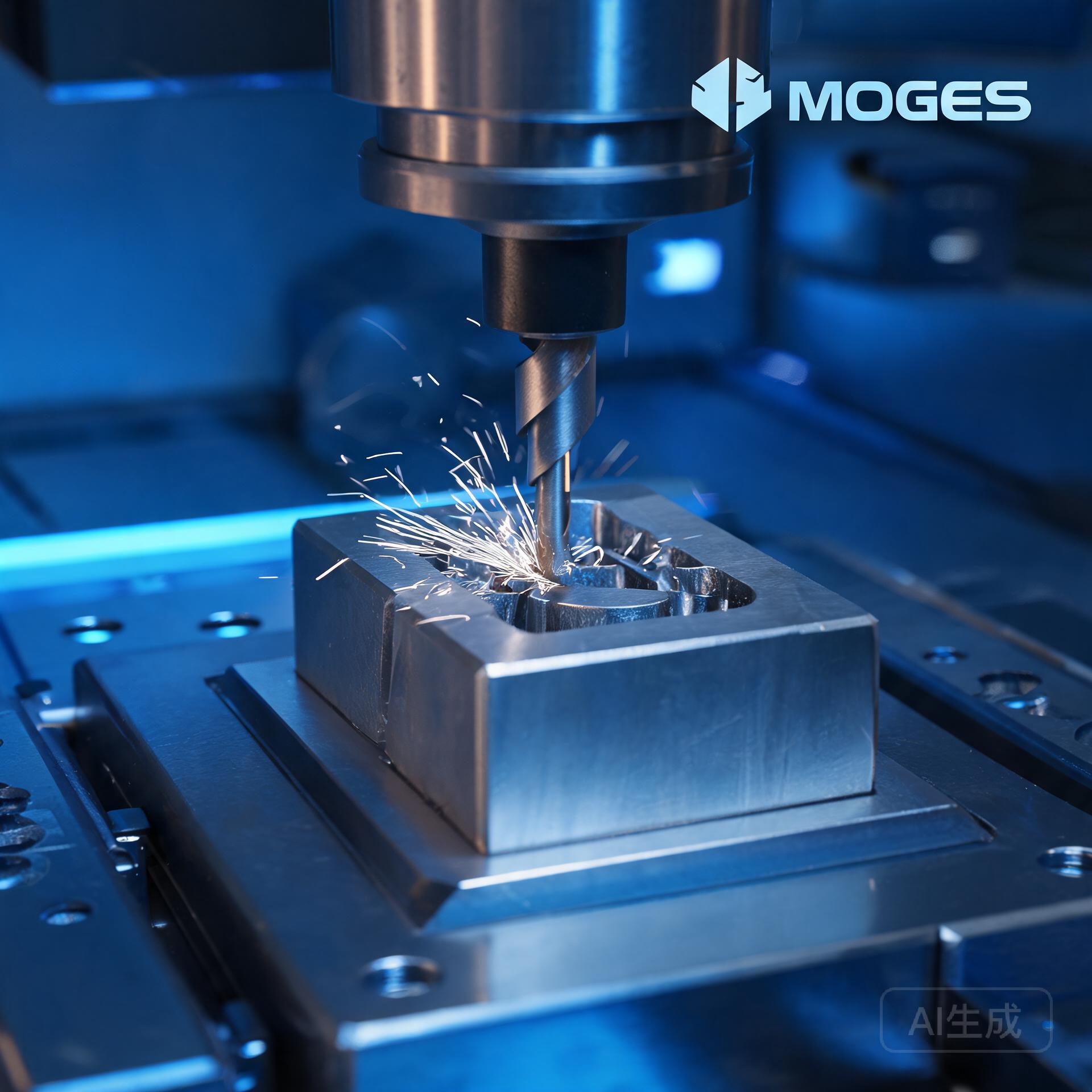
1. Overview of mold pricing trends for 2026 (Jiangsu Kunshan/Suzhou sample)
Let me start with a general overview. Kunshan is one of the regions in China with the highest concentration of mold factories. Injection molding, die casting, and stamping mold factories are clustered in areas such as Yushan Town, ZhouCity and town, and Huachiao Town. While there's intense price competition, profits are not as low as initially anticipated. This is because Jiangsu has a strong manufacturing base, and customers in SMT, automotive parts, and medical equipment sectors have high standards for mold quality compared to other regions.
| Workstep | Pricing Unit | Jiangsu Average Price | Kunshan/Suzhou region | Wuxi/Changzhou region |
|---|---|---|---|---|
| CNC mold milling | CNY/hour | 35 - 80 | 40 - 85 | 30 - 65 |
| EDM Discharge Processing | CNY/hour | 60 - 150 | 70 - 160 | 55 - 120 |
| Plasma Cutting | CNY/thousand square millimeters | 0.08 - 0.25 | 0.10 - 0.28 | 0.06 - 0.20 |
| Injection mold material costs (mold steel) | CNY/kg | 45 - 120 | 50 - 130 | 42 - 100 |
| Prototype cost (T0 prototype) | CNY/unit | 1500 - 5000 | 2000 - 6000 | 1200 - 4000 |
| Mold Design Fee | CNY/set | 3000 - 15000 | 3500 - 18000 | 2500 - 12000 |
The price differences primarily stem from three areas: firstly, the equipment itself. Japanese Shadik's EDM machines are 2~3 times faster than Taiwanese machines, resulting in a higher hourly price; secondly, the labor costs. Experienced EDM technicians in Kunshan earn a monthly salary of 1.2+ (plus), while the equivalent in Wuxi is only 8000; and thirdly, the quality guarantees. Offering a higher price may guarantee a single trial run with no rework, while offering a lower price often involves multiple trial runs (3~4 times), ultimately leading to a higher total cost for the customer.
II. How are mold quotes calculated? Why do different manufacturers use different algorithms?
The core formula for mold pricing is actually quite simple: Total Cost × Target Profit Margin = Quote. However, when you break down "Total Cost," there are several key factors to consider.
Material Costs: The price of mold steel fluctuates significantly. The differences in prices for common steel types such as P20, 718H, and S136 can range up to 3 times. Some manufacturers calculate material costs based on the weight specified in the drawings, while others calculate based on the actual weight of the cut material. The latter method often results in a 10% to 20% difference, due to the need to account for waste during cutting.
Manufacturing Costs: CNC, EDM, wire cutting, polishing, and assembly. The price per unit is calculated based on the number of hours for each process. However, how to estimate the hours is the core "black box" in pricing. Experienced estimators can estimate that EDM requires 40 hours based on a single drawing, while beginners may estimate 25 hours, resulting in a direct difference of several thousand dollars.
Cost Allocation: Factory rent, equipment depreciation, utilities, administrative salaries, and design costs must be allocated to each mold. Some factories allocate 20%, while others allocate 30%. Smaller factories simply do not allocate these costs, which makes their pricing appear attractive but results in very thin margins.
Contingency fund: Costs associated with rework due to failed prototypes, last-minute design changes from the customer, and the need for overtime to meet deadlines. These costs should be budgeted for, typically ranging from 5% to 15% of the total cost, depending on the customer's cooperation and the complexity of the mold.
Three. Why does the same mold cost 80,000 from one company and 120,000 from another? What's the difference?
I've spoken with over thirty mold factory owners in Kunshan, and the conclusion is consistent:A price difference isn't necessarily a sign of someone trying to cheat you; it's more likely that you haven't fully understood the other party's cost structure..Specifically, the differences lie in the following points:
Poor equipment efficiency: CNC machines purchased before 2018 have a machining accuracy of ±0.02mm, and mold cavities take 36 hours to machine. Five-axis linkage machines purchased in 2024 have a machining accuracy of ±0.005mm, and the same mold cavity can be completed in 18 hours. The quoted price for older machines at 60 yuan/hour may seem cheap, but the double increase in operating time results in the same actual machining cost.
Material procurement channels are inconsistent: large manufacturers purchase directly from Fushun Special Steel and Tian Gong International, costing 55 yuan/kg for P20 mold steel; small manufacturers purchase from local distributors, with a markup of 65 yuan/kg. The material cost for a set of medium-sized injection mold is 800 kg, resulting in a difference of 8,000 yuan.
Significant design cost difference: Some factories only create 2D drawings, relying on experienced technicians to make modifications on-site, resulting in a design fee of 3000 yuan. Others perform full 3D modeling, flow analysis, and automatically generate machining paths, resulting in a design fee of 8000 yuan, but reducing rework by 30% during the manufacturing stage.
Quality promises are inconsistent: For a factory quoting 80,000, the initial prototype (T0) is rejected, followed by revisions (T1, T2), and further revisions are required to reach T3, which is then considered acceptable. The customer bears the cost of production losses during the revision period. For a factory quoting 120,000, the contract states "T0 must have a ≥ 90% pass rate, otherwise no mold revision fees will be charged," which appears expensive, but the overall delivery cycle is shortened by 2-3 weeks.
4. Common pitfalls in mold pricing: 5 common mistakes that new pricing specialists often make
Mr. Zhang from a mold factory in Kunshan told me about a major pitfall he encountered ten years ago: a set of automotive component molds. He initially estimated the cost at 120,000, but the actual EDM machining time was 80 hours (only 45 hours were estimated initially), plus the customer made three changes to the drawings, resulting in a loss of 20,000.
Pit 1: EDM machining time estimation is underestimated: For deep cavities and narrow gaps, the EDM discharge speed is not uniform, and the final 0.02mm finishing operation may only take 1/5 of the time required for rough machining. Experienced estimators typically add a 30% buffer to their estimates, while new estimators simply calculate based on average speeds.
Pit 2: Neglecting polishing and surface treatment: The drawings only specify "Surface Ra 0.8" but do not detail the specific processes, such as standard polishing at 8 yuan per square meter, mirror polishing at 25 yuan, and PVD coating at 50 yuan. The quotation does not break down these costs, and ultimately, who is responsible for these price differences?
Pit 4: Managing Unallocated Costs: Costs such as rent, depreciation, and utilities, which are "fixed costs," are often not included in quotes by small manufacturers. However, these costs must be paid each month, and not including them results in a loss. The correct approach is to calculate the fixed cost per hour by dividing the total factory costs by the total monthly working hours, and then add this fixed cost to the processing price.
Pit 5: Urgent Orders Not Priced Higher: A customer said, "Can we expedite the delivery by a week?" The new employee immediately agreed without adding any extra charges. However, expediting the delivery by a week would mean disrupting the production schedule, requiring overtime, and consuming the capacity of other orders. The industry standard is to charge an additional 20% to 50% for urgent orders, depending on the urgency.
V. Rapid Mold Quotation Tool: Get detailed quotes in 5 minutes, say goodbye to guesswork.
Relying on manual calculations in Excel to generate mold quotes presents several challenges: it is slow, prone to errors, and heavily dependent on the experience of the quote estimator. The Moges mold rapid quote system addresses these issues. Simply import CAD drawings (DWG/DXF format), and the system automatically identifies the cavity area, EDM machining depth, CNC path length, and laser cutting length. It also includes a real-time mold steel price table for the Jiangsu region, standard working hour parameters, and a cost allocation template.Generate a complete quote in just 5 minutes.
| Comparison items | Traditional Excel-based quoting | Moges rapid quotation system for molds |
|---|---|---|
| Quotation time | 30 - 120 minutes | 3 - 8 minutes |
| Time estimation error | ±15% - 30% | ±5% - 10% |
| Price data update | Manual maintenance, quarterly updates | Real-time steel prices + Monthly labor hour calibration |
| Granularity | Material costs + processing costs | Includes material costs/costs for each operation/prototype/management/profit, with more than 15 detailed items. |
| Historical Quote Reuse | Copy using Excel templates | Automatic application of similar molds for the same type, with a similarity rate ≥ 80% |
| Connect with ERP/MES | Manual entry | One-click conversion from sales order to ERP |
Feedback from over 20 mold factories in Kunshan indicates that quoting efficiency has been reduced from an average of 2 hours to 10 minutes, and that the estimation error has decreased from ±25% to ±8%. The customer loss rate has also decreased by 15%. This is because they can provide detailed quotes faster, allowing them to be the first to offer professional quotes to competitors.
Even small factories don't need to worry. Start with a pilot program using 2~3 quotation specialists, and then expand once they are familiar with the system. The system supports three mainstream mold types: injection molding, stamping, and die casting. Different factories can adjust the time parameters and rate standards according to their specific manufacturing processes.
Conclusion
The process of providing mold quotes essentially involves a combination of cost calculation and experience-based judgment. While the experience of seasoned quote specialists can be valuable, the cost calculation aspect should be handled by software. By freeing up quote specialists from manual Excel-based calculations, we can enable them to dedicate more time to communicating with clients, optimizing pricing strategies, and ultimately, enhancing competitiveness.
In 2026, the mold industry is facing increasingly thin profit margins, with the challenges of both over-quoting and under-quoting, making it increasingly difficult to succeed using traditional methods. Try the Moges mold rapid quotation system, and turn "guessing" into "calculation."