MES or ERP for a Mold Factory? A 2026 Decision Guide for Mold Factory Selection
2026-09-30 08:06:36
When a mold factory upgrades its information systems, the two concepts MES and ERP always cause headaches. Some say ERP alone is enough; some insist MES is the real production necessity; still others simply buy both, spend the money, and end up with two systems whose data won't reconcile. What exactly is the relationship between MES and ERP, and how should a mold factory choose? This article explains the boundaries, the pain points, and the selection logic all in one pass.
I. What Do MES and ERP Actually Manage? Clear the Boundary First
ERP and MES are not a "one replaces the other" relationship; they manage different layers of the factory, with clear boundaries but some overlap. Get each one's management scope straight, and selection stops being confusing.
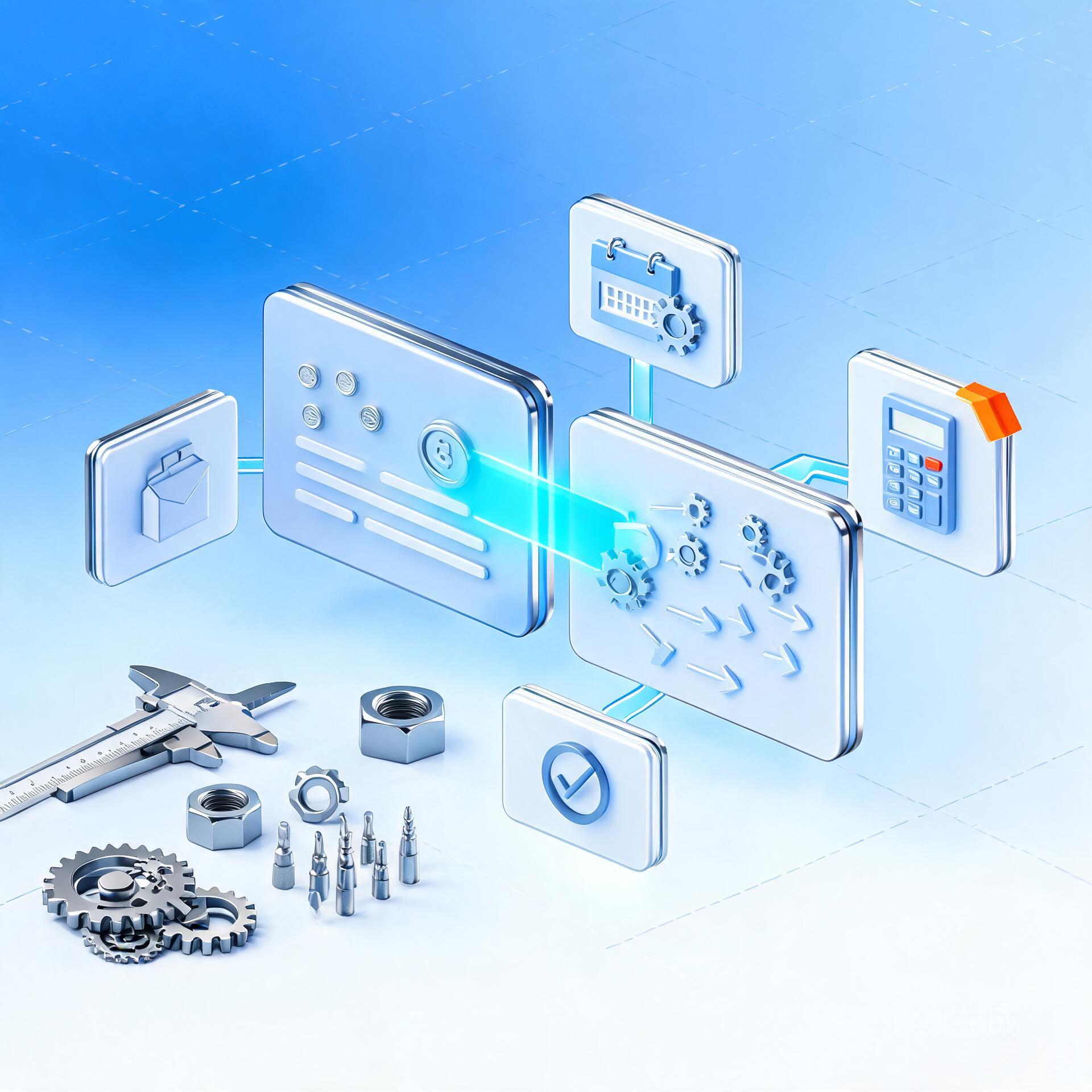
ERP (Enterprise Resource Planning) manages "the books": how much raw material was purchased, how much money was spent, how much finished-goods inventory remains, how much customers owe you. It chains purchasing, sales, inventory, and finance together and hands the owner one complete operating report. ERP's core is cash flow and business flow.
MES (Manufacturing Execution System) manages "the shop floor": which operation this work order has reached, who's doing it, how many labor hours were consumed, which machine is waiting in queue. It breaks orders into individual dispatch tickets and tracks every operation's progress and quality. MES's core is production rhythm and process control.
Here's a simple example. ERP receives a customer order for 100 sets of molds and breaks it into raw material purchasing, production scheduling, finished-goods warehousing, and shipping/invoicing. As for which CNC machine starts first on the floor, which day EDM is scheduled, which machinist handles mold mounting, and which operation failed spot inspection and needs rework — ERP can't manage these details; they all belong to MES.
II. Mold Factory Production Pain Points: Can MES or ERP Solve Them?
Before choosing, ask yourself: what hurts most right now? Factories at different stages have completely different pain points.
If your current problems are purchasing and inventory records that won't reconcile, inaccurate stock, or lost customer orders, that's business-flow chaos, and ERP can solve it. A lightweight ERP chains purchasing, sales, inventory, and finance together so you always know "how much material I have left, how much I owe customers, how much money is tied up in the warehouse."
If your problem is work orders piling up on the shop floor with no idea which is urgent, CNC and EDM waiting on each other, and reporting done entirely by WeChat voice messages, that's loss of control at the production-execution layer. ERP can't help; you need MES. MES breaks every work order down to operations, assigns them to people, and tracks progress, so the owner sitting in the office can see "which work order is stuck at the EDM operation, why it hasn't come out, and when it's expected to move to the next step."
Many mold factories have made this mistake: they deploy ERP first, assuming "everything's handled," yet the shop floor stays just as messy, and reporting data has to be manually entered into ERP — by the time it's entered, it's already the next day. Production data in ERP is permanently lagging; the owner always sees "yesterday's situation."
Others hit the trap in reverse: the shop-floor MES looks beautiful, but purchasing is still managed in Excel and finance is still manual bookkeeping — the MES can't issue materials against work orders, and when jobs finish, the inventory can't land in the financial system. Data gets hand-copied back and forth between the two systems.
III. Choose MES or ERP: A Five-Dimension Comparison
The table below helps you quickly compare and see which side you need more.
| Dimension | Generic ERP | Generic MES | Moges Mold Industry Solution |
|---|---|---|---|
| Core management object | Cash flow + business flow | Production rhythm + operation progress | Full mold work-order flow + business-finance integration |
| Shop floor control | Almost none; production is a black box | Strong; full coverage of operations/machines/people | Strong; mold-specific operations (cutting/CNC/EDM/polishing/assembly/trial molding) |
| Business-finance connection | Strong; natively links purchasing/inventory/finance | Weak; requires third-party ERP integration | Natively connected; work reporting auto-generates costs |
| Go-live timeline | 2~4 weeks (lightweight version) | 4~8 weeks | 3~6 weeks, industry templates ready-made |
| Mold industry fit | Nearly zero; generic production module | Generic MES understands mold operations only superficially | Designed for mold/machining, operation model built in |
| Per-user cost | 10,000~20,000 yuan/year | 20,000~50,000 yuan/year | Together, 30% cheaper than buying two systems separately |
Note the last row: if you truly need both MES and ERP capabilities, buying two generic systems separately means not only higher cost but also integration development — and even after integrating, data easily falls out of sync. Moges folds MES shop-floor execution and ERP business-finance capability into one system: work reporting automatically computes costs, decrements inventory, and posts to finance, so the data is consistent from the source.
IV. Selection Advice by Factory Size
There's no standard answer to selection, but there are rough decision boundaries.
Small workshops under 10 people: don't rush into a system yet. Excel + WeChat can hold on a while longer. But if any of the following appears, it's time to consider a lightweight version — work orders getting lost frequently, outsourcing reconciliation that won't balance, no visibility into what the shop floor does each day. At this point, choose a lightweight MES or reporting system (for example Moges PMS5); a few thousand yuan gets the shop-floor side under control first.
Mid-size factories of 20~50 people: this is the stage that demands the most careful selection. ERP and MES both become unmanageable — the shop is chaotic, purchasing is chaotic, and finance starts slipping too. We recommend MES first, then ERP, because the shop floor is a mold factory's core capacity; lock down production first, then extend business-finance capability on both ends. Moges PMS9 is designed exactly for this stage: MES core capability as the foundation, business-finance modules switched on as needed.
Scaled factories above 50 people: you basically need both, but don't buy them from two different vendors. The cost and risk of integrating data far exceed imagination — monthly reconciliation can eat days. An industry solution that natively connects MES + ERP saves far more trouble and money than buying separately.
One special case: factories where outsourcing exceeds 50%. Your own shop capacity is limited and you rely mainly on nearby machining partners. Here ERP actually carries more weight, because your core pain is uncontrollable progress and murky reconciliation after work goes out. When choosing ERP, focus on whether its outsourcing module can attach work orders and keep process traces.
V. The Moges Solution: Connecting MES and ERP Is the Right Answer
Moges doesn't advocate "either/or" — we advocate "connection." A mold factory's problem is never "missing a system" but "shop-floor data and business data don't match." Solving it requires MES and ERP to speak on the same work order.
A concrete example. A mold work order enters the Moges system:
Step 1: the ERP module automatically breaks down raw material requirements and triggers purchase requisitions.
Step 2: the MES module schedules production along the mold process route, dispatching operations to CNC, EDM, polishing, and other machines.
Step 3: as the shop floor completes each operation by reporting work, the system automatically accumulates labor hours and computes the current work order's cost.
Step 4: finished goods enter the warehouse, and the ERP module automatically updates inventory and generates accounts receivable.
Step 5: the owner opens the dashboard, and whether the work order made money from raw material to finished product is crystal clear.
Throughout the process, no data is entered twice, no reconciliation between two systems, none of the awkwardness of "MES says it's done but ERP still shows it open." Because MES and ERP live in the same database from the start, the work order is their shared backbone.
For small factories on tight budgets, Moges also offers a phased path: start with MES core (reporting + operation tracking), then open purchasing and inventory once it runs smoothly, and finance last. Every step's spend shows immediate results — no waiting half a year for implementation to finish before you know whether it works.
Closing Words
MES and ERP were never opposites. ERP manages the books, MES manages the shop floor; each covers its stretch. The key to a mold factory's selection isn't "which one to pick" but "whether they can be connected." Deploy ERP alone and the shop floor stays a black box; deploy MES alone and business-finance data still needs manual syncing. Finding one system where the two collaborate on the same work order is what makes digitalization real.
If your mold factory is selecting a system, start by listing your three most painful problems and check them one by one against the comparison table in this article. You can also contact Moges and have a consultant produce a tailored selection recommendation based on your shop size and process characteristics.