How to Choose a CNC Machine Remote Maintenance Management Platform: Functional Modules, Architecture Design and Real-World Cases
2026-10-03 12:42:44
1. What Is a CNC Machine Remote Maintenance Management Platform?
A CNC machine remote maintenance management platform, put simply, is a digital system that lets equipment vendors or a factory's internal maintenance team manage shop-floor machines without leaving their desks. Relying on OPC UA, MTConnect or vendor-proprietary protocols, it aggregates real-time data from CNC machines distributed across the country or even overseas into a cloud or local data center. Maintenance engineers open a browser and can see key indicators for each machine such as running status, tool life, spindle temperature and vibration waveforms.
The concept has been widespread in Europe and America for five or six years, but in China's mold industry it only started to take hold rapidly in the last three years. The reason is very practical: previously, from the time a CNC machine left the factory until it was scrapped, all maintenance depended on the on-site technician's experience and phone photos. When a machine failed, you first had to wait for the customer to describe the symptoms (usually unclearly), then send an engineer flying over (fine in the Yangtze River Delta, but round trips to western or overseas customers take three or four days), and once on site still spend half a day troubleshooting to locate the root cause. The time and manpower wasted across this whole chain can add up to more than a year's maintenance contract fee for the machine itself.
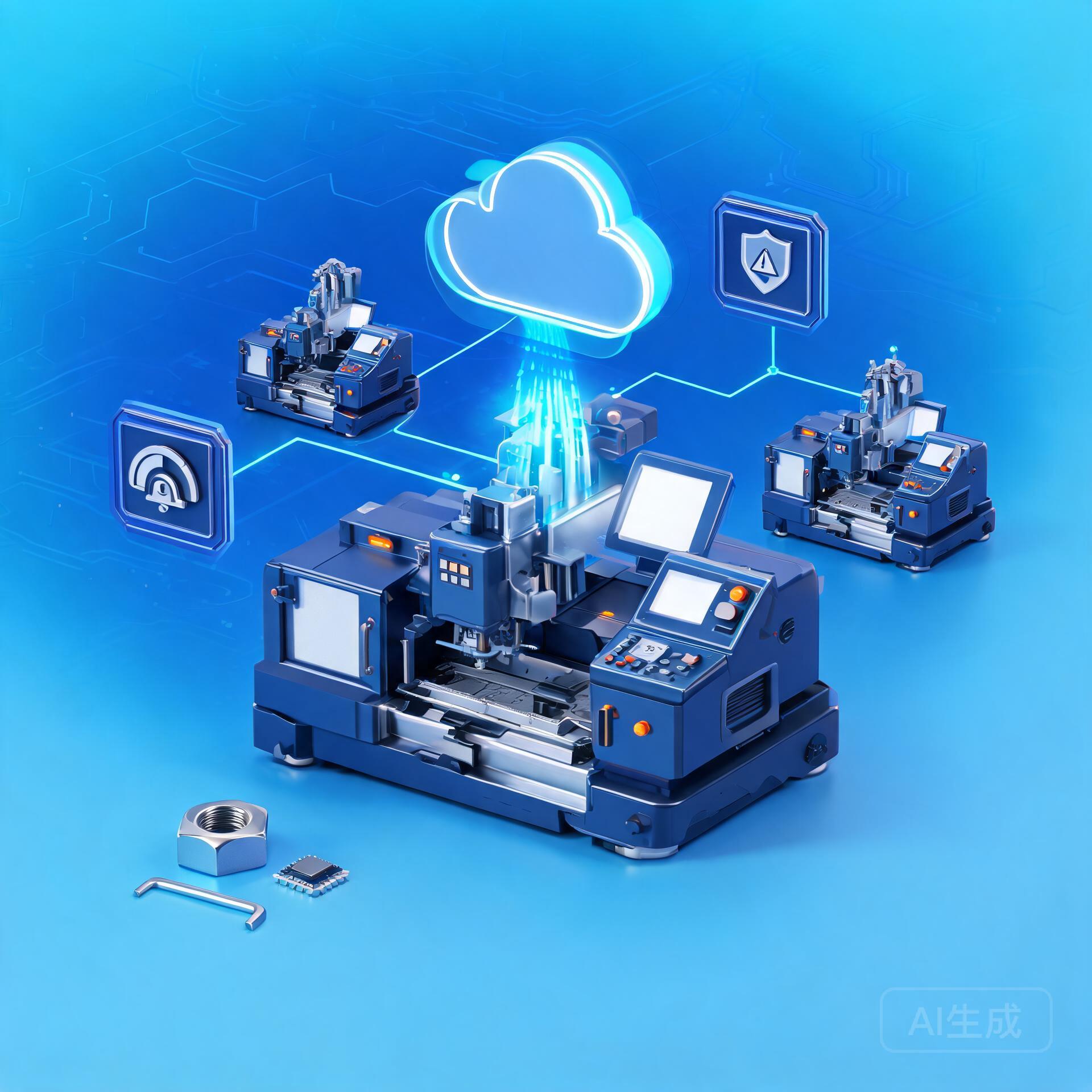
The remote maintenance platform solves exactly this pain point. The system can push warnings before a failure occurs, automatically collect and upload a failure snapshot when a failure occurs, and let vendor engineers securely access the machine controller remotely via VPN from their own location, view PLC programs and even issue parameter correction commands. All operations have audit logs and comply with industrial safety standards.
2. The Platform's Core Functional Modules
A mature remote maintenance management platform usually contains the following six core modules.
The first is equipment asset management. The system automatically collects static and dynamic information for each machine, such as model, date of manufacture, cumulative power-on hours and cumulative parts machined, so the maintenance team no longer has to maintain Excel ledgers by hand. When a machine reaches its maintenance cycle, the system automatically generates a work order and pushes it to the PDA.
The second is real-time status monitoring. This is the most basic and most frequently used function of the platform: whether each machine is "running", "idling" or "stopped on alarm" is displayed visually on a shop-floor map or list view. Clicking a machine expands detailed parameters such as spindle speed, feed rate, coolant level and remaining tool life.
The third is fault warning and diagnosis. The platform has built-in algorithmic models for common failure modes, such as a continuous rise in spindle bearing temperature, an abnormally fast tool wear rate and a servo following error exceeding the threshold. Once a warning is triggered, the system automatically suggests possible troubleshooting directions and pushes records of similar past faults to the maintenance engineer for reference.
The fourth is remote access and assistance. This is the most technically demanding part. Through a secure VPN tunnel, a vendor's senior engineer can remotely access the customer's machine controller interface (with customer authorization), view real-time logs and even temporarily adjust parameters. Many vendors now use this function to replace more than 70% of on-site trips - especially for simple parameter corrections and program debugging.
The fifth is the maintenance knowledge base. After each fault is handled, the system automatically archives the symptom, root cause, handling steps and replaced parts into a knowledge entry. The next time a similar fault occurs, the system prioritizes historical records, and new engineers can also quickly learn from the experience of veterans.
The sixth is data analysis and reporting. The platform regularly generates overall equipment effectiveness (OEE) analysis, fault frequency distribution and trend charts of MTBF (mean time between failures) and MTTR (mean time to repair). These data help management make more scientific purchasing decisions and maintenance budget plans.
3. Technical Architecture: From Edge to Cloud
The technical architecture of a remote maintenance management platform usually has three layers: the device edge layer, the factory aggregation layer and the cloud service layer. The device edge layer is deployed in an industrial gateway near each machine or embedded directly inside the CNC system, and is responsible for collecting raw data and doing preliminary preprocessing. For example, it converts a vibration signal sampled 50 times per second into an RMS value and calculates the temperature rise rate from a 10-minute time series of spindle temperature. Although the edge layer has limited computing power, it can greatly reduce the volume of data uploaded - from possibly several hundred KB per second to a few KB per second.
The factory aggregation layer is deployed on an edge server or small data center inside the factory and is responsible for aggregating data from dozens or even hundreds of machines across the plant and storing it in a local time-series database. This layer is also the key node for security isolation: all external data transmission originates here, preventing outside parties from directly accessing the machine controllers. The aggregation layer also provides a local web access interface, so the factory's internal maintenance team can see the data without going online.
The cloud service layer is usually provided by the platform vendor and runs on Alibaba Cloud, Huawei Cloud or a self-built data center. It stores global data across factories, runs the trained AI warning models, and also hosts the VPN relay servers for remote assistance. For group mold enterprises with multiple factories, the cloud layer is the foundation of unified management: the technical director at headquarters can see the health of equipment in all factories across the country on a single panel.
4. Current Adoption in China's Mold Industry
Judging from the 2024 data, acceptance of remote maintenance platforms in China's mold industry is accelerating. The table below compares penetration rates and usage scenarios across factories of different sizes.
| Factory size | Remote maintenance penetration | Main usage scenarios | Typical platform choices |
|---|---|---|---|
| Large mold group (100 or more machines) | About 65% | Group-wide unified scheduling, vendor remote support, AI predictive maintenance | Siemens MindSphere, Haier COSMOPlat, in-house platforms |
| Medium-sized mold shop (30-100 machines) | About 30% | Remote assistance from equipment vendors, warnings for key machines, OEE statistics | Cloud services bundled by equipment vendors, Moges MES extension |
| Small mold workshop ( | Remote connection to a single machine from the vendor, occasional remote diagnosis | No platform adopted, relies on the vendor's ad-hoc remote support |
The data reveals a clear gap: large groups are already pursuing data-driven refined management, while small workshops are still at the "call when it breaks" stage. Medium-sized factories are the incremental market with the most potential: they have a certain equipment scale and the need to cut maintenance costs, but do not want to invest in the high cost of a large platform. For such customers, the remote maintenance module built into the Moges mold industry management system is a highly cost-effective choice: no additional platform purchase is needed, and simply activating a module on the existing MES delivers machine status monitoring and basic warning functions.
5. Five Key Points to Watch During Selection
The first key point is protocol compatibility. CNC machines from different brands use different protocols: Siemens 840D uses OPC UA, FANUC has FOCAS, Mitsubishi uses the MC protocol, and domestic systems may use Modbus or vendor-proprietary protocols. Before selecting, make sure the platform can cover all brand equipment in your shop; otherwise you will face the awkward situation where half the machines connect and half do not.
The second key point is the security architecture. Remote maintenance means the machine controller exposes a communication channel to the outside, and the security of this channel directly affects shop-floor production safety. A good platform should provide bidirectional VPN authentication, operation audit logs, fine-grained permission control (who can view what, who can operate what remotely) and data transmission encryption (TLS 1.3 or above). Do not choose a solution that achieves remote connection through nothing more than simple port forwarding.
The third key point is on-premises deployment vs SaaS. Large factories with high data security requirements and an existing IT team are advised to deploy on premises so that no data leaves the plant. For small and medium-sized factories, the SaaS model is easier: the platform vendor handles operations and upgrades, and the factory pays monthly. Each model has its pros and cons; the key is the factory's own conditions and data sensitivity.
The fourth key point is the depth of AI capability. Many platforms on the market advertise AI warnings, but actual capabilities vary widely. A good AI model needs historical fault data from the equipment for training, and its prediction accuracy should have a quantitative metric (for example, accuracy of warnings 72 hours in advance of 85% or more). If a platform only has simple threshold alarms, it is essentially not much different from a traditional monitoring system.
The fifth key point is the implementation cycle and follow-up service. If a good platform takes more than half a year to implement, it is too long for a factory: the market changes fast and competition does not wait. The ideal implementation cycle is to bring core functions online in 2-4 weeks and then expand gradually. On follow-up service, the platform vendor should have a dedicated customer success team that regularly follows up on usage, helps optimize warning rules and organizes user training.
6. A Real-World Case at a Mold Enterprise
A large mold group in Ningbo has six factories and about 280 CNC machines. Before it introduced the remote maintenance management platform in 2024, the group's maintenance team had 42 people, 15 of whom were constantly traveling between factories. The average annual maintenance cost per machine was about RMB 180,000, while the indirect losses caused by failures (order delays, overtime production) were 2-3 times the maintenance cost.
The changes after introducing the platform were quite significant. The number of traveling engineers fell from 15 to 4, and the remaining 11 moved into remote technical support or trainer roles. The average unplanned downtime of equipment dropped substantially, and MTBF rose from 420 hours to 615 hours. The most critical change is maintenance response speed: previously a new machine fault took an average of 8 hours from being reported to locating the root cause; now engineers can see the fault snapshot and real-time data at headquarters, and the average time to locate it has been shortened to within 1.5 hours.
The group's equipment director said: "The platform itself is not a panacea, but it lets us put our best resources where they matter most. Previously a new engineer had to follow a veteran for three years before being able to work independently; now the knowledge base has captured the veterans' experience, so newcomers get up to speed much faster. And the data lets us, for the first time, precisely calculate the maintenance input and output of each machine - that was unimaginable before."
Overall, the CNC machine remote maintenance management platform has already gone from an "optional item" to a "necessity for improving competitiveness". While your competitors are driving maintenance costs down year after year and OEE up year after year with data, staying with experience-based management will only widen the gap. Choosing the right platform and implementation path and rolling it out gradually from a small pilot is a safe route to digital upgrading.