Intelligent management system to reduce equipment damage: Practical solutions for mold factories, saving tens of thousands of dollars per year.
2026-10-05 08:38:05
What is the most expensive thing in a mold workshop? Many owners' first reaction is CNC machines and EDM (Electrical Discharge Machining) machines, which can cost tens of thousands of dollars each. However, the real pain comes not from the initial purchase price of the equipment, but from the money that starts to drain out when it suddenly breaks down.
A three-axis machining center that was in operation, with the main spindle making a strange noise, was sent for repair. Upon disassembly, it was discovered that the bearings were burnt. The cost of replacing the parts and labor alone could be between 20,000 and 30,000, but does the five-day downtime justify this cost? Currently, the delayed delivery of orders has resulted in financial penalties, and the production schedule has been completely disrupted. The subsequent batches of work also need to be postponed, and the customer is calling repeatedly from early morning to late at night. This chain reaction represents the true cost of equipment failure, which most small and medium-sized mold factories have never accurately calculated.
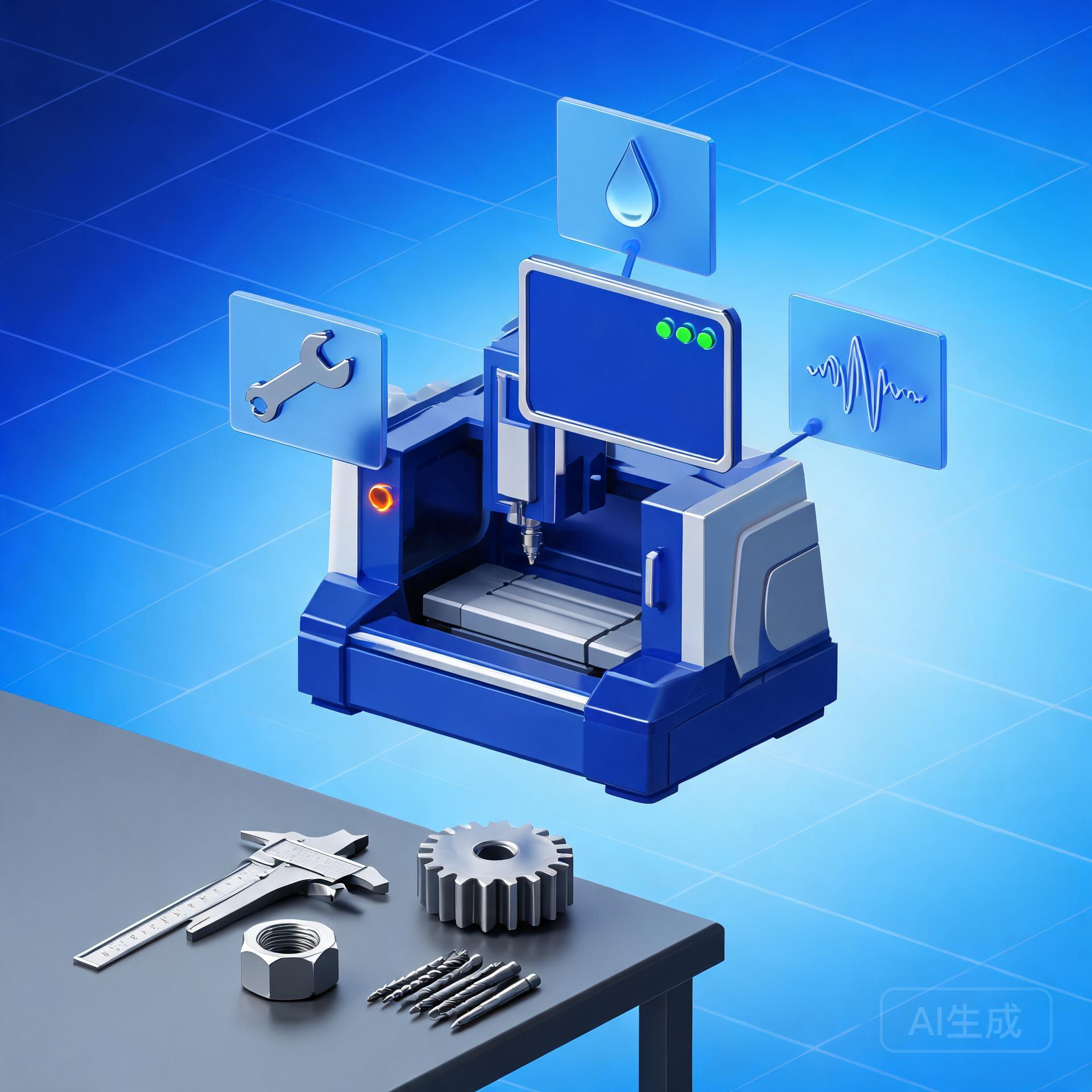
A more common scenario is that equipment doesn't suddenly fail; instead, it operates with "sub-optimal performance" every day. The spindle temperature is two degrees higher than normal, but this is not recorded; the cutting tools are worn beyond the threshold, but they are still used; the hydraulic oil contains more metal particles, and the oil level remains below the minimum line – these signals are not observed or monitored. When the equipment finally breaks down, the resulting damage is more than ten times the cost of routine maintenance.
I. The Three Major Hidden Causes of Equipment Damage
Let's do the math. Assuming there are ten CNC machines in the workshop, with an average of eight unplanned shutdowns per machine per year, each lasting 20 hours, this results in a 1600-hour production shortfall. This shortfall won't simply disappear; it will either be covered by overtime, outsourced, or by losing orders. All of these options represent costs.
Downtime capacity loss: Assuming a CNC machine produces 150 yuan per hour, 20 hours would result in 3000 yuan per run. Eight runs per year would equate to 24,000 yuan per machine, and ten machines would total 240,000 yuan. This calculation only considers direct production value and does not account for indirect losses caused by processes being stalled.
Repair Overrun Costs: Do you have spare parts on hand in case of breakdown? When will the repair technician arrive? If it's imported equipment, waiting for parts from overseas is common, which can lead to a week or two of downtime. Order delays and customer cancellations result in losses that are difficult to quantify with a single number, but these could represent up to 5% to 10% of annual revenue.
Quality chain losses: Parts produced with malfunctioning equipment have reduced precision, leading to increased assembly clearances and shortened lifespan. If a critical mold part fails, the entire batch of products may be scrapped, or early failures may occur after going online, ultimately leading to customer losses. These hidden costs are difficult to attribute to "equipment management" during year-end reviews, but their proportion is much higher than most people imagine.
II. Why the traditional "fix it when it breaks" approach leads to increasing losses.
In many workshops, the status of equipment management is essentially "no one manages it." Operators only operate the equipment, and maintenance is entirely based on the experience of senior technicians. Equipment is only brought up for repair when it actually stops working, which is a reactive approach. While this "firefighting" approach may seem to save on daily hassles, the cost of each repair is significantly higher than the initial investment in preventative maintenance.
| Comparison items | Traditional after-sales maintenance | Smart Preventative Maintenance Management |
|---|---|---|
| Methods for detecting faults | It was only when the equipment stopped that we realized... | Automatic parameter anomaly warning |
| Average downtime duration | 15-25 hours | 2-4 hours |
| Repair cost per cycle | 2000-8000 Yuan | 500-1500 Yuan |
| Number of unplanned shutdowns per year | 6-10 times/unit | 1-3 times/unit |
| Maintenance execution rate | Less than 30% (primarily relies on self-discipline) | More than 98% (automatic job assignment) |
| Data Traceability | Record manually, but not searchable. | Complete lifecycle tracking, with one-click access. |
The data above is based on the actual operating data of 47 mold factories that Moges has served in the past two years. On average, after implementing an intelligent management system, the annual total cost per machine can be effectively reduced to. This is a tangible result – not just theoretical, but actual savings from repair budgets and loss expenses.
Three. Five Core Strategies to Reduce Equipment Damage
Ultimately, reducing equipment damage is not a mysterious process. Its underlying logic is to capture signals before failure occurs and intervene promptly before losses escalate. To achieve this, five key actions must be implemented.
First, establish a baseline for real-time equipment operating data. The normal operating ranges for parameters such as spindle temperature, vibration levels, and current fluctuations for each piece of equipment are fixed. By establishing these baselines, any deviations can trigger alerts. Many factories are unable to even articulate what the normal parameters for their own equipment are, making management discussions essentially meaningless.
Second, enforce a tiered maintenance plan. This includes: daily inspections (performed by operators each time the machine is started), weekly maintenance (checking oil levels, cleaning, and lubrication), monthly maintenance (precision checks and replacement of wear-and-tear parts), and annual major overhauls. These four levels of maintenance must be strictly separated and cannot be mixed together. The system must automatically remind, automatically assign tasks, and automatically record completion status. Any tasks that are skipped must be traceable back to the responsible person.
Third, establish models for predicting the remaining lifespan of critical components. Components such as cutting tools, bearings, lead screws, and guide rails, which are prone to wear and tear, have relatively clear usage lifespan curves. By using cumulative processing counts, processing times, and load data, the system can accurately estimate the remaining lifespan, allowing for proactive replacement before failure occurs. Replacing bearings can cost $3,000, while a worn bearing can cost $30,000.
Fourth, knowledge base accumulation and reuse for failures. After each equipment failure, the repair personnel should record what diagnoses they performed, what parts they replaced, and how long it took. This information should not be discarded after the repair is complete. By documenting the entire failure resolution process, similar problems can be addressed directly by retrieving the historical solution, and new technicians can quickly get up to speed.
Fifth, operator behavior constraints. According to statistics, 30% to 40% of equipment failures are due to improper operation. Issues such as not performing preheating before starting, not checking torque when changing tools, and exceeding the specified range for machining parameters are ineffective if simply posted on the wall. The system must be able to intercept these issues through comparison of process parameters, and automatically trigger alarms or shut down in the event of abnormal operations.
IV. How to Implement These Five Strategies with an Intelligent Management System
Understanding the five strategies mentioned above.Furthermore, after experiencing an intelligent management system, you will no longer perceive it as a "frivolous IT project." Its core function is to automate tasks that humans often perform poorly, allowing programs to monitor, record, and even proactively guide these processes.
The data acquisition layer is fundamental. The Moges equipment management module utilizes industrial gateways to connect with CNC machines, PLCs, and sensors, collecting data such as temperature, vibration, current, and oil pressure every minute and storing it in the database. The acquisition cost is very low; mainstream gateway devices typically range from a few thousand to over 10,000, and a single gateway can support four to six devices, resulting in a low cost per device.
The early warning engine is the core. The system automatically establishes personalized operating baselines for each device based on its historical data. A yellow warning is triggered when the temperature exceeds the baseline by 15%, and a red warning is triggered when the temperature exceeds the baseline by 25% or when the vibration value changes abruptly, notifying the device supervisor and maintenance personnel. Warning messages can be delivered through multiple channels, including WeChat, SMS, and system notifications, ensuring that no warnings are missed.
Automatic maintenance scheduling is a highly effective feature. Many factories saw a significant improvement in maintenance execution rates after implementing the system. Specifically, maintenance execution rates increased from 40% to over 95% within the first three months – this is due to the fact that previously, maintenance plans were written in Excel and rarely used. Now, the system automatically sends maintenance tasks to the relevant operator's mobile phone the day before the maintenance is due. Once completed, the operator scans a code to mark the task as finished. If a task is not completed on time, it is automatically escalated to the team leader. This feature is essential.
Fault handling records are archived as a knowledge base. After each repair, the technician enters the fault symptoms, root cause analysis, solution, parts replacement list, and recommended preventive maintenance in the system. After accumulating data for six months, when a similar fault occurs again, the technician can easily find the complete handling process from the past, resulting in at least a doubling of efficiency.
5. Three common pitfalls to avoid when selecting a system
There are many software options available on the market for managing equipment, ranging from lightweight versions costing a few tens of thousands of yuan to full-process MES solutions costing tens of thousands of yuan. Mold factories often fall into three common pitfalls when selecting a solution.
Pit 1: Overambitious, aiming for complete coverage and failing to implement effectively. Some factories immediately try to implement a full-fledged MES, including warehouse management and financial accounting, all at once. This results in an implementation cycle that stretches to six months or even a year, leading to resistance from workshops and ultimately, an idle system. For mold factories, focus on implementing the core functions first: data collection, alerts, maintenance records, and repair records, before considering expanding to other modules.
Pit 2: Over-reliance on hardware, neglecting software logic. Some vendors sell hardware gateways, but the software side only provides a simple large-screen display after data collection, without a warning engine, automatic job assignment, or a knowledge base. You are buying a "data display," not a "management system." When selecting, focus on what the software side can help you do in terms of decision-making, rather than the aesthetics of the interface.
Pit 3: Ignoring data integration with existing systems. Factories that are already using ERP or production scheduling systems will face problems if the new equipment management system cannot integrate with these systems. This will result in manual synchronization of equipment failure and downtime information, leading back to the old problem of "two-layer" data management. When selecting a system, it is crucial to verify the vendor's interface capabilities, at a minimum, the system should be able to automatically trigger production adjustments when equipment downtime events occur.
Conclusion
The real challenge isn't acquiring a system; it's transforming the reactive "fix it after it breaks" mindset into a proactive "preventative maintenance" management habit. This transformation requires data support, tool enforcement, and sustained leadership drive. When Moges implemented the equipment management module for mold factories, they found that the first three months were the most critical adaptation period. Operators needed to get used to receiving and managing maintenance tasks via their mobile phones, and repair technicians needed to get used to recording fault processes within the system. However, once this phase is overcome, data begins to accumulate, and the system starts to help reduce repair costs and minimize downtime. This mechanism will then operate in a positive feedback loop.
One of our clients calculated the return on investment for us: they lost 680,000 in 2024 due to unplanned downtime, and reduced this loss to 210,000 in 2025 after implementing our intelligent management system. This alone saved them 470,000. And they only spent less than 120,000 on the system and hardware. This is a clear demonstration of the return on investment.