Inventory Flow Traceability System: A Full-Chain Material Traceability Solution for Non-Standard Automation Factories
2026-10-05 10:05:04
Once a non-standard automation project reaches volume-production freeze, material turnover ramps up quickly. From supplier incoming, shop picking, inter-process flow, to finished-goods stock-in — any error affects downstream production scheduling and cost accounting. The traditional approach relies on Excel spreadsheets or the finance department's inventory module, but both share one common weakness — flow records stay at the "number level", with no visibility into which work order, which machine, and which operator each batch of material corresponds to.
The inventory flow traceability system was born to solve exactly this pain. It stamps every inventory movement with a complete traceability tag, letting managers answer three questions at any time: where this batch of material came from, where it went, and which stage it is stuck at now. In machining and non-standard automation, this capability directly determines the efficiency of quality traceability and the precision of cost control.
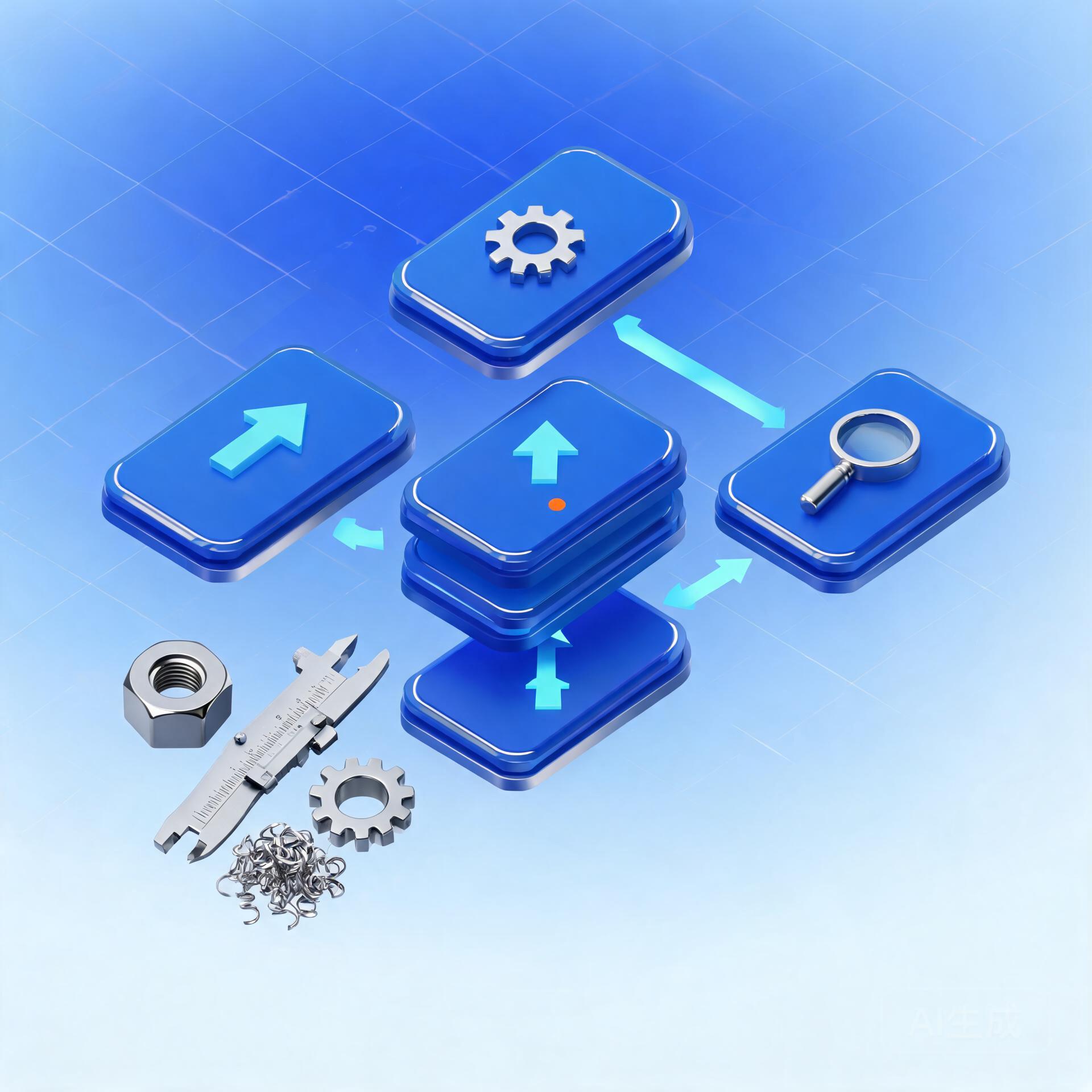
1. Why Non-Standard Automation Factories Need Dedicated Flow Traceability
Non-standard automation differs from standard-part batch production. Each project uses part models that vary widely, in many batches, from mixed supplier sources. A batch of precision gears just received may need CNC roughing, EDM finishing, and surface treatment before it can be mounted on the final device; the same batch of bolts may be picked by three different projects. If the traceability chain breaks, when quality problems occur nobody knows whether to blame a supplier or an internal shop link.
Consider the common machining scenario: the shop runs five work orders simultaneously, each split into a dozen-plus processes. Tools, blanks, and standard parts circulate mixed together; picking registration is by handwriting or scanner gun entry, and month-end stocktaking regularly finds records mismatching reality. For finance to compute a project's accurate material cost, data must be pieced from five or six Excel spreadsheets — time-consuming, laborious, and error-prone.
One table shows the difference between the traditional approach and a traceability system:
| Comparison dimension | Traditional Excel / inventory software | Inventory flow traceability system |
|---|---|---|
| Recording granularity | Aggregated by material category | Precise records by batch + work order number + process number |
| Traceability direction | Only forward-looking "how much is left" | Bidirectional: source → usage → destination |
| Data linkage | Inventory numbers severed from production work orders | Every flow entry linked directly to BOM and production scheduling |
| Anomaly response | Discrepancies found only at month-end stocktaking | Real-time warnings; errors located the same day |
| Cost accounting | Finance allocates manually at month end | Accurate costs auto-aggregated per project |
A traceability system essentially issues every in-stock item a barcoded "ID card", and the card records its whole life story — who delivered it, when it was stocked in, which work order it was allocated to, and at which process it was picked.
2. The Core Function Modules of a Flow Traceability System
A decent traceability system must cover at least the following function points.
Stock-in registration and batch binding. When material arrives, the system automatically generates a unique batch number, recording the supplier, arrival time, inspection results, and purchase order number. For standard parts or repeatedly purchased general materials, it can link historical batches directly for easy comparison. Done well at this stage, all subsequent traceability has its foundation.
Work order binding at picking. When workers pick material, it is no longer a simple "take and sign" — the system pops up the work order's BOM list and checks whether picked quantities match. Over-picking triggers a second confirmation; under-picking prompts that process scheduling may be affected. Picking records write directly into that work order's cost aggregation account.
Inter-process flow tracking. As material moves between shop stations, the system records current location, dwell duration, and handler in real time. If a batch dwells at a station beyond the preset time, the system issues an automatic stagnation warning — critical in non-standard automation shops with tight scheduling.
Anomaly tracing and problem retrospection. When a project develops a quality problem, the manager enters a work order number or material batch number and pulls up the complete traceability chain with one click: which supplier this material came from, which projects and processes it went into, who handled it, and which other projects used the same batch in the same period. Combined with the quality module's inspection data, the root cause can be located within minutes at the fastest.
3. The Practical Value of Moges PMS9 Inventory Flow Traceability
A Kunshan customer making semiconductor automation equipment used to spend three full days on month-end stocktaking before adopting Moges PMS9 last year, and always had hundreds of thousands of records mismatching reality. The core cause: three shops sharing one warehouse, picking registered on paper slips, and month-end Excel entry often missing or mistyping records.
After adopting the traceability system, every rack got a QR code; when workers picked by scanning, the system auto-matched the work order BOM and intercepted quantity mismatches on the spot. Month-end stocktaking became scan-and-verify, done in one day. More importantly, this spring a batch of precision bearings showed early wear — the traceability system locked onto three other devices using the same batch within five minutes, proactively contacting customers for preventive replacement and avoiding a bigger quality incident.
The customer's cost aggregation efficiency also improved considerably. Previously finance allocated material costs to projects by hour ratio, with errors often above 15%. Now every flow entry binds directly to the work order number — the exported cost report is the project's true material consumption, and Q1 project profit margin calculation error fell from 12% to 1.8%.
4. Three Details Easily Overlooked in Selection
Many factories choosing a traceability system get led astray by "feature count" — in fact several details matter more than feature lists.
First, linkage capability with production scheduling. If the traceability system only records inventory numbers without linking scheduling plans, it is just an advanced inventory ledger — not traceability. In Moges PMS9, inventory flows and the scheduling dashboard sync bidirectionally — BOM usage updates automatically after schedule changes, and over-picking triggers scheduling warnings in return.
Second, hardware adaptation for barcodes/RFID. Shop environments are complex — oil, cutting fluid, and high temperature can all interfere with device signals. When selecting, confirm the system is compatible with your existing scanners and RFID tags, and preferably supports mobile App scanning as a fallback, preventing a hardware failure from stalling the whole shop.
Third, flexibility of data export. Finance often needs to export flow details for specific periods and projects for analysis, and HR needs material loss rates for performance calculation. A system that can only display but not export leaves the traceability chain, however complete, as merely an "electronic ledger".
5. Landing Advice for Moving from Excel to a Traceability System
Many factories worry the adoption pain period is too long. It can actually be done in three steps.
Step one: supplier batch tracking — without changing the existing picking flow, just enter batch numbers and supplier info at stock-in. This step costs the least and goes live within a week; when problems occur, supplier-side causes can already be located.
Step two: bring work order picking into traceability. Equip each station with scanning devices and bind work order numbers at picking. This step requires training workers to scan, but runs smoothly in about two weeks. At this stage, finance gains accurate project material costs.
Step three: inter-process flow tracking. This has the highest hardware requirements but is also the most valuable step. Recommend piloting in one workshop first, then rolling out factory-wide after it runs through.
For the non-standard automation and machining industries, inventory flow traceability is not icing on the cake — it is quality management infrastructure. As projects multiply and material turnover accelerates, without a clear traceability chain every batch of material is a small bomb waiting for an unknown moment to explode.