Mold Project Collaboration Platform: Design, Production, and Outsourcing Working on One Shared Board
2026-10-06 22:27:44
Mold manufacturing's project execution chain is long and involves many roles. From customer requirement confirmation through scheme review, structural design, process planning, parts machining, assembly and commissioning, to trial acceptance — the cycle takes weeks to months. Any unsynchronized link affects both delivery and cost.
The current reality of many mold factories: design uses one drawing management tool, the shop schedules via Excel, outsourcing progress is chased on WeChat, and answering customers' delivery inquiries relies entirely on sales phoning around. Project information is scattered across different tools, and nobody can fully answer "where exactly is this mold stuck".
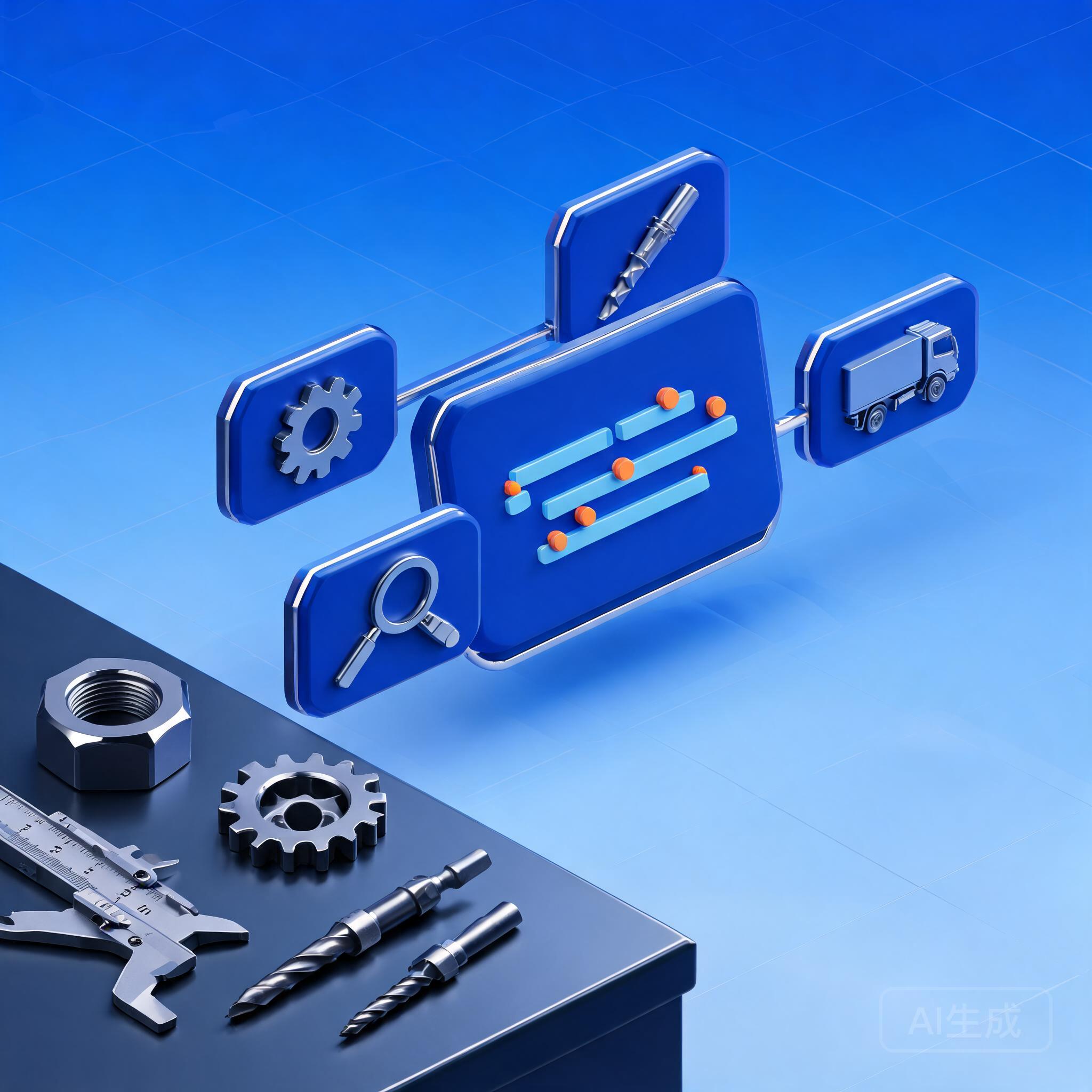
This is precisely the core problem a mold project collaboration platform solves. It is not a standalone scheduling tool, nor a pure document management system — it puts the people, tasks, and things of the whole project flow onto one unified platform, letting every role collaborate on the same information source.
1. What Does a Mold Project Collaboration Platform Actually Manage
Mold projects typically go through six stages: initiation, design, machining, assembly, trial, delivery. Each stage has clear inputs and outputs, plus many cross-departmental handoffs. The collaboration platform's value is making these handoffs independent of verbal notices and gut judgment.
An example. After design completes the 3D drawings, the traditional flow requires manually messaging the process engineer, who then splits the BOM and writes the process routes from the drawings. If the drawings change, all downstream people must be notified one by one. In this process, one person missing a message lets the error amplify through subsequent processes.
The collaboration platform institutionalizes these actions. Once drawings are uploaded, the system automatically triggers the process-planning task, visible in the process engineer's to-do list. Any drawing version change pops a reminder on the related roles' interfaces, with change content logged and queryable. Everyone on the chain sees the same latest version.
2. Why Mold Factories Need Collaboration, Not Silos
A mold project's participating roles include at least: project manager, structural design, process design, production supervisor, machining team leader, procurement specialist, outsourcing coordinator, quality inspection, and sales liaison. A moderately sized project often involves more than ten people.
Silo problems may not show on small projects. But when a mold factory runs five or more customer projects simultaneously, the cost of information chaos amplifies sharply. Typical symptoms:
- The 2D drawings and 3D model versions of the same mold do not match, and machined parts do not fit
- Procurement does not know which parts have arrived and which are en route — shortages discovered only at assembly
- Nobody watches outsourced machining progress; the two-week delay surfaces only when the customer presses for delivery
- After a failed trial, design and production blame each other — root-cause tracing is difficult
The collaboration platform's core logic is "making project status visible". Every node's completion time, responsible person, and deliverables are recorded in the system. The project manager opens the dashboard and sees each project's stage, overdue tasks, and risk points.
3. What Core Modules Should a Collaboration Platform Have
Mold factories of different sizes emphasize collaboration needs differently, but the following five modules are universally applicable.
3.1 Project Dashboard and Gantt Chart
This is the collaboration platform's entrance. All in-execution mold projects display as cards on the dashboard, each showing the current stage, completion progress, and key node dates. The Gantt view stretches the project's time span, showing each process's planned start/finish and actual completion as bars.
The project manager's most-asked questions — "how many trials this week", "which mold's assembly is delayed", "is next month's capacity enough for new orders" — are answered directly on the dashboard, with no manual Excel aggregation.
3.2 BOM and Process Route Collaboration
The BOM (bill of materials) is the mold project's skeleton. A mid-size injection mold's BOM usually contains one to two hundred parts, each linked to process routes, machining equipment, and estimated hours. If this information sits scattered across design drawings, process cards, and Excel, maintenance cost is high.
The collaboration platform connects BOM, process routes, and machining plans. When design updates one part's dimensions, the process route syncs to the latest version automatically, and the machining group sees correct parameters at dispatch. When a part's machining completes, the system updates that part's status in the BOM automatically, and the project manager sees the whole mold's material completion rate at a glance.
3.3 Outsourcing Machining Progress Tracking
Many mold factories cannot do every process in-house — heat treatment, surface treatment, and some precision machining usually go to specialist vendors. Outsourcing is the most easily out-of-control link in collaboration, because the outsourcing vendor is not inside your shop, and posting someone to watch is unrealistic.
The collaboration platform offers two responses. One: the outsourcing vendor logs into a dedicated portal and uploads machining progress photos and completion status on the platform. Two: the factory's outsourcing coordinator periodically enters key nodes via mobile. Either way, progress data syncs to the project dashboard in real time — no more digging through chat records.
3.4 Drawing and Document Version Management
Mold projects generate a huge volume of documents — 3D models, 2D engineering drawings, technical agreements, customer change orders, trial reports... If these merely live in a shared folder, version chaos is almost guaranteed.
The collaboration platform's document module supports online preview, version comparison, and change approval. When any document uploads a new version, the system automatically notifies related personnel, and old versions are preserved as history rather than overwritten. In disputes, you can trace who, when, and what was changed.
3.5 Mobile Reporting and On-Site Data Collection
Collaboration cannot happen only in the office. The shop's machining team leaders and on-site assembly workers know actual progress best. Making everyone open a computer to enter data is unrealistic — mobile reporting is a necessity.
Workers scan a code on their phones to report process completion and upload machining photos. Quality inspectors enter trial data and dimension measurement results directly on mobile. These data enter the collaboration platform instantly — project managers and customer liaisons do not wait for the daily meeting to learn what happened that day.
4. Mold Project Collaboration Platform vs. Generic Project Management Tools
Generic project management tools abound — Trello, Asana, Jira, Feishu Projects... They can also do dashboards and task assignment. Why should mold factories use a dedicated collaboration platform?
The fundamental difference is industry knowledge. Generic tools make you build flows and define fields yourself — a mold factory must design its entire project management framework from a blank sheet. A professional mold collaboration platform has the mold industry's standard logic built in — BOM structures, process route nodes, trial acceptance flows — usable out of the box.
| Comparison dimension | Generic project management tools | Mold industry collaboration platform |
|---|---|---|
| BOM management | Self-defined, no hierarchy linkage | Material hierarchy built in, auto-linked with processes |
| Process routes | Manually created task lists | Process nodes auto-generated from mold process templates |
| Drawing versions | File attachment uploads, no industry validation | DWG/STEP preview supported; changes auto-trigger downstream |
| Outsourcing tracking | Relies on task comment threads | Outsourcing portal + mobile photo reporting |
| Hour costs | Requires extra finance system integration | Reporting data auto-aggregates to project costs |
| Launch cycle | 2-4 weeks, self-configured | Within 1 week, template-based import |
A concrete example. A mold factory managing projects with generic tools had to design its own "BOM list" spreadsheets, create its own "machining completed" statuses, and write its own rules for auto-advancing to the next node. This configuration work not only took time but needed dedicated ongoing maintenance. After switching to a mold-industry collaboration platform, these logics are built in — import the customer order and the flow starts running.
5. How to Judge Whether a Mold Factory Should Adopt a Collaboration Platform
No universal standard exists, but the following signals are worth watching:
Project count first. If more than 5 mold projects are running simultaneously, information sync difficulty rises markedly. Within 5, a project manager's personal ability can still cope; above 10, systems become mandatory.
Cross-departmental collaboration frequency. Are there frequent drawing changes between design and production? Do process and procurement often run short on materials over BOM version mismatches? These are the most direct pain sources for a collaboration platform.
Outsourcing ratio. When outsourced machining exceeds 30% of total processes, progress-tracking blind spots become the largest delivery risk.
Customer transparency demands. Some customers require periodic progress reports, or even on-site confirmation of key nodes. A collaboration platform exports standardized project status reports directly — no manual assembly.
6. Common Misconceptions in Launching a Collaboration Platform
The first misconception is "one step to perfection". Trying to move all projects, all roles, and all flows onto the new platform within a month usually means people have not adapted while the old system is already off — more chaos. The right way: pick one or two flagship projects to pilot, run the flow through, then roll out gradually.
The second misconception is "tools solve everything". Systems manage flows but not people's attitudes. After launch, establish a daily data-entry checking mechanism — e.g., verify the day's reporting data before end of shift and review project node completion weekly. A platform nobody uses with no data equals no platform.
The third misconception is "copying other factories' flows". Both mold factories, yes — but precision injection molds and stamping dies have very different project flows, and a large factory's multi-department approval chains do not fit small factories. A good collaboration platform should support adjusting flow templates per your actual business, not forcing you into its defaults.
7. Conclusion
The mold project collaboration platform is not a fashionable concept — it is the necessary path for the mold industry from "relying on experience" to "relying on data". It solves not one small specific problem, but the structural ones: unsynchronized information, unclear responsibilities, and difficult tracing across the project execution chain.
When choosing a platform, first inventory which link is your factory's core pain — is outsourcing unmanageable, is design-production handover slow, or does the customer demand transparent reports? Go to a solution with concrete problems in hand, and you will more easily pick the right tool than by following concepts.