Simple Production Management Software for Small and Mid-Sized Factories: 2026 Lightweight Production Management System Selection Guide
2026-10-11 21:31:01
I. Do Small and Mid-Sized Factories Really Need Production Management Software
A CNC shop of some 20 people, the owner juggling four or five Excel sheets for scheduling, the shop supervisor shouting instructions to machines over a walkie-talkie, and a month-end reconciliation revealing a loss rate 8 percentage points above peers - scenes like this are far too common in the mold and machining factories of the Yangtze River Delta.
Many owners think their factory is small and can make do. But "simple" does not mean "making do". What actually stalls small factories at their bottleneck is rarely poor equipment - it is information flow that has never been straightened out: work order status chased by people, tool life judged by feel, outsourced parts confirmed by phone calls. In a single day, just checking progress, patching data and coordinating rush orders can eat three or four hours of the production supervisor's time.
The core purpose of adopting software is not glamour - it is structuring and visualizing production data at the lowest possible cost. Get three things right - no re-scheduling from scratch, no duplicate job reporting, no missed defective parts - and per-capita output rises 15% or more.
II. Simple Production Management Software vs Traditional ERP: What Exactly Is the Difference
The ERP market is crowded, but most products are designed for large manufacturers of 100+ people. The more modules stacked on, the deeper the pit for small and mid-sized enterprises. The table below lays out the core differences between the two approaches:
| Dimension | Simple production management software (Moges as an example) | Traditional ERP |
|---|---|---|
| Core modules | Work order management + scheduling + PDA job reporting + basic quality inspection | Finance + purchasing + inventory + production + CRM, full chain |
| Deployment cycle | Live in 1-2 weeks | 3-6 months or longer |
| Implementation cost | RMB 50,000-150,000 buy-out or SaaS annual fee | From RMB 300,000, implementation extra |
| Onboarding barrier | Shop supervisor learns it in 2 hours | Needs dedicated IT liaison, all-staff training |
| Fit scale | Shops of 10-80 people | Multi-plant operations above 100 people |
| Ongoing maintenance | Vendor remote support, no extra fee | Annual maintenance at 15-20% of license |
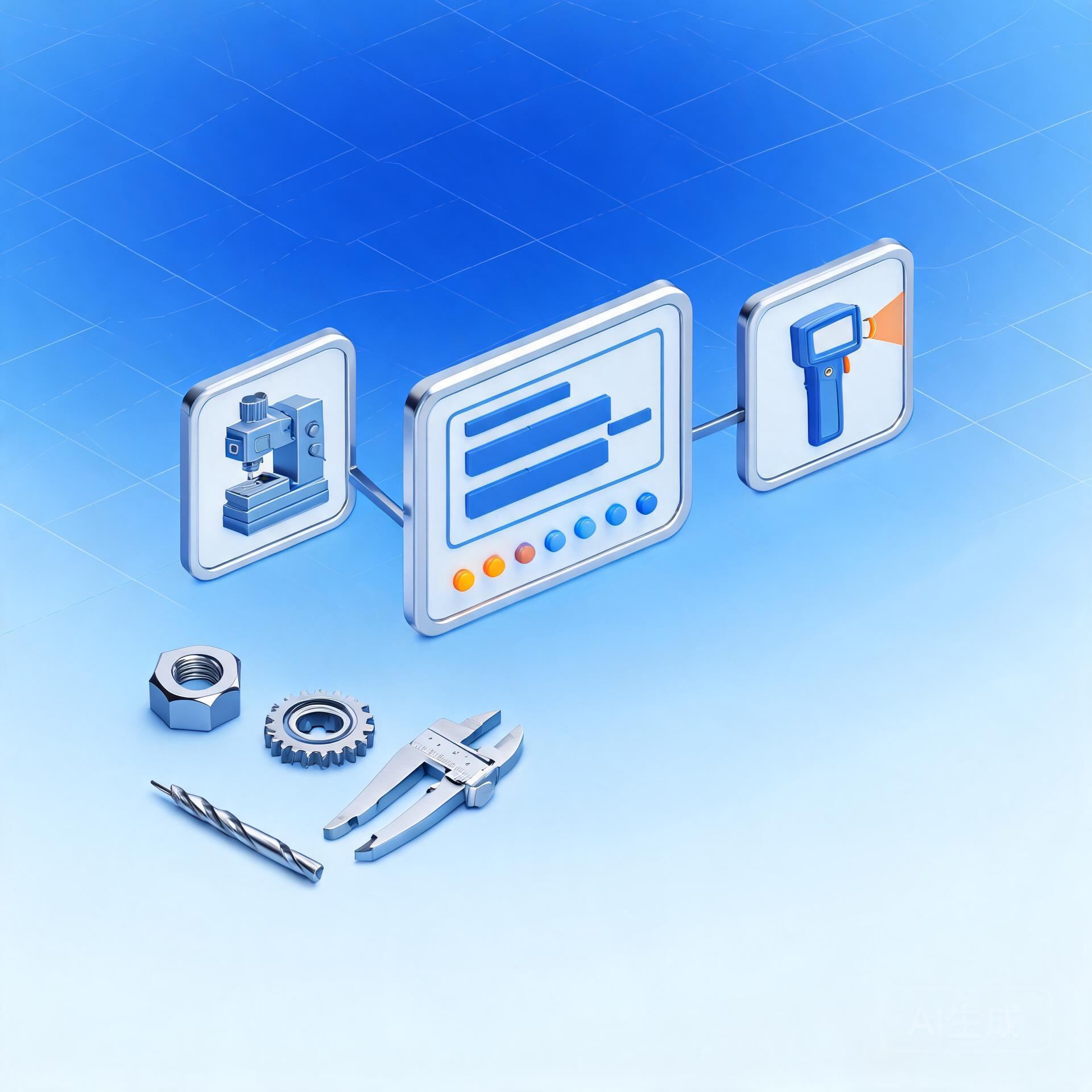
Simple does not mean crude. Take Moges's lightweight MES: it cuts the modules small factories never use - general ledger, HR attendance - and concentrates computing power on three things: work order flow, machine status and job data collection. Boot it up and you see every machine's real-time status; work orders hang on a Gantt chart in plain view; drag a rush order and it reschedules automatically.
III. The Core Feature List of a Simple Solution (Must-Haves for Small Factories)
Work Order Management: Making "Verbal Orders" Disappear
The most common source of chaos in small factories is verbal or WeChat ordering, with traceability dependent on chat screenshots. A qualified simple system must close the loop in-system: from customer order entry, BOM expansion and operation splitting through dispatch, job reporting and completion warehousing, with status trackable end to end. Every work order carries a unique number; tap in and see exactly which step it has reached, where it is stuck, and how many work hours remain.
Scheduling: Goodbye to "Rescheduling Three Times a Day"
Machining shops suffer from frequent rush inserts: the CNC section is scheduled in the morning, and an urgent customer order in the afternoon scrambles everything. A simple scheduling module's value: drag the work order bar on the Gantt chart to reschedule, while the system automatically checks machine loads and remaining tool life, so you do not schedule yourself into an overload.
PDA Job Reporting: Frontline Workers Finish It Themselves by Scanning
If job reporting still depends on team leaders filling Excel after hours, the data will always lag. A simple solution uses a PDA or smartphone: scan the work order barcode, pick the operation, enter completed quantity, photograph and upload defects - the whole flow takes under 30 seconds. Workers need not switch systems, and the system needs no dedicated administrator.
Basic Quality Inspection: No SPC Yet, but Defect Rates Under Control
Small factories need not adopt SPC (statistical process control) right away, but at minimum every job report should record pass/defect quantities together. Exporting Excel at month-end shows which machine has the highest defect rate and which operation drives the most rework - enough for the owner's management decisions.
IV. How to Judge Whether a Simple Solution Is Trustworthy
Move 1: See Whether They Can Demo a Real Business Scenario
Ignore sales pitches - ask the vendor to demo the full flow with one of your factory's real work orders. Walk through order taking, scheduling, dispatch, reporting and warehousing, and you will know whether the system chokes. If you hear "this feature would need customization", be careful - a simple solution's whole point is out-of-the-box usability; heavy customization needs mean its underlying architecture does not fit small and mid-sized business.
Move 2: See How Many Excel Habits Go-Live Would Change
Some software claims to be simple yet demands scrapping all your existing Excel templates and entering piles of base data before it can run. A trustworthy solution lets you "run first, optimize later": import your current Excel-format material list first, and in week one allow Excel and the system to run in parallel while the frontline adapts gradually.
Move 3: Check the Vendor's "Service Response Speed"
Small factories have no dedicated IT - problems mean phoning the vendor. Ask clearly: how long until someone responds after the call connects? Remote assistance or on-site only? Is anyone on duty on holidays? Moges assigns each customer a dedicated support group: responses within 15 minutes during business hours, common issues resolved within 2 hours.
V. Three Real Cases: What Changed After Adopting Simple Software
Case 1: A 25-Person CNC Precision Machining Shop in Suzhou
Before: scheduling ran on a hand-tuned Excel Gantt chart, and each rush insert cost the shop supervisor at least 2 hours. In the second half of 2025 the shop adopted Moges's lightweight MES; scheduling time compressed to within 15 minutes and on-time order completion rose significantly. The most visible change: the owner no longer chases the supervisor daily for progress - he opens his phone and sees every machine's real-time status.
Case 2: An 18-Person Hardware Stamping Factory in Dongguan
Before, job reporting relied on team leaders filling Excel after hours, with frequent omissions and errors. After go-live, workers report jobs by scanning work order barcodes on smartphones, data syncs in real time, and month-end settlement efficiency improved significantly. More crucial, defect data finally became structured: before, all they knew was "1,200 pieces scrapped this month"; now they can pinpoint "8 consecutive defective parts from stamping machine No. 3 last Thursday morning" - and after the die was changed, that problem never appeared again.
Case 3: A 40-Person Injection Molding Factory in Ningbo
The biggest headache used to be outsourcing management: how many parts went out, how many came back, whose shipment was late - all tracked in notebooks. After go-live, outsourcing orders are managed separately: scan to send, scan to receive, automatic overdue alerts. The owner said this one item alone saved about RMB 80,000 in "lost outsourced goods" losses last year.
VI. Closing: Do Not Wait Until "The Factory Gets Big"
Many small factory owners carry a misconception: adopt a system only after reaching 50 people or monthly output over RMB 10,000,000. In reality, the 20-50 person range is precisely the golden window for simple production management software. Business complexity has not yet exploded, resistance to process change is lowest, and a few tens of thousands of RMB gets production data flowing; as the factory grows, the system keeps up by adding a few modules - no need to start over.
Moges's suggested evaluation approach: list the 3 production pain points that hurt most right now (chaotic scheduling? slow reporting? high defect rates?), then take those 3 pain points to software vendors. Whoever can present a plan covering all 3 scenarios within 1 week is worth a deep conversation. Do not reach for everything - solve the sharpest pain first, and let the rest come gradually.