Multi-Person Collaborative Shop-Floor Systems: How Mold Factories Keep the CNC-to-EDM Relay on Track
2026-10-12 08:38:36
I. Why Mold Shops Need Multi-Person Collaborative Production Systems
Mold shop production is inherently a "multi-person relay". A mold travels from raw blank through CNC rough milling, semi-finish milling and finish milling, then EDM, wire EDM, polishing, assembly and mold trials - at least 5-8 operations, each with a different person in charge. If the flow is a relay race, the moment one runner hands off to the next is where the whole collaboration chain is most likely to break.
Under traditional shop management, that baton is passed "from person to person". Craftsman A finishes rough milling and either shouts "done" or drops the work order card in a box beside his station, waiting for craftsman B to come pick it up. Sometimes B is busy with another mold, hears nothing, sees nothing, and half a day is lost before he notices. Worse, if a mid-process problem requires rework, the feedback chain grows even longer - craftsman B finds a dimension out of tolerance, tells the team leader, the team leader phones the process engineer, the process engineer goes to confirm the plan with the customer. Each round takes from half an hour to several hours, and the whole line waits.
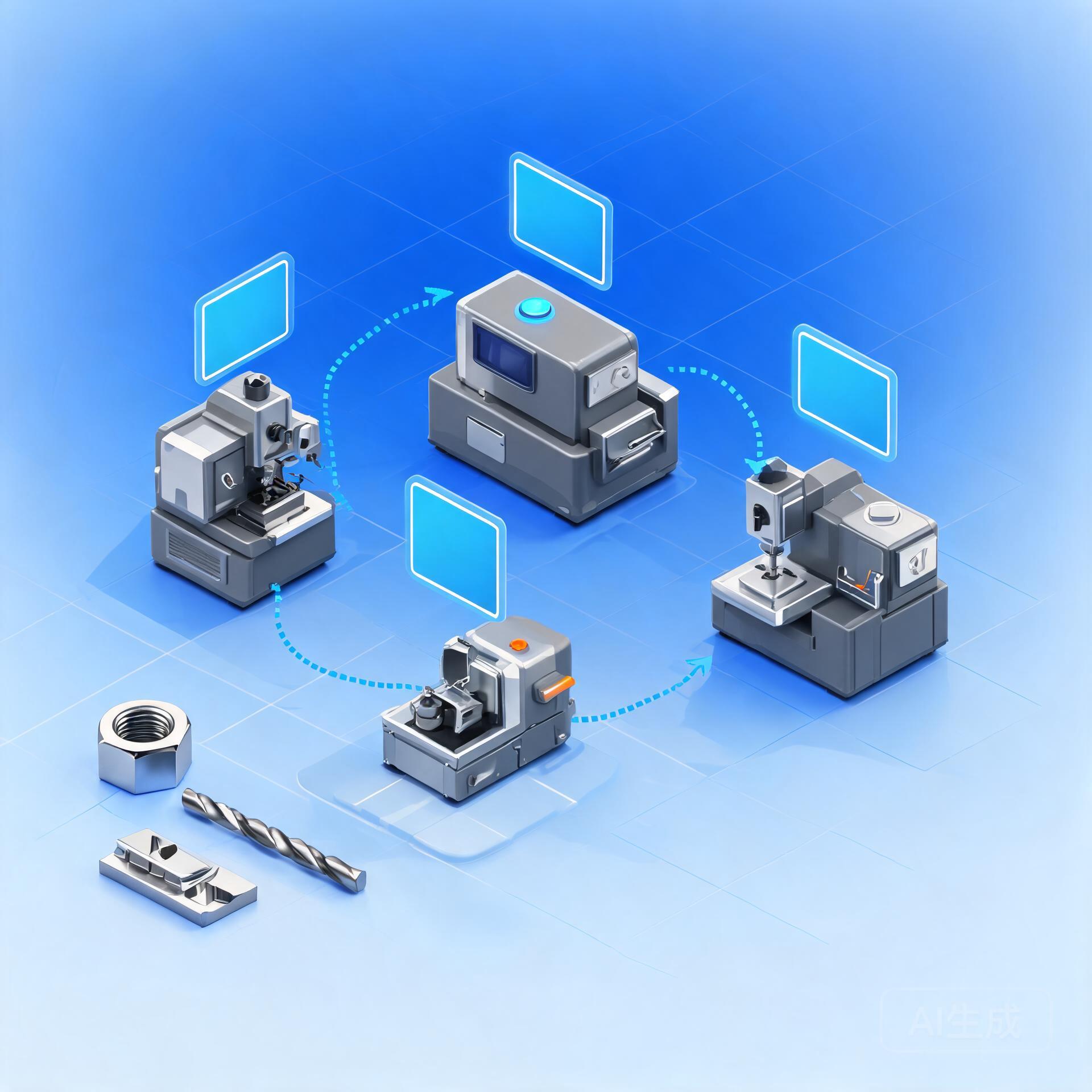
A multi-person collaborative production system essentially replaces the "person-to-person" baton with a digital "real-time relay". In the system, every work order follows a mold's complete life cycle - from the moment of scheduling, its status, which operation it is currently paused at, who takes the next handoff, and how many work hours each step actually took are transparent to everyone involved in the shop. The CNC craftsman sees at his station "which mold is next to machine and in what time slot"; the team leader sees on his phone "which molds are behind plan today and by how much"; the process engineer sees from the office "a mold in the EDM section needs parameter adjustment".
This transparency delivers two direct effects. First, "waiting" time drops sharply - shops used to waste 20-odd percent of work hours on "waiting for the previous operation to finish, waiting for the next one to collect"; with a collaboration system running, that figure usually falls below 5%. Second, "anomaly response" speeds up - a problem in one operation used to take half an hour to reach decision-makers; now the moment an anomaly tag is applied, everyone responsible for that mold gets a push notification simultaneously, and whoever can handle it takes it first.
II. Four Core Scenarios of Multi-Person Collaboration
Collaboration is not an abstract concept - in a mold shop's daily operations it means four concrete, recurring scenarios. Get these four running smoothly and the whole system's value shows.
Scenario 1: Real-time confirmation of dispatch and handoff. After PMC schedules the week in the backend, the system pushes work orders to the phones of the craftsman responsible for each operation. At start of shift, every craftsman sees which molds he has today and in which time slots. More crucial is the handoff itself: the moment the previous operation's craftsman taps "report complete", the system immediately pushes a notification to the next operation's craftsman and lights a yellow lamp on the station board. One tap on "received" flips the mold's status from "pending machining" to "in machining" - the whole exchange takes under 10 seconds, with zero transmission lag.
Scenario 2: End-to-end visibility of operation flow. To know where a mold stands as it traverses all operations, you used to walk every section and ask. In a collaboration system every work order has a live progress bar - current operation, previous operation's completion time, next operation's planned start time, all crystal clear. If an operation finishes early, the system automatically updates the projected start times of downstream operations and notifies the relevant people, who can prepare ahead. If an operation slips, the system flags it red and pings both team leader and PMC simultaneously, allowing immediate rescheduling or extra hands.
Scenario 3: Multi-party collaboration on anomalies. The most common shop anomalies are four: dimensions out of tolerance needing rework, tool wear needing replacement, process parameters needing adjustment, and customers requesting design changes mid-job. The old chain was long; the collaboration system compresses it into "one-tap initiation": the craftsman who spots the problem takes a photo on his phone, selects the anomaly type, describes the issue - and the system instantly pushes this anomaly ticket to the mold's process engineer, team leader and customer contact. All three see the photo and description simultaneously on their phones; the process engineer proposes the technical solution, the customer contact communicates the customer's view, the team leader coordinates the floor - all online, no side meetings, no paper notes.
Scenario 4: Multiple people on one operation. Some operations need several people - assembly and mold trials of large molds often take two or three craftsmen together; and CNC finish machining and polishing may need to "advance in parallel" - while craftsman A finish-machines one mold, craftsman B starts polishing prep for the next. The collaboration system supports linking multiple people to one work order, each logging their own portion of hours and content, while the team leader sees everyone's actual contribution and collaboration progress - avoiding the imbalance where some are worked to death and others sit idle.
III. Collaboration Needs Compared Across Shop Sizes
Collaboration depth should not be one-size-fits-all. A 15-person shop and an 80-person one have entirely different needs. The table below puts four typical shop sizes side by side to help you locate the right tier quickly during selection.
| Shop size | Typical staffing | Core collaboration pain point | Recommended collaboration depth | Typical investment |
|---|---|---|---|---|
| 10-20 person small shop | Owner doubling as PMC, 2-3 CNC machines, one person many roles | Nobody knows who is doing what when the owner leaves the shop; verbal reporting easily missed | Basic: work order dispatch + reporting sync + anomaly reporting | RMB 30,000-80,000 / year SaaS |
| 20-40 person mid-sized shop | Dedicated team leaders, 4-8 CNC machines, EDM/wire EDM section emerging | Operation handoffs jam; rework traceability hard; rush orders disrupt the whole schedule | Standard: end-to-end operation flow + multi-person collaboration + Gantt rescheduling | RMB 150,000-400,000 buy-out |
| 40-80 person large shop | 2-3 team leaders, 8-15 machines, dedicated trial area | Multi-team collaboration out of control; critical-operation bottlenecks frequent; utilization stuck | Professional: capacity load analysis + multi-team collaboration + automatic scheduling suggestions | RMB 400,000-800,000 buy-out |
| 80+ person enterprise-scale shop | Multi-site, multi-workshop, independent PMC department, ERP in place | Inconsistent data across sites; gap between ERP and shop MES; management blind to real-time shop data | Full-process: MES + collaboration + ERP integration + BI boards | RMB 800,000-1,500,000 buy-out |
One important reminder: many mold factories think "collaboration" means "everyone sees the same sheet". But a collaboration system that truly works must answer this: "when something needs your handoff, can the system find you automatically and push the information to you?" Merely putting the Gantt chart on phones for people to check is no different from pinning it on the shop wall. A good collaboration system pushes proactively rather than waiting to be queried - the system knows who needs what before people do.
IV. Four Key Nodes for Landing a Collaboration System
Buying the right system is only the first step - landing it depends on four key nodes. Many factories pay for software and then, because this step goes badly, end up with another "decoration sitting in a computer".
Node 1: Get the "minimum loop" running before talking about full rollout. Do not pull every operation and every team in at once. The right approach: pick the single most painful scenario - say, the handoff between the CNC section and the EDM section - and let only those two sections' craftsmen run the collaboration system for 2 weeks. Then decide whether to extend. Benefits: frontline craftsmen get an adjustment period and do not resist "yet another new thing"; and you find and fix problems in a small scope without disrupting the whole shop's normal production.
Node 2: Team leaders are the key "anchor bolts" of implementation. For whether a collaboration system works well, team leaders have more say than the owner. Team leaders know the shop's realities best - who is skilled, who is fast, which operations tend to fail - information the system cannot read but they carry in their heads. Involve team leaders in configuring and tuning the system rather than having them passively "accept a ready-made system", and success rates rise enormously. Among Moges's customers, those who had team leaders join the on-site research and test new features from day one almost all got the core flow running within a month; of those where "the owner decided and everyone was told to learn it", about one third eventually fizzled out.
Node 3: Anomaly handling must be linked into the system. After many collaboration systems go live, people mainly use them for reporting and progress, while "anomalies still go out over WeChat" - snap a photo, post it to the group, @someone and wait. That means the scenario that most needs collaboration is exactly where the system is not used. The good practice: before go-live, sort out the shop's 5-6 most common anomaly types and build their "standard handling paths" into the system - who receives, who approves, who follows up, all pre-configured. Then people feel not "yet another new process" but "what I used to do over WeChat is easier in the system".
Node 4: Review data weekly instead of holding a meeting. The most valuable thing about a collaboration system is not that everyone sees progress in real time - it is the data it accumulates: average work hours per operation, utilization per machine, total cycle from blank to finished mold, which teams chronically slip, which anomaly types recur. This data is a gold mine for optimizing production. Yet after adopting systems, many factories still hold a weekly "progress report meeting" where team leaders read Excel numbers aloud - numbers the system could already generate as a BI board automatically. In the 2-3 months after landing, replace the weekly person-to-person reporting with "look at the BI board, find anomalies, decide improvement actions" - you will find the collaboration system's value far exceeds your original expectations.
V. Customer Practice with the Moges Collaboration System
A precision mold factory of 30-plus people in Kunshan makes precision injection molds mainly for automotive and new-energy customers. At the end of 2024 they adopted Moges's multi-person collaborative production system. In the first 2 weeks, the shop's 4 CNC craftsmen and 2 EDM craftsmen were still unaccustomed, occasionally still "shouting" instead of taking handoffs in the system. But after 3 weeks the habit fully formed - now everyone opens their phone each morning to check the day's work order assignments, and the first thing they do after finishing an operation is tap "complete" in the system, then wait for the next operation's craftsman to take the handoff there.
After 3 months they ran a comparison: a mold used to average 18 days from blank to trial, now down to 15; monthly delays from untimely operation handoffs used to be 8-10 times, now down to 1-2. What delighted the owner most: he used to spend at least 1 hour a day phoning team leaders for progress - now that time is 5 minutes looking at the BI board.
The factory paid RMB 280,000 as a buy-out for the collaboration system, and did their own math: customer penalties for late delivery used to average RMB 12,000 a month, now down to under RMB 3,000; add the extra orders enabled by higher capacity utilization, and the investment paid back in about 10 months.
Worth noting: they did not adopt full-process ERP, but started with the collaboration system's "standard edition" - covering collaboration across the core operations from CNC to EDM to polishing to assembly. Inventory, purchasing and finance remain on their original systems for now. The owner said: "Once the collaboration layer runs completely smoothly, we will consider whether to connect inventory too. The lesson of biting off more than you can chew applies doubly in the mold industry."