Moges PMS9 Function Introduction: A Full-Flow Project Management Platform for Non-Standard Automation Equipment Factories
2026-10-15 10:45:17
Non-standard automation equipment manufacturing has one trait: projects never repeat — every machine is a customized exam paper. From customer requirement confirmation and scheme design to parts machining, on-site assembly, powered commissioning, and delivery acceptance — three to four months at best, spanning two calendar years at worst. Dozens to hundreds of in-progress projects run simultaneously along this chain, each involving from hundreds to over a thousand parts.
The traditional approach is piled-up Excel: one master sheet listing project statuses, several sub-sheets chasing BOM details, shop reporting on paper routing slips, and outsourced parts' arrivals depending entirely on the warehouse keeper's memory. The project manager spends half of every day phoning people for progress and reconciling accounts instead of looking at the projects themselves. When one project simultaneously has standard part procurement, in-house machining, and outsourced shipments in transit — which link is jammed and which is already delayed, nobody can say.
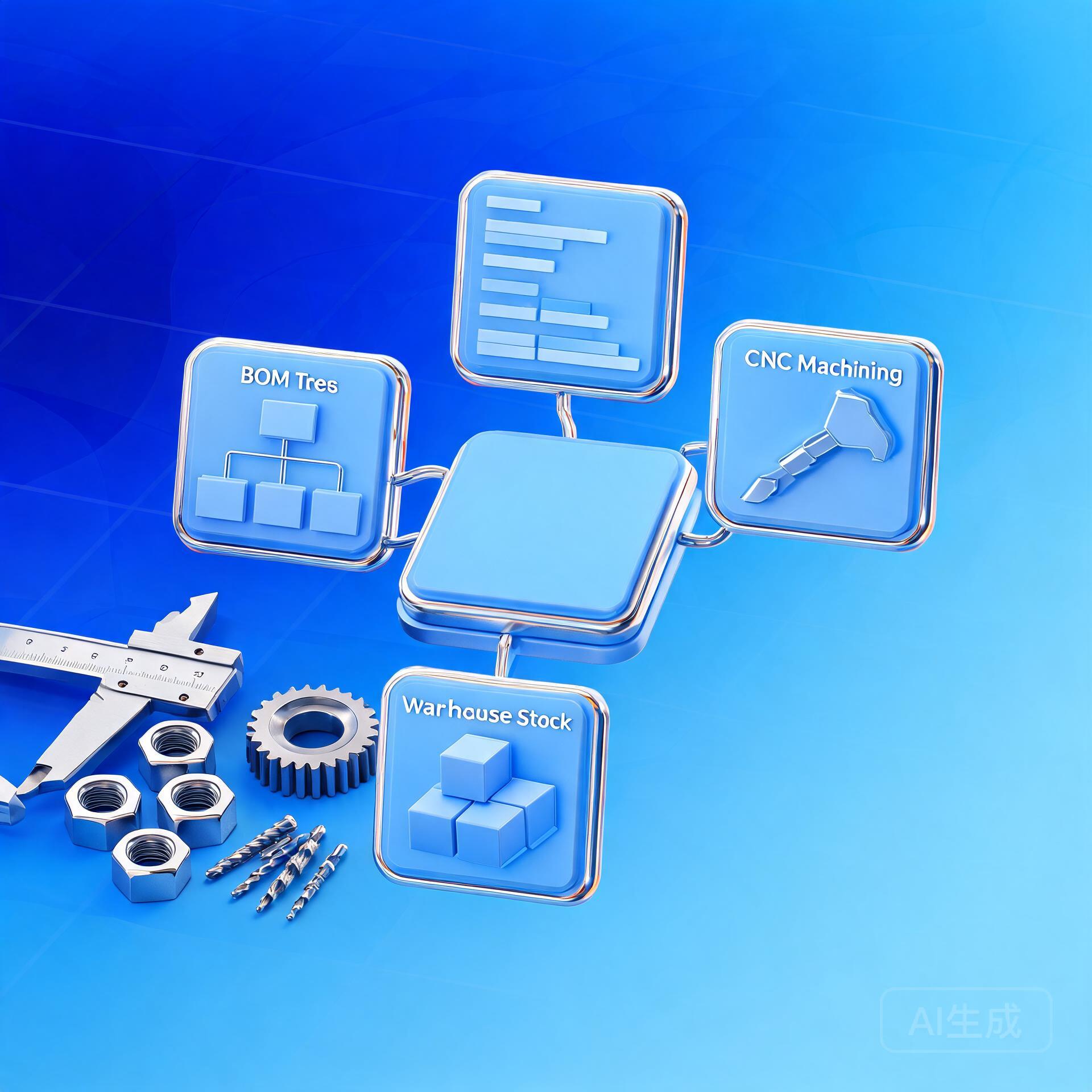
Moges PMS9 is a system built for exactly this scenario. It is not yet another ERP — it starts from non-standard automation's business flows, moving every step from sales signing to equipment delivery online. Introduced below by business module.
1. From Sales to Delivery: The Full-Flow Project Management Skeleton
PMS9's entrance is the sales contract. Every incoming order generates an independent project, numbered automatically by the "M+year-month+sequence" rule. The project list shows each project's customer, target delivery date, and current stage at a glance — still in scheme design, already in machining, or in assembly and commissioning.
Project team information hangs under each project: who leads mechanical design, and which engineers follow integration assembly and commissioning respectively. No more flipping through contact lists to find people.
The equipment's BOM (bill of materials) is the project's core. PMS9 supports multi-level BOM structures, with parts classified into standard parts, self-machined parts, and outsourced parts. Once the BOM is built, one-click order release automatically splits the purchase and machining details out. Standard parts enter the procurement requisition pool, outsourced parts generate outsourcing machining orders, and self-machined parts convert to internal machining tasks. Shortage quantities are computed automatically — no manual line-by-line comparison.
The drawing management module lets engineers upload design documents with version history retained. After assembly completes, each device's design drawings, machining records, and commissioning logs aggregate into the equipment resume — very convenient for future after-sales maintenance.
2. Machining, Procurement, Outsourcing Linked: The BOM-Driven Order Release System
Many factories' pain is not building the BOM — it is that nobody executes it afterward. When order release stalls, every downstream link is dragged. PMS9 made this step a rigid action.
Every part entry in the BOM is marked by the system for which route it should take. Procurement, outsourcing, and shop machining pipelines split automatically, with corresponding purchase orders, outsourcing orders, and machining tasks generated synchronously. Procurement can batch-aggregate same-model materials across multiple projects into consolidated orders; outsourced parts create outsourcing orders in batch directly from the BOM release details; self-machined parts enter the machining task pool awaiting dispatch.
Compared with the traditional manual way:
| Comparison dimension | Traditional manual way | PMS9 BOM-driven |
|---|---|---|
| Order release action | Project manager copies line by line from Excel into different forms | One-click release on the BOM page; system auto-splits by part type |
| Multi-project consolidated procurement | Manual aggregation of project needs; items easily missed | Requisition pool auto-aggregates same materials; purchase orders generated in batch |
| Shortage tracking | Relies on warehouse/procurement verbal feedback | BOM page shows released, arrived, and remaining gap quantities in real time |
| Error rate | Missed releases, over-releases, unit errors common | System validates against material files; fields standardized |
When outsourced parts return, the system automatically prompts acceptance. Quick acceptance mode completes stock-in with one tap — no extra flow needed. The supplier management and material file modules maintain each vendor's supply categories and grade ratings, and procurement reconciliation no longer requires digging through Excel records from half a year ago.
3. Process-Level Shop Execution: Machining Reporting and Rework Traceability
After BOM release, self-machined parts enter the machining task pool, and the shop lead dispatches by process. Each process has standard hour definitions in the system; operators record start, finish, and inspection on mobile or shop terminals. Reporting data flows straight back into project progress — the project manager no longer visits the shop to ask "where is this batch".
The process library is maintainable. Common process numbers, names, and standard hours can be set up in advance; each new machined part simply checks the needed process chain. For ad-hoc process change applications, the system records change history — what the original process was, what it became, and who approved it.
Rework and scrap are unavoidable in machining. PMS9's approach: every rework or scrap entry links to the specific process, operator, and reason classification, generating traceable records. At month-end quality analysis, statistics run directly by part type, process type, and reason type.
4. Warehouse and Procurement Closed Loop: In/Out Transactions Auto-Linked
Warehouse management is often treated as an isolated module, but in non-standard automation scenarios, warehouse data should link with procurement and assembly. PMS9 binds document types to sources at stock-in: procurement receipts auto-link to their purchase orders, outsourcing receipts link to outsourcing orders, and return receipts are traceable too. Stock-in confirmation updates the inventory table automatically.
The inventory page shows each material's code, specification, classification, current stock, locked quantity, and available quantity. Safety stock warnings auto-prompt below thresholds. At assembly picking, selecting "production picking" as the out-type automatically aggregates those materials into the corresponding project's costs.
Every in/out transaction leaves a flow record. This traceability chain is especially useful for reconciliation, stocktaking, and cost accounting — no more digging through piles of paper slips or scattered Excel sheets.
5. Cost Accounting and Permission Control: Multi-Dimensional Aggregation + Fine-Grained RBAC
Cost accounting is the hard part of non-standard project management. One project carries material fees, machining fees, outsourcing fees, installation and commissioning fees, plus travel, taxes, and various miscellaneous charges. PMS9's finance module aggregates these costs by materials, machining, and total cost, with one-click computation and allocation.
Advance payment management tracks each project's prepaid amounts, prepayment ratios, and write-off status. The expense management module records travel, miscellaneous, and other in-period expenditures. All this data ultimately rolls into project profit, helping managers judge which projects make money and which need quotation strategy adjustments.
On permissions, PMS9 uses a role-based RBAC system. The administrator role holds all 187 permissions; ordinary user roles default to 22. Each role independently configures create, read, update, and delete permissions, ensuring different positions see and operate only data within their scope. Audit logs record all user operations for easy after-the-fact tracing.
Conclusion
The management difficulties of non-standard automation equipment manufacturing are essentially the stacking of three things: long project cycles, high part complexity, and multi-role process participation. Moges PMS9 does not attempt one big all-inclusive system covering every manufacturing scenario — it targets non-standard equipment factories' specific business flows, making every key node from sales to delivery a trackable, linked online action. For factories still managing projects manually in Excel, this system's biggest change is that "chasing progress" is no longer one phone call after another — open the system and the whole picture is there.