Moges Mold Shop Management Rules: Full-Process Standards from Fabrication to Maintenance
2012-08-22 00:00:00
In a mold shop, molds are among the most precious assets. From drawings to volume production, a set of molds has to pass through fabrication, inspection, use, repair, modification, and maintenance; if any of these steps is handled loosely, it can turn into quality incidents and cost holes. The prerequisite for using a management system well is a set of rules put down on paper first.
This set of mold management rules, implemented in combination with the Moges Mold Shop Production Management System, has three purposes: extend mold service life, stabilize product quality, and make responsibilities clear. It applies to the use and management of molds by the production department and production workshop, and serves as a baseline standard for taking molds seriously in daily work.
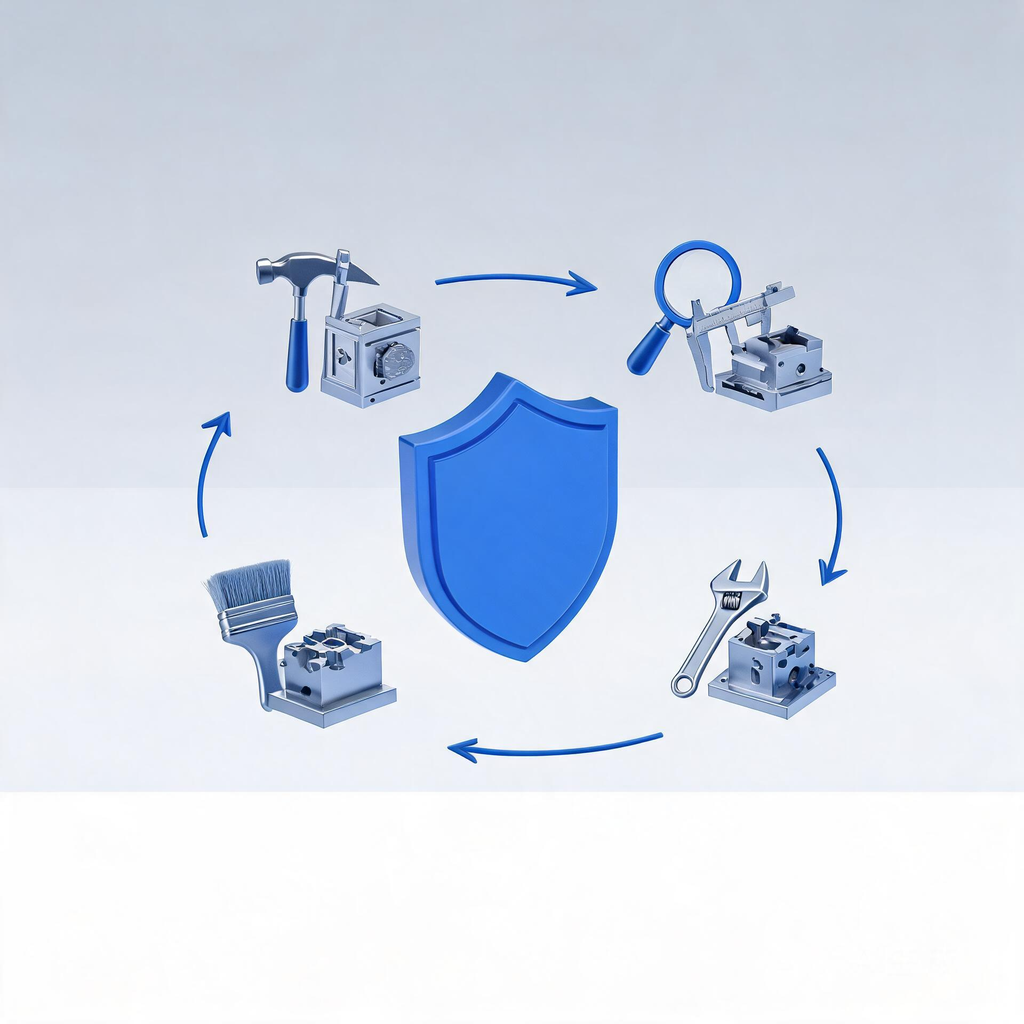
1. Who Is Responsible for What, Stated Up Front
Unclear responsibilities are where management starts to fail, so the first step of the rules is to fix the division of labor. The technical quality department is responsible for providing mold drawings and technical requirements, establishing standards at the source; the production workshop is responsible for mold use, maintenance, and repair, keeping daily actions under control. Each side manages one end, and when problems occur, they are easy to trace.
2. Fabrication and Inspection: Gatekeeping from the Source
For mold fabrication, the technical quality department first draws the mold sketch according to product characteristics and technical requirements, then hands it to the production department for machining. Once the sample mold comes out, it must pass inspection: after machining is completed, the technical quality department inspects it; if qualified, it is accepted into the warehouse, registered and numbered by the production department, and recorded in the Mold Inventory List. From that moment, each mold has its corresponding archive.
The details of polishing molds are the most easily overlooked yet most worthwhile to do. Removing flash cleanly, chamfering edges, and ensuring proper fitting of assembly surfaces: every manual error directly determines the mold's life and the stability of product quality.
The use stage requires careful operation to keep performance stable, and rough handling must be avoided. Do not underestimate this rule: many molds are scrapped early because of non-standard operations such as overload and hard knocks.
3. Repair, Modification, and Maintenance: Every Fix on Record
When a mold produces batches of defective products or breaks down and can no longer work normally, the operator must promptly fill in the Mold Repair Record Form and hand it to the repairer for handling. After the repair, the mold is not put straight back on the machine; the operator must trial-produce a certain number of products, and only after passing inspection does the repairer sign the form, followed by sign-off by the workshop. The whole process leaves records and assigns responsibility to individuals.
When a mold needs modification due to product process changes, the technical quality department raises the modification requirements, the production department carries out the machining, and after the modification the production department inspects it again, ensuring the mold remains qualified and usable.
Maintenance is the most often neglected yet truly money-saving step. The rules require removed molds to be placed in fixed locations with clear numbering and labeling; regularly clean oil stains and debris off the molds and apply anti-rust oil. A few casual minutes of work can often add considerably to a mold's life.
Summary: Rules Are the First Step Before System Implementation
These rules only put management actions on paper; real execution relies on the system linking these records together. The Moges Mold Shop Production Management System binds forms such as the Mold Inventory List and the Mold Repair Record Form to the full-process progress and responsible persons of each mold, so that every use, repair, and modification is traceable.
However comprehensive the rules are, in the end they come down to three phrases: recorded, traceable, executable. Managing molds starts with managing each mold in detail, and quality and service life will naturally be protected.