ARM servers are here! They are very powerful, and Moges may consider adopting the mold production management system.
2012-08-23 00:00:00
If this is available on the market, running the Moges mold production management system would be an excellent choice.
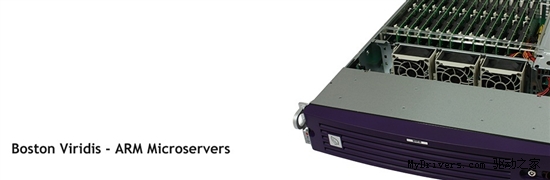
Boston, a UK IT supplier, announced today the launch of a new server based on the ARM architecture, named "Viridis", and stated that shipments will begin within a few weeks. This marks a new era for ARM.
Viridis is derived from the Latin word "Green," which naturally highlights the low power consumption and high efficiency characteristics of the server. In comparison to x86 servers, which prioritize performance, Viridis will undoubtedly be a key advantage for ARM-based systems.
Viridis utilizes the first ARM SoC processor specifically designed for server applications, released by American company Calxeda at the end of last year, namely the "EnrgyCore ECX-1000". This processor has a clock speed of 1.4GHz (high-frequency version) and includes four Cortex-A9 cores per chip. A standard 2U rack can accommodate up to 48 chips, which translates to a maximum of 192 cores.
If using a standard 42U rack, the total number of processors will reach 1008, with 4032 cores.
In Boston, we leveraged Calxeda's four-node reference design, EnergyCard, and named it "POCket." Each 2U server contains twelve such boards, with four processors, four 4GB DDR3 miniDIMM memory slots, and four SATA interfaces per board (referencing the sixteen SATA interfaces in the reference design). Additionally, a supplementary PCB, similar to a PCI-E expansion card, was added, connecting to the mainboard via a 10Gbps Ethernet connection.
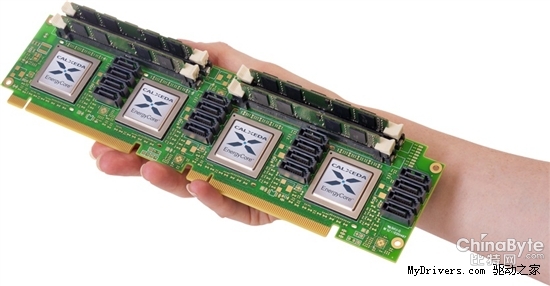
Calxeda EnergyCard reference solution, slightly different from the one used in Boston.
Regarding power consumption, the thermal design power (TDP) of a single processor is as low as 5W, and the total power consumption for the 2U server is only 300W, which is equivalent to a standard desktop PC. This is a significant advantage over x86 servers.
However, for ARM architectures, the range of operating systems and software that can be used on servers is limited. Windows Server is not recommended at this time. Windows 8 currently only supports ARM in the consumer market. Boston recommends Canonical Ubuntu 12.10 and Red Hat Fedora 17, and states that popular software such as Perl, Python, and MySQL also support ARM, but the level of optimization needs to be observed.
Boston also hinted that they would also consider launching a micro server based on ARM in the future.
Regarding pricing, if the entire solution, including memory, hard drive, and network components, is included, the total cost would be approximately $5,000, along with three years of on-site maintenance support and unlimited technical support.
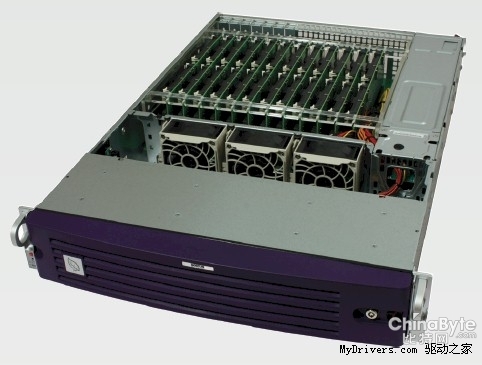
Front view (without the cover)
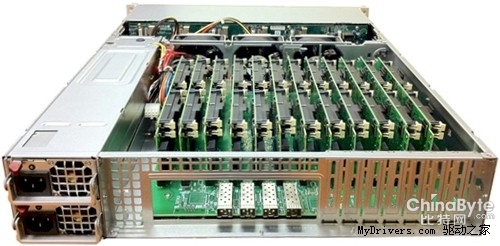
Rear view
I'm concerned about the wide range of available processors and motherboards, and I'm unsure about the pricing and performance characteristics.
This system absolutely requires customization. I'm unsure if Dibian will be involved.