Intel's Potential Rival ARM Disrupts the Server Market
2014-01-14 00:00:00
The future server market may be disrupted by ARM. Behind the disruption will be a richer server market landscape and more choices for users.
ARM barges into the server market
If a fundamental change is to take place in server architecture in 2012, it is most likely to be provoked by ARM chips. Through increasingly mature technology and architecture upgrades, it will significantly reduce data center costs and profoundly affect the landscape of the entire server market.
The server market may be disrupted by ARM
The server market may be disrupted by ARM
In today's market, most of ARM's processors are based on the 32-bit architecture. However, for ARM to make a difference in the server market, it must have 64-bit products to count as genuine server-grade products (there have already been quite a few successful applications of graphics chips in supercomputers). ARM itself now admits that the development of its 64-bit architecture came too late — which is why even its newly released Cortex-A15 Eagle is far from being able to compete with Intel and AMD. Cortex-A15 Eagle supports many server-specific features, but it is still based on a 32-bit design.
In fact, as early as 2008, ARM began developing the ARMv8 64-bit architecture, officially launching it in 2011. Initially, the company expected to release its first ARM-architecture server in 2014, but seeing the strong support and enthusiasm of HP, Calxeda, and other chip designers (such as Nvidia), ARM believes that in 2014 it will be able to gain a certain influence in the server market.
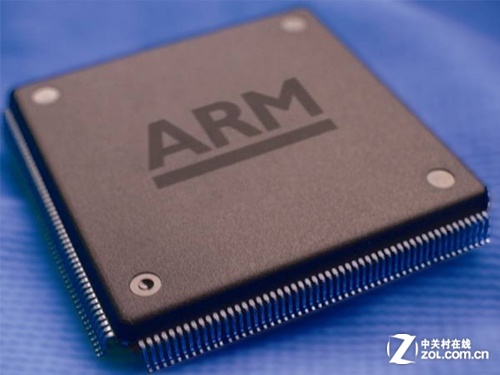
ARM architecture processors
It is widely expected that in 2013, ARM low-power processors will be widely adopted in data centers. With the help of graphics chips and more mature technology, this will bring effective performance gains and energy savings. Calxeda's release of the "EnergyCore ECX-1000" last November also signals the beginning of ARM processors in server applications.
On the other hand, many users are trying various different technologies, especially in the cloud computing era, where people must consider both computing density and low power consumption. Aggregations of low-power ARM processors may provide cloud computing capacity that is more energy-efficient than traditional x86 server chips such as Intel Xeon or AMD Opteron. The coupling of ARM processors with graphics processors is also attracting particular attention. Many supercomputers now use graphics chips. With the coupling of graphics processors and ARM processors, some applications will show better performance than traditional CPUs.
All of this seems to foreshadow the emergence of a new player in the server market, and through ARM's past successful applications in supercomputers, one can vaguely sense that ARM may, in the not-too-distant future, become an important branch of the server chip field.
Page 2: What exactly is ARM's trump card
Before detailing ARM's trump cards, we should first introduce the company. Founded in 1991, ARM is a company that sells IP (technology intellectual property). Its architecture uses RISC, completely different from the x86 processor architecture that currently dominates the server market.
ARM processors support both 16-bit and 32-bit instruction sets, and the "ARMv8" processor entering the 64-bit architecture has already appeared. Although this processor based on the 64-bit architecture still has some shortcomings, it shows ARM's pace of marching into the 64-bit world. Compared with the traditional x86 architecture, ARM has many advantageous features such as low power consumption, low cost, and high execution efficiency, and it enjoys broad partner support: related server processor products have been launched and even deployed in servers.
Low power, low cost
Because the ARM architecture uses a unique design with the natural advantages of low power consumption and low cost, it has been widely applied in many consumer products (such as phones and tablets).
Broad vendor support
Last year, Microsoft announced that Windows 8 would officially support ARM-architecture processors. ARM gaining the recognition and support of the software empire means the dominant position of x86 processors will be challenged. Also last year, HP and Canonical successively announced the world's first ARM server based on the Ubuntu 11.10 operating system (ARM processor version). In addition, ARM will receive broad support from other vendors in the industry.
HP's ARM server
HP's ARM server
ARM server processors arrive
Last year the American vendor Calxeda released the industry's first processor based on the ARM architecture and specifically designed for server applications, the "EnergyCore ECX-1000". It uses a highly integrated SoC system-on-chip design with up to four ARM Cortex-A9 processor cores, clocked at 1.1-1.4GHz, with 32KB of L1 instruction cache and 32KB of L1 data cache per core, and all cores sharing 4MB of ECC L2 cache.
EnergyCore ECX-1000 chip
EnergyCore ECX-1000 chip
This processor integrates a 72-bit ECC DDR memory controller supporting 32-bit physical addressing and DDR3 1.5V and DDR3L 1.35V memory modules at 800/1066/1333MHz frequencies. Particularly noteworthy is that it integrates, for the first time, an 80Gb (10Gb×8) crossbar fiber switch supporting pass-through traffic, providing five external 10Gb channels and three internal 10Gb channels, with up to 4096 nodes connectable and dynamic link speed control.
EnergyCore block diagram
EnergyCore block diagram
Calxeda has also designed a four-node solution, the "EnergyCard", which takes the form of a half-height expansion card, 254 millimeters long and 69 millimeters high.
EnergyCard
EnergyCard
Calxeda is also using ARM Cortex A9 architecture processors to build servers, and judging by actual results, it performs quite well in multi-node distributed computing and big data processing.
Page 3: Fierce slaughter in the server market
Compared with other IT fields, the processor competition landscape in the server market is dominated mainly by the x86 architecture. Compared with chip giants in the server field such as Intel and IBM, ARM's route can be described as going from low end to high end (broadly, consumer-grade first, then toward enterprise-grade high-end servers). Due to its inherent limitations, ARM made no mark in the server field at first; in fact, many people had never even heard of ARM before.
However, fortunes change with time. With the arrival of the cloud computing era and growing attention to energy issues, ARM architecture processor products have ushered in a spring of development through years of technical accumulation and exploration. After the launch of ARM's 64-bit server processors, it will undoubtedly have a huge impact on the server market.
However, because the ARM architecture is still immature and the supporting software-hardware ecosystem is not yet complete, ARM will still face severe challenges in the next 2 or 3 years of development. Moreover, even if a new batch of ARM servers is released now, after many years of enrichment and refinement of the x86 architecture product line, and with users' familiarity with x86, most of the program code used by researchers was written for the x86 instruction set. From the perspective of protecting investment and providing technical support, a migration from x86 to ARM will not happen in the short term; it can only serve as a brand-new IT infrastructure or a new solution design for entirely new users.
EnergyCard four-node server board
EnergyCard four-node server board
Another way out is that the ARM architecture will gradually occupy specific application domains, such as web hosting, static storage, and office applications. For example, ARM's official site uses an ARM server based on the Marvell MV78100 SOC, combined with the commonly used Debian and Nginx software combination, which very effectively supports the operation of its official site. Static storage and office applications, compared with workloads such as databases and mission-critical applications, do not demand much from CPU and memory, so introducing the ARM architecture without affecting performance can reduce the cost and power consumption of servers used for static storage loads.
Marvell MV78100 SOC block diagram
Marvell MV78100 SOC block diagram
Marvell MV78100 system structure
Marvell MV78100 system structure
Looking at the entire server market, 2012 will further intensify the already fierce competitive landscape. Intel has launched the brand-new Xeon E5, Itanium "Poulson", and the MIC many-integrated-core architecture. And as a direct response to ARM, Intel will also launch Atom-architecture server processors. Atom-architecture processors mainly target the microserver market; they do not emphasize high performance but place more emphasis on low-power design.
By every indication, ARM and ARM-architecture server processors will play an important role in the future server market. On the one hand, it will intensify market competition and subdivide the server market, shaking the dominant position of the x86 architecture to a degree; on the other hand, it also conforms to the inevitable trend of green IT and the cloud computing era. Fierce market competition and energy efficiency are bound to bring users more real benefits.
The future server market may be disrupted by ARM. Behind the disruption will be a richer server market landscape and more choices for users.