A Kunshan Precision Mold Company Shortened Delivery Cycle by 22% with the Moges MES System
2026-01-06 16:44:08
In Kunshan, where manufacturing in the Yangtze River Delta is highly concentrated, mold delivery efficiency directly determines an enterprise's market competitiveness. A local precision mold enterprise focused on the automotive and consumer electronics fields, Ruifeng Mold (not the real name), had long been troubled by the production dilemma of "local delays, overall paralysis": a delay in machining one key insert could drag down the delivery plan of the whole mold.
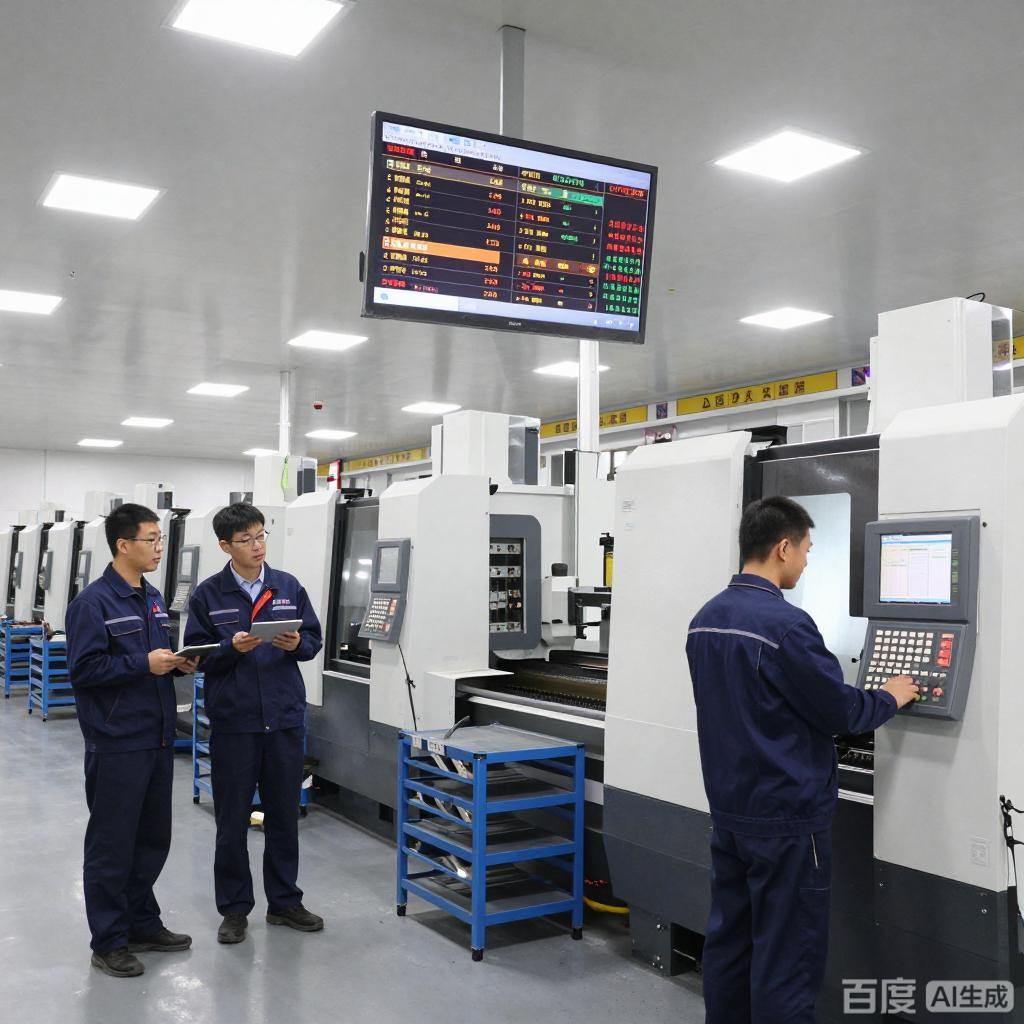

Today, with the Moges (MOGES) MES intelligent manufacturing execution system, the company has successfully shortened the average mold delivery cycle by 22% and established a digital production management system that is warning-capable, traceable, and collaborative.
1. "We Used to Be a Fire Brigade; Now We Are a Command Center"
Ruifeng Mold has an annual capacity of more than 300 sets of high-precision injection molds, but as order complexity increased, the traditional Excel spreadsheets plus paper work order model gradually failed.
"The biggest headache was information gaps," said Engineer Li, the production manager. "After design drawings were issued, the fitters did not know when heat treatment would finish, and the CNC group was waiting for EDM electrodes. By the time we discovered that a part had sat in the warehouse for three days with nobody picking it up, the whole mold was already late."
What was trickier: once internal capacity was insufficient and outsourcing was needed, the best window was often missed due to delayed decision-making, making the delay even worse.
At the end of 2024, the company introduced the Moges MES system, connecting the whole chain from order receipt, process scheduling, and process flow to outsourcing management.
"Now the system automatically calculates the theoretical completion time of each process and compares it with actual progress in real time," Engineer Li said, pointing at the shop floor dashboard. "If a part exceeds 10% over time in the heat treatment stage, the system immediately flags a red warning, so we can arrange outsourcing in advance, instead of waiting for the 'explosion' two days before the delivery date."
2. Automatic System Warnings Make "Traffic Jams" No Longer Fatal
One of the core capabilities of the Moges MES is its intelligent bottleneck identification and outsourcing suggestion mechanism. Based on equipment load, historical cycle times, and current in-process tasks, the system dynamically assesses capacity risks and proactively suggests outsourcing options when potential delays are detected.
"Outsourcing used to be 'passive remedy'; now it is 'active diversion'," said Ms. Wang, the procurement supervisor. "For example, last week, for the slider machining of a mobile phone mold, the system warned 48 hours in advance that the CNC equipment was fully loaded and suggested outsourcing the non-core parts to partner factories. We confirmed the outsourcing order the same day, and the whole mold was delivered one day early."
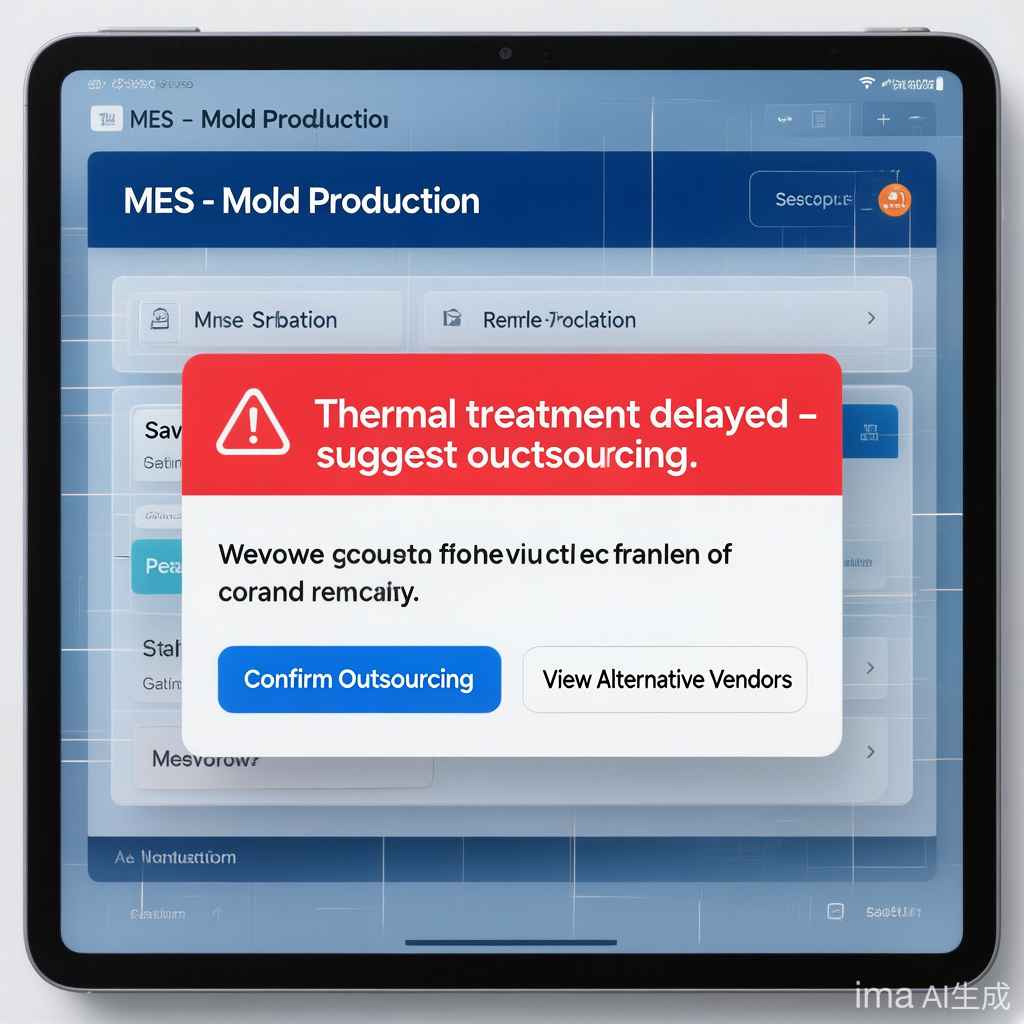
According to internal statistics, in the 6 months after the system went live, overall delivery delays caused by internal process delays dropped by 87%. Even when "traffic jams" occasionally occur, the shop can respond quickly under the system's guidance and avoid chain reactions.
3. From the Boss to the Front Line, Everyone Can See and Control
Beyond process optimization, the system's transparent management has also reshaped team collaboration.
"At month-end reviews, each department used to have its own story: production blamed slow procurement, procurement blamed frequent design changes," recalled General Manager Chen. "Now every node has a timestamp; how long anyone spent at which step is clear at a glance in the system. With clear responsibilities, collaboration actually became smoother."
What pleased him even more was the change in customer feedback. "Last month, a German customer specifically mentioned at acceptance: 'Your progress updates are even more timely than our own project management system.'"
4. The Digital Logic Behind the 22% Delivery Speedup
According to the operating data provided by Ruifeng Mold:
the average delivery cycle per mold dropped from 46 days to 36 days, a 22% reduction;
process waiting time decreased by 35%;
outsourcing response speed improved to confirmation within 24 hours;
the customer complaint rate dropped by 61% year on year.
"Moges did not simply electronize processes; it uses data to drive decisions," General Manager Chen concluded. "It moved us from 'working by experience' to 'delivering by rhythm'."
Conclusion: Small Molds, Great Collaboration
In the mold industry, the delivery cycle has never been merely a matter of "fast or slow"; it is a comprehensive reflection of supply chain collaboration capability, process controllability, and risk foresight. The practice of Ruifeng Mold proves that an MES system fitted to local manufacturing scenarios can not only solve the stubborn problem of "one delayed part dragging down the whole order", but also build sustainable delivery competitiveness for the enterprise.
"Now we dare to take more urgent orders," Engineer Li said with a smile, "because we know that even if there is a bit of a jam on the road, the system will help us find the fastest route."
About Moges (MOGES)
Moges focuses on providing lightweight, highly adaptive MES solutions for small and medium-sized mold manufacturing enterprises, supports a Simplified Chinese interface, and has served more than 200 precision manufacturing enterprises in the Yangtze River Delta and Pearl River Delta. The system covers six core modules: order management, process routes, process work reporting, outsourcing collaboration, equipment monitoring, and delivery warnings, helping mold factories achieve "transparent production, on-time delivery".