The precise way to manage materials in a mold factory: a differentiated control strategy based on business fundamentals.
2026-03-08 14:15:00
Introduction: The core contradiction in mold material management.
In the mold manufacturing industry, material management has long faced a fundamental contradiction: the "standardized receiving process" promoted by general-purpose ERP systems clashes with the mold business's inherent nature of being "highly customized and order-driven." Forcing the use of traditional inventory management models not only creates a large number of unnecessary operations such as moving, counting, and accounting, but more critically, once customer drawings or orders change, the specialized materials (such as mold steel cut according to specifications) that have already been received will instantly become unusable waste, resulting in direct economic losses.
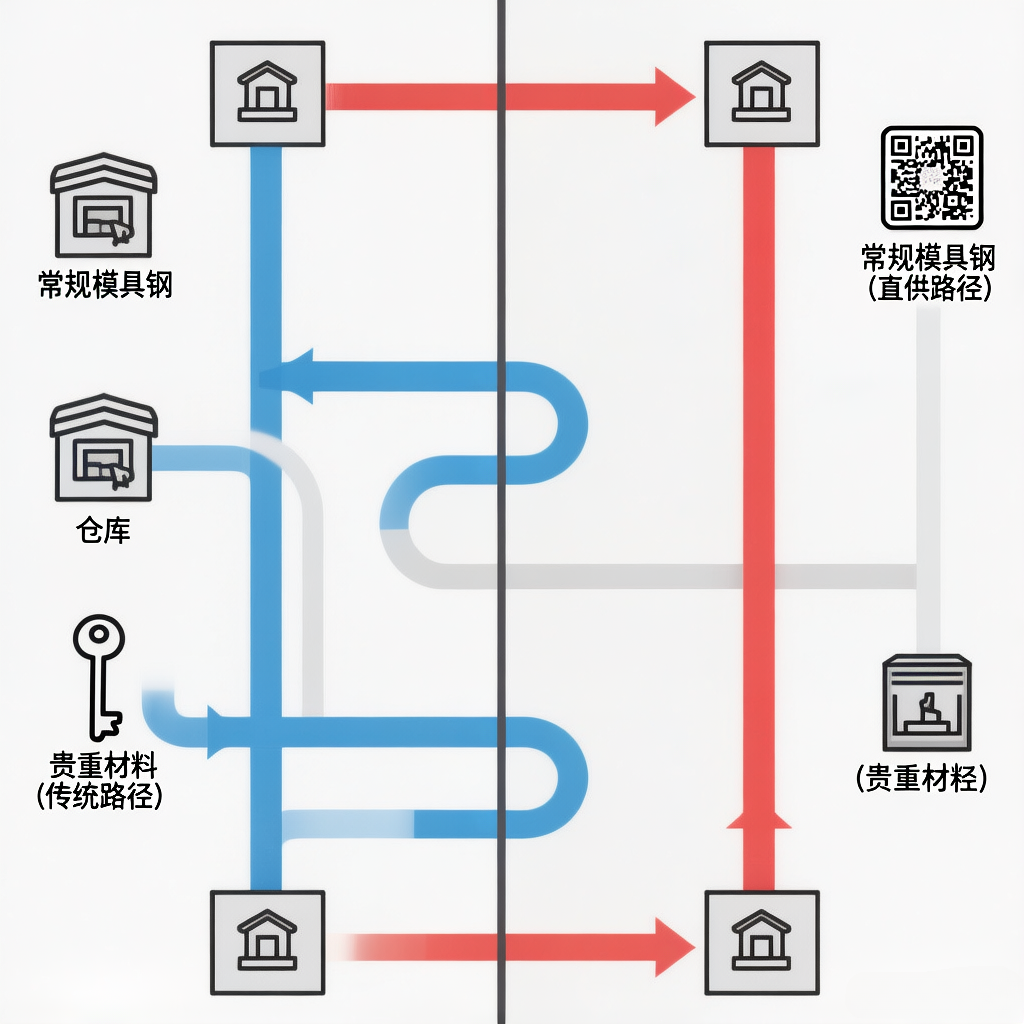
A truly efficient material management system is not a one-size-fits-all solution, but rather requires aReturn to the core business, based on the inherent properties of materials and potential business risks, implement fine-grained, differentiated control strategies.. With over ten years of experience in the mold industry, the Moges production management system is built on this core principle, offering two typical solution scenarios.
1. Standard mold steel (SKD61 / P20 / NAK80): Bypass the warehouse, direct supply to workstations.
Business Features and Pain Points: These materials account for the vast majority of mold materials, and their key characteristics are:Customized dimensions according to order drawings, with extremely high specificity, making it almost impossible to switch between different molds.The biggest management risk is that once materials are received, they immediately lose value and become obsolete if subsequent orders are canceled or designs are changed.
Moges' differentiated solutions:
Intelligent generation of material demand orders: Once an order is initiated, the system automatically parses the BOM and generates material demand orders containing precise dimensions, material specifications, and heat treatment requirements.
Direct delivery to workstations from suppliers: Based on this purchase order, suppliers will perform precise cutting of materials.Direct delivery to the specified CNC machining center or milling station.completely bypasses the central warehouse.
On-site inspection and virtual receiving: Quality inspection personnel complete acceptance at the workstation, and the system immediately marks the material status as "Received".Directly link its logic to the corresponding mold work order.This system does not generate any physical or paper-based "receiving" records throughout the entire process.
Automated Cost Allocation: Once materials are used, their costs are automatically and accurately allocated to the specific mold project, achieving real-time cost transparency.
Key Customer Value: This model simplifies the material flow path from "Procurement → Receiving → Picking → Shipping → Delivery → Workstation" to "Procurement → Direct to Workstation".Increase process efficiency by more than 50%... and alsoEliminates the risk of material backlog caused by order changes at its source.significantly reduces hidden waste.
II. High-value materials (CD650 hard alloy / CU copper material): Full lifecycle asset management
Business Features and Pain Points: These materials have a high unit cost and also possess value for recycling and reuse. Their primary risks are not related to inventory stagnation, but rather...Loss, waste, and discrepancies in the flow process.Therefore, the core management requirements are "traceability, auditability, and control."
Moges' differentiated solutions:
Mandatory Receiving and Unique Identification: All high-value materials must be received and stored in a controlled warehouse, and the system will generate records for this.Unique batch number and QR code label, serving as its unique identifier throughout its entire lifecycle.
Fine-grained consumption and approval: Any usage must be authorized.Related to specific mold orders, and approved by authorized personnel online, ensuring clear purpose and clear accountability.
"Trade-in for New" Closed-Loop Control: For scrap or waste materials resulting from processing, the system supports a "trade-in" mechanism. Employees must return old materials in order to claim new materials, thereby creating aComplete material closed-loop, Thereby, maximize reduction in losses.
End-to-end traceability audit: From receiving, storage, issuance, and use to waste recycling, every stage of operation is linked to batch numbers, allowing for immediate retrieval and meeting the strict requirements of internal audits and cost analysis.
Key Customer Value: By adopting a centralized management model, companies canEffectively ensures the security of high-value materials.,Accurate calculation of mold costs, ensuring that all transactions are reconciled and auditable during year-end closing or audits.
Conclusion: The essence of management is to align business operations.
Mold factory material management doesn't have a universally accepted "standard answer." The key to success lies in deeply understanding the business logic and risks associated with different materials, and then designing the most appropriate control processes based on that understanding. The Moges system achieves this "combination of flexibility and control" through a differentiated strategy, helping mold companies break free from the constraints of traditional ERP systems, while ensuring compliance and risk management, and achieving ultimate operational efficiency and cost optimization.