Quality Exception Management: Building a Closed-Loop Defense System for Machining Manufacturing
2026-03-10 18:22:09
Introduction: Quality Exceptions, the Hidden Cost Black Hole of Machining Companies
In today's high-precision, fast-delivery machining environment, a minor dimensional deviation or surface defect can trigger full-batch rework, customer rejection, or even lost orders. The traditional quality management model that relies on paper records, verbal communication, and after-the-fact fixes is not only inefficient but also incapable of building an effective prevention mechanism. Facing increasingly stringent quality requirements and cost pressure, manufacturers urgently need a digital, closed-loop, and traceable quality exception management system.
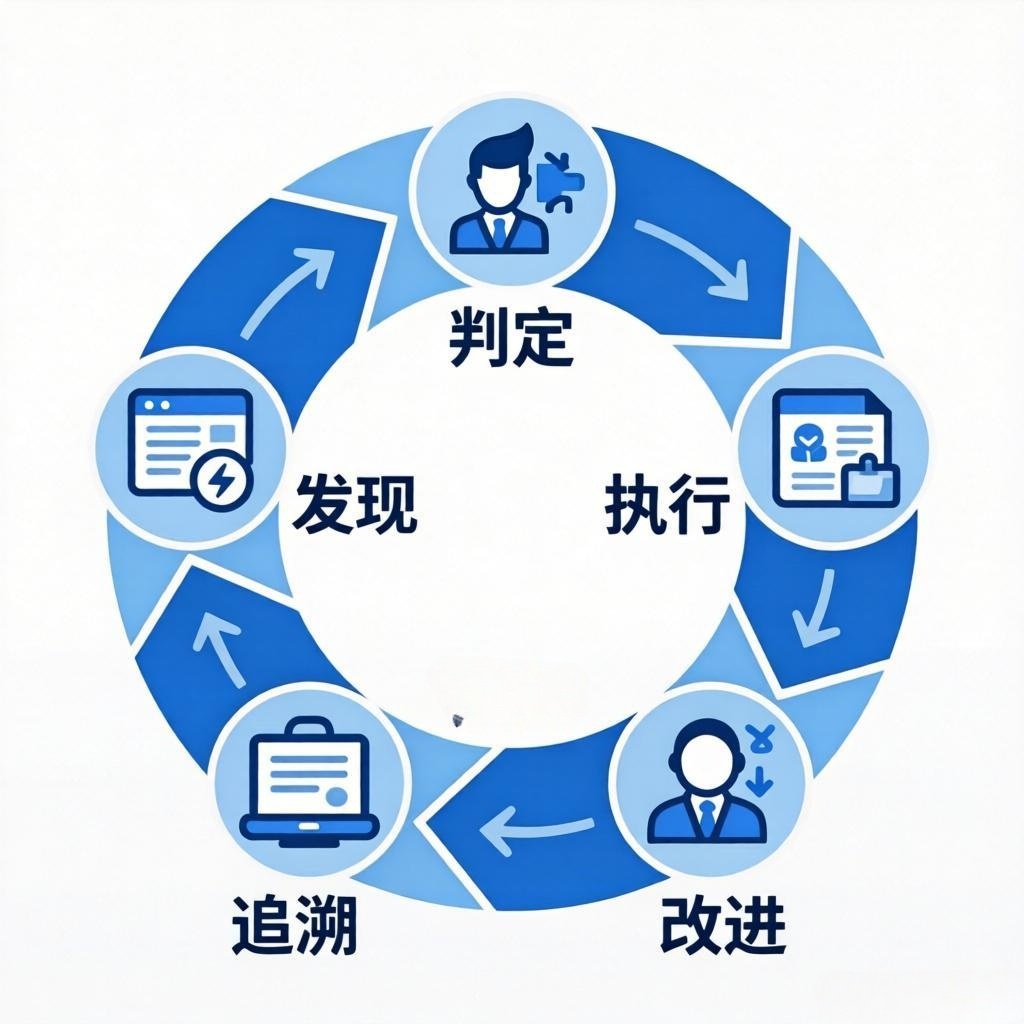
With more than a decade of deep engagement in the machining industry and practice across hundreds of customers, Kunshan Moges Information Technology Co., Ltd. (MOGES) has built a quality exception management closed loop covering the full life cycle of "Discovery, Adjudication, Execution, Tracing, and Improvement". Deeply integrated with the MES production execution system, it turns exceptions from a "burden" into "opportunities for improvement", helping enterprises achieve a strategic upgrade from passive firefighting to proactive defense.
1. Full-Chain Exception Capture: Nowhere for Any Problem to Hide
Quality exceptions originate from diverse sources; without timely, structured collection, subsequent analysis and improvement are impossible. The Moges system opens four core exception entry points, ensuring problems are recorded, classified, and responded to immediately:
Operator self-inspection exceptions: When operators scan a QR code to report work via the mobile app, issues such as dimensional deviations, scratches, or burrs can be photographed and uploaded instantly, freezing the current report. The system automatically pauses the operation flow to keep defective parts out of downstream processes.
Inspection interception exceptions: When IPQC (in-process patrol inspection) or FQC (final inspection) personnel identify batch risks (such as consecutive deviations caused by tool wear), they can trigger an alert with one click; the system automatically locks related batch inventory and notifies process and production managers.
Outsourced machining exceptions: When incoming inspection of outsourced parts fails, the system automatically links supplier records, purchase orders, drawings, and process cards, generates collaborative handling tasks, clarifies accountability, and triggers the supplier scoring mechanism.
Customer-side quality complaints: Once customer feedback is entered, the system flags it as a top-priority event, automatically launches a backward tracing process, and precisely pinpoints the specific machine, shift, operator, tool number, and machining parameters, greatly shortening troubleshooting time.
All exception data converges in the quality management module, forming structured, searchable, and auditable digital assets that lay a solid foundation for subsequent analysis.
2. Scientific Disposition Linkage: Intelligent Execution of "Exception as Task"
Discovering an exception is only the start; efficient disposition is what counts. Moges embeds four typical disposition methods deep into the business flow, achieving "adjudicate and execute" in one step and eliminating management gaps:
| Disposition Method | System Automation Actions |
|---|---|
| Concession | Completion of a risk assessment form is mandatory; after multi-level approval, a "concession" e-tag is applied automatically. Corresponding work hours are credited to performance at a preset discount (e.g., 70%) to keep risk under control. |
| Remake | Automatically generates a remake production task order and a material requisition; work hours tied to the defective parts are automatically reversed to negative values, eliminating invalid pay and truly reflecting production efficiency. |
| Repair | Generates a dedicated rework work order specifying the repair process, required auxiliary materials, and the responsible person; after repair, a second inspection must pass before the task can be closed, ensuring repair quality. |
| Replacement | Executed in parallel: (1) the problem part is allowed to flow temporarily (with an automatic warning label); (2) an urgent replacement task order is generated automatically with a strict deadline; if exceeded, an escalation alert is sent to management. |
With this mechanism, every exception has a clear exit, a responsible owner, and completion criteria, cutting average handling time by more than 60%.
3. Closed-Loop Tracing and Continuous Improvement: From "Firefighting" to "Fire Prevention"
1. Exception data linked directly to employee performance
Tying quality performance directly to income is the most effective behavioral driver:
Rework caused by operational errors? The system automatically deducts valid work hours;
Proactively discovering and reporting hazards? "Quality discovery" points are awarded, redeemable for bonuses or honors;
Consistently high first-pass yield (FPY)? Performance coefficients rise, creating a positive incentive loop.
2. Multi-dimensional analysis for precise decision-making
The system's built-in intelligent analytics dashboard supports Pareto analysis by part, operation, machine, team, shift, and other dimensions, quickly locking onto the "vital few" problem points. For example, one company found through analysis that 80% of dimensional deviations were concentrated in an aging lathe; after scheduling preventive maintenance, similar problems dropped by 90%.
3. CAPA mechanism to consolidate improvement results
For major or recurring exceptions, the system supports standardized corrective and preventive action (CAPA) processes, with full traceability from root cause analysis and action planning to execution tracking and effectiveness verification. If the same problem recurs, the system automatically raises a "measures ineffective" prompt, driving deep team reviews and preventing repeat issues.
4. Customer Value: From Cost Optimization to a Leap in Competitiveness
Lower quality costs: Rework rates down by more than 40% on average, significantly reduced scrap losses, and directly improved gross margins;
Higher delivery reliability: First-pass yield (FPY) steadily above 95%, with substantially higher on-time delivery rates;
Stronger customer trust: Fully traceable quality issues and 70% faster response times boost customer satisfaction and loyalty;
Optimized workforce: Employees focus on "doing it right the first time", while managers shift from daily "firefighting" to systematic improvement, enabling continuous organizational evolution.
Conclusion: True Intelligence Stops Problems Within the Loop
In the era of intelligent manufacturing, quality management is no longer a cost center but a key pillar of core competitiveness. Anchored in machining scenarios, the Moges (MOGES) Production Management System uses digital means to rebuild quality exception management logic, helping enterprises build a closed-loop defense system with the ability to "sense, respond, learn, and evolve".
True efficiency is efficiency with quality.
True intelligence stops problems within the loop.
To learn more about Moges' specific implementation approach to quality exception management, feel free to contact us or request a system demo to get the Machining Quality Exception Management Whitepaper for free.
Moges (MOGES) - focused on the digitalization of machining manufacturing, making every investment deliver real value.