5 Key Steps for Implementing a Mold Production Management System: A Complete Guide from Planning to Full Rollout
2026-04-22 12:36:49
Introduction: Embrace Digitalization and Open a New Chapter in Mold Manufacturing
As the global manufacturing industry accelerates its wave of transformation toward intelligence and digitalization, the mold industry, known as the "mother of industry", urgently needs to innovate its production management model. As the core hub connecting the enterprise planning layer (ERP) and the workshop control layer, the manufacturing execution system (MES) is becoming the strategic choice for many mold enterprises to improve fine-grained management, shorten delivery cycles, and reduce costs. However, the success of an MES system does not happen overnight; its implementation process is linked step by step, and negligence in any link may lead to project delay or even failure. This article breaks down in detail the 5 key steps for implementing a mold MES system and provides a complete action guide from planning to full rollout.
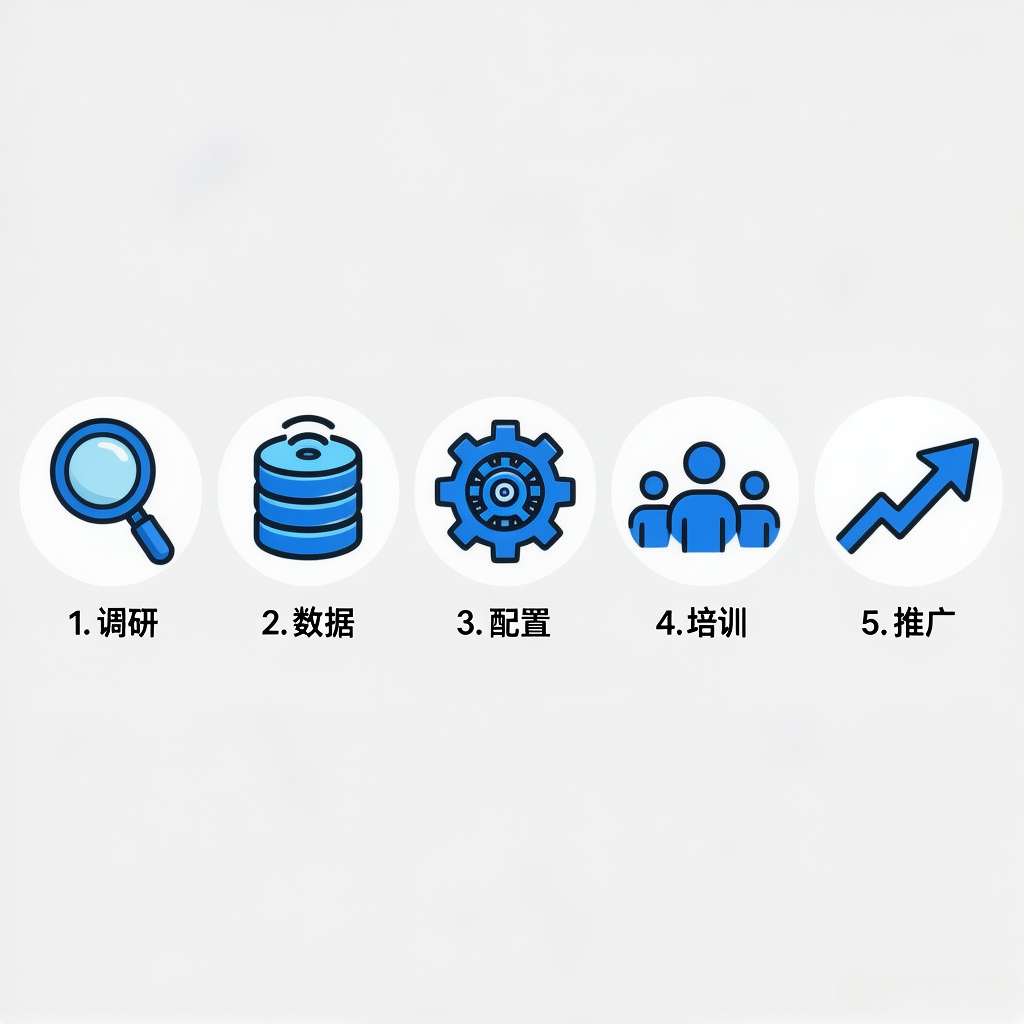
Step 1: In-Depth Requirements Research and Scientific Solution Design
This is the cornerstone of the entire project and determines the direction and success of all subsequent work. This stage is by no means a simple check of a feature list; the project team needs to go deep into the workshop frontline and communicate fully with people at all levels, from management to frontline operators.
Comprehensively diagnose the status quo: sort out in detail the enterprise's existing core business processes such as production planning, material flow, process job reporting, quality management, and equipment maintenance, and precisely identify the current management pain points and bottlenecks.
Clarify business goals: work with enterprise management to establish clear, quantifiable project goals, such as "shorten the mold delivery cycle by 20%" and "achieve real-time visualization of production progress".
Design a customized blueprint: based on the research results and business goals, an experienced consulting team designs an implementation plan that both conforms to industry best practices and fits the enterprise's unique business model. This blueprint will be the "construction drawing" for all subsequent work.
Step 2: Lay a Solid Foundation—Comprehensive Data Preparation
The MES system is hailed as "an engine that drives production with data", and its effectiveness depends entirely on the accuracy, completeness, and timeliness of the underlying data. As the saying goes, "garbage in, garbage out"; without high-quality basic data, even the most advanced system cannot play its role.
The core task of this stage is to establish a unified and standardized master data management system, mainly including:
Material master data: establish a complete material coding rule and enter the specifications, attributes, and unit information of all raw materials, semi-finished products, and finished products.
Process routing: define the standard machining processes, work instructions, standard working hours, and the equipment/tooling used for each mold or part.
Equipment and resources: establish a detailed equipment ledger, including equipment type, capacity, status, and maintenance plan.
Organizational structure and personnel: define clear workshop, team, position, and personnel information, laying the foundation for permission management and performance assessment.
Data cleaning and entry involve a large and tedious workload, but it must be treated rigorously. It is recommended to set up a dedicated data team and formulate strict data validation rules.
Step 3: System Configuration and Flexible Custom Development
After the blueprint and data preparation are ready, the system enters the "building" stage. Modern mature MES platforms usually provide powerful configuration capabilities and can meet most general needs through parameter settings.
System configuration: according to the design plan, configure business processes, approval flows, report templates, kanban views, alarm rules, and so on in the system.
Custom development: for in-depth needs unique to the mold industry that cannot be met through standard configuration (such as complex mold repair history tracking and trial molding management), secondary development is required. Excellent vendors adopt low-code or modular approaches to ensure the stability and future maintainability of the customized parts.
Integration: seamlessly integrate the MES system with the enterprise's existing ERP, PLM, and equipment control systems (such as CNC and EDM) to break down information silos and achieve automatic data flow.
Step 4: Empower Employees—System Training and Pilot Operation
No matter how perfect a system is, ultimately people need to operate it. Therefore, the human factor is the key to project success. The goal of this stage is to make employees not only "able to use" it, but also "willing to use" it.
Training by level and by role: design dedicated training courses and operation manuals for different positions (such as planners, workshop supervisors, team leaders, operators, and quality inspectors) to ensure the training content fits actual work scenarios.
Pilot in a small scope first: choose a representative production line or a typical product series for pilot operation. During the pilot, the project team must be on site throughout to support and quickly respond to and solve any problems that arise. The success of the pilot not only verifies the effectiveness of the plan, but also builds an internal benchmark, accumulating valuable experience and confidence for full rollout.
Step 5: Full Rollout and Continuous Optimization
After the pilot succeeds, the system can be gradually rolled out to all relevant business units across the plant. But this does not mean the project is over; it is a new beginning—the continuous optimization stage.
Phased rollout: formulate a detailed rollout plan and advance steadily by workshop and by product line, avoiding the chaos brought by a "one-size-fits-all" approach.
Establish an operations and maintenance system: cultivate internal system administrators and key users to form independent operations and support capabilities.
Data-driven optimization: after the system goes live, it will generate massive amounts of production data. Regularly analyzing this data can reveal new improvement opportunities, such as further optimizing process takt time, adjusting scheduling strategies, and predicting equipment failures. The MES system should become a living, continuously evolving management tool.
As a professional software service provider deeply engaged in the mold industry for more than ten years, Moges has a deep understanding of the industry's unique challenges and needs. We not only provide a powerful MES product, but also provide full lifecycle support from consulting and implementation to continuous service. We have successfully helped 200+ mold enterprises in the Yangtze River Delta region achieve digital transformation, shortening delivery cycles by 22% and reducing costs by 35% on average. You are welcome to contact us at any time to discuss your intelligent manufacturing upgrade path together.