Guide to Equipment Debugging and Management for Small and Medium-Sized Precision Manufacturing Plants: Maximize Capacity with Automated Tools
2026-06-16 08:03:02
Last month, I visited a precision stamping mold factory in Kunshan to discuss a potential partnership. The owner expressed his frustration, stating that six months ago, he invested 3 million yuan in upgrading two automated CNC machines, with the expectation of increasing his workload by one-third. However, after actually implementing the new machines,Utilization rate is consistently below 85%.
After investigating for half a month, we discovered that the problem is entirely due toDebuggingAbove: An experienced machine operator left, taking a half apprentice with him. When replacing a mold with the same type, the original operator could adjust it in two hours, while the apprentice took half a day, and produced several defective parts. Last time, the apprentice took on a product that had been made six months ago. After searching through the notebook, he couldn't find the previous debugging parameters, and it took him three hours to try again, resulting in the waste of four pieces of material, and he also missed the customer's deadline.
Many factories can afford automated equipment costing several million, but struggle to manage the debugging records that cost only a few hundred dollars. This is not an isolated case.
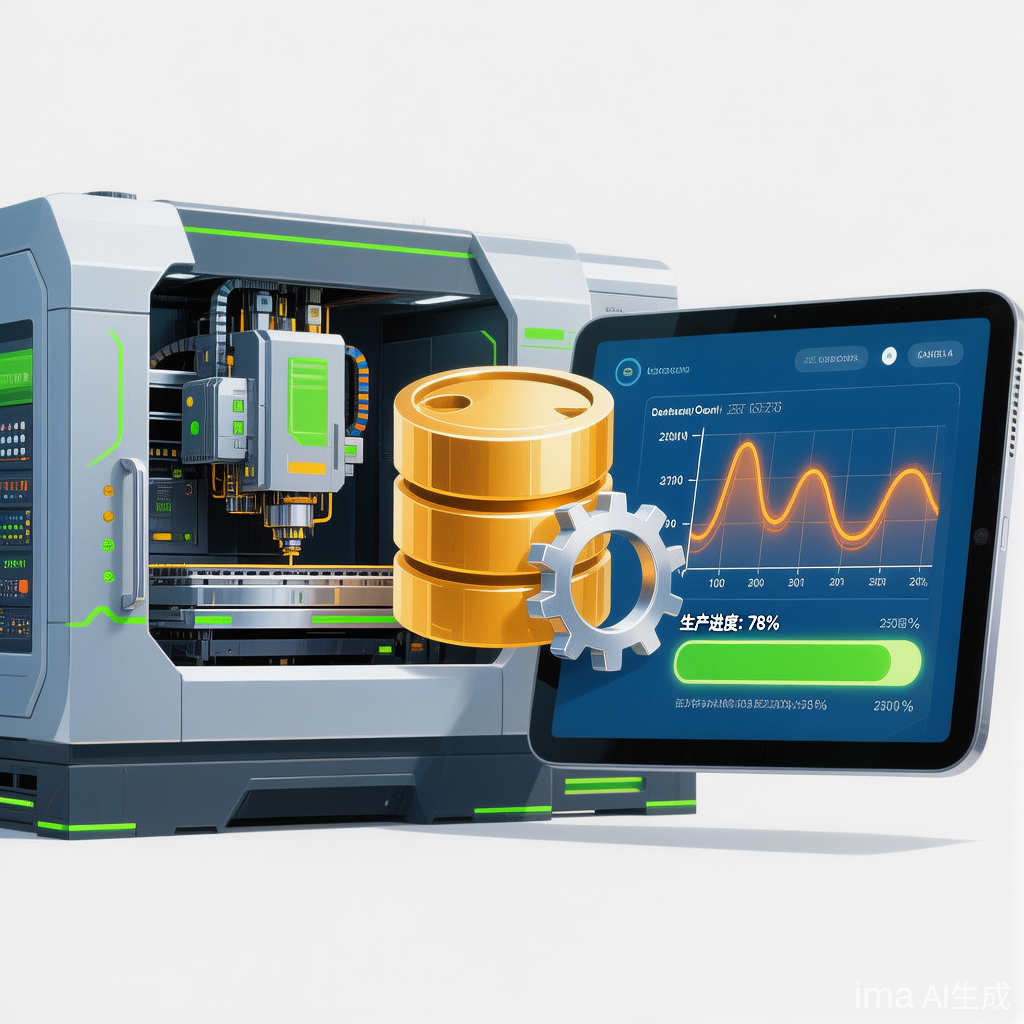
1. Most factories overlook this: chaotic debugging is the biggest waste of automated equipment.
Many owners believe that once automated equipment is purchased, production capacity will naturally increase. However, this is not always the case. The ability of equipment to deliver value depends on 90% on on-site management and proper commissioning, which is often overlooked. Through my experience with numerous small and medium-sized precision machining workshops, the most common commissioning and management issues are as follows:
| Management Pain Points | Specific manifestations and hazards |
|---|---|
| Parameters are to be memorized. | Debugging parameters are typically stored in the technician's notebook or their memory. When changing personnel or repeating the same task several months later, everything must be retested from scratch, which is both time-consuming and wasteful of raw materials. |
| No process recording. | When the first piece is defective, it's unclear whether the issue is with the materials, tools, or parameters. Troubleshooting relies on guesswork, which often leads to getting stuck and delaying the delivery cycle by half a day. |
| Lack of visibility on progress | The scheduler doesn't know when a machine will be ready for maintenance, making it impossible to schedule the next task in advance. This frequently leads to a situation where subsequent processes are idle, creating a bottleneck. |
| Experience is difficult to accumulate. | The experienced master has left, taking his skills with him. The training period for new apprentices has doubled, and we are unable to handle urgent orders. |
Don't underestimate these hidden wastes. The cumulative waste from debugging alone is roughly equivalent to closing an entire production line. Many business owners only calculate costs based on equipment depreciation and materials, never factoring in this type of waste. As a result, they unknowingly lose money without understanding the root cause.
II. Truly practical debugging and management tools, focusing on solving these 4 core issues.
For small and medium-sized factories with an annual turnover of 10 million to 50 million, automation equipment debugging and management tools do not need to be overly complex or comprehensive. By focusing on solving the core issues, they can achieve 80% of the value.
Standardized binding storage for debugging parameters:After each debugging cycle is completed, the technician scans the code to report the work, entering the parameters into the system, directly linking them to the mold number and product number. The next time the same product is produced, the technician can retrieve the parameters by searching for the mold number and use them directly, eliminating the need for repeated trial and error.
Seamless integration across the entire production process:Debugging itself is a critical process. Effective tools will synchronize debugging time, the number of prototypes, and pass/fail rates into the production schedule. The scheduler can see at a glance which equipment is being debugged, when it will be finished, and can proactively schedule subsequent operations, preventing idle time.
Traceable Debug Logs:When the first piece is defective, you can directly retrieve the parameters, tool model, and material batch from that specific instance, allowing you to pinpoint the issue within minutes. Even if a customer reports a problem months later, you can quickly identify the responsible party and capture valuable improvement experience.
Extremely user-friendly operation:Line workers won't use complex systems. Scanning barcodes allows for data entry, and smartphones enable parameter lookup. No need for a week-long training program; users can quickly become proficient in a single day, eliminating the issue of reluctance due to perceived complexity.
3. Choose an automation equipment debugging and management tool, and don't be misled.
Having worked in this industry for 14 years, I've seen many factories fall into the same traps. They spend money on tools that ultimately prove useless. The common pitfalls include:
Believing in the more expensive option:Many large factories use systems costing hundreds of thousands of dollars, but 90% of the features are not needed by small businesses. The annual service fees alone can equal the salary of one employee. The best solution is to choose a system that meets your specific needs, rather than trying to find a system that does everything.
Focus solely on functionality, not implementation:This tool, developed solely by an IT company, lacks the necessary features for mold debugging. It requires filling out approximately 10-15 fields, and the technicians are unwilling to use it.Three parts software, seven parts implementation.Having an implementation team that understands molds and machining is more important than the software itself. The founders of Moges come from mold workshops at Foxconn, and their expertise is ingrained.
It's not necessary to implement all modules at once.The team struggled to adapt to the system that included production, quality, and inventory management, which was pushed upon them by the supplier. The correct approach is:Pilot first, then promote.First, focus on getting the debugging and management features working, and then gradually expand from there.
4. Implement thorough debugging and management, resulting in tangible and measurable returns.
As mentioned at the beginning, the Kunshan factory first piloted and deployed the management module. Within the first month, they were able to see noticeable changes:
Average production debugging time for the same mold.Reduced by nearly 50%;
Sample waste partsReduced by 30%;
New employee training cycle directlyReduced by half;
The utilization rate of newly purchased CNC machines is less than 50%.Mentioned that over 70%This effectively eliminates the need for additional equipment, resulting in the production of over 10 molds per month.
Many business owners believe that digitalization is something only large companies can afford. However, a simple calculation reveals the truth: a high-end automated device, costing around 1 million,Increased utilization by 10%, generating profits for over a year, far exceeding the initial investment in the tools.; The master's experience and expertise become a valuable asset for the factory, and will not be disrupted due to personnel turnover. This is a benefit that cannot be purchased with money.
Most people spend the majority of their budget on purchasing equipment, but only a small fraction on managing it. The ability of equipment to generate profits is not determined solely by its initial purchase.