How to solve slow mold pricing? Calculate this, and achieve 10-minute accurate quotes in 3 steps.
2026-06-19 08:31:45
Introduction: Slow quoting can be a costly mistake, potentially resulting in losses of over 200,000 per year.
If you've searched for "mold pricing is too slow how to solve it," you've likely experienced frustration – either losing customers to competitors who can provide quick quotes, or making rushed, inaccurate quotes to secure orders, only to find that the orders are unprofitable or even result in losses.
Many business owners believe that slow quoting is simply a matter of spending more time, but that's not actually the case. Having worked in the mold industry for 14 years, I've seen over 100 factories, and I've consistently found that slow quoting is a significant problem.Slow quotation processes lead to lost orders and wasted labor, resulting in losses of tens of thousands of RMB per year for small and medium-sized mold factories, and losses of tens of thousands of RMB are common for larger factories.
Let's be clear: for a medium-sized mold factory, an average of 10 valid inquiries per month, with a 30% loss of quotes (3 quotes), and an average net profit of 5000 yuan per set,Annual loss of 180,000 due to order losses.; Furthermore, experienced technicians spend 1/3 of their time on data retrieval and recalculation (monthly salary of 1.5 × 1/3 × 12).Hidden labor waste of 60,000 per year..Totaling 240,000, these funds can be completely saved.
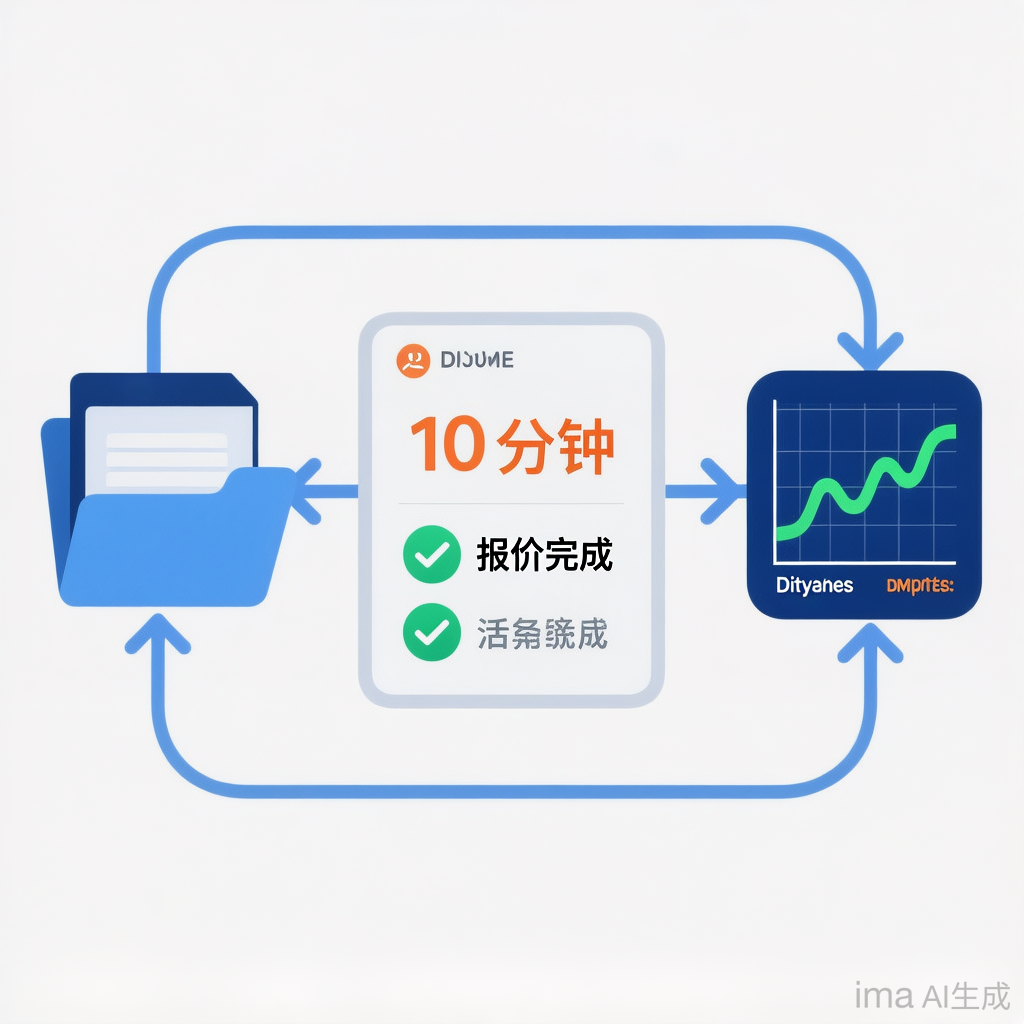
Root Cause Analysis: The three key issues that cause slow quoting and repeated revisions are:
Historical data not found:Currently, mold pricing information is locked in individual computers or filing cabinets, making it difficult to access and compare. There is existing reference data, but it requires manual calculation from scratch.
Base prices are not uniform:Steel prices, processing costs, and external vendor prices are not shared through a central price list. Obtaining a price quote requires contacting multiple people, and the process can take up to half a day.
Relying solely on manual calculations leads to errors:Calculate volume weight, cumulative processing time, and profit margin, and even a single error will require a complete rework. The faster the process, the more likely errors are to occur.
3 Practical Solutions: From Cost Reduction to Speed Improvement
Avoid investing tens of thousands of dollars or implementing a large system all at once. Start with small, targeted changes and see results quickly.
Step 1: Standardize and archive historical quotation data.
Organize all quotations from the past 3 years by mold type, tonnage, accuracy, and number of cavities, and store them in a shared location accessible to everyone. When requesting a quote next time, first search for historical quotations of the same type, and then adjust the parameters based on those, eliminating the need to start from scratch.Many factories only focus on this step, which results in a speed increase of over twice the original rate.
Step 2: Centralize the management of base prices and update them at any time.
Consolidate raw material prices, labor costs per process, and external vendor quotes into a unified, shared price table, with prices updated in real-time. For example, if the price of steel increases by 500 yuan/ton, all subsequent quotes will automatically use the new price, avoiding underpricing and potential losses, while also saving time on communication.This step alone can save at least half the time spent on communication.
Step 3: Replace manual, repetitive calculations with professional tools.
After completing the first two steps, use the tool to automate repetitive calculations: input mold basic parameters, and the system automatically generates pricing and historical reference data, resulting in accurate quotes in a matter of minutes.
Important Note:Don't look for generic systems! Mold solutions are customized, and the pricing logic is completely different from that of mass-produced products. Kunshan Moges has been specializing in mold industry management systems for 14 years, and has a deep understanding of the characteristics of customized pricing, including seamless integration of historical data retrieval, price updates, and automated calculation processes.Previously, many customers would take half a day to receive a quotation, but now the average time is 10 minutes.
Small and medium-sized enterprises (SMEs) often worry about: * High costs * Complexity
Industry experts have long recognized:Mold management provides 80% of its value from 20% of its core functions.Don't try to implement all the production, quality, and finance modules at once. Instead, focus on solving the most pressing issue, which is pricing, and recover the tens of thousands of dollars lost each year. Then, gradually expand the system.
The standard approach for providing ERP/MES solutions to small and medium-sized mold factories is to begin with a pilot program, followed by full implementation. This includes on-site consulting services, enabling users to start using the system within three months, and ensuring that frontline employees can easily adopt it.
Let's recalculate:Previously, the slow quotation process resulted in a loss of tens of thousands of yuan per year. Now, by solving this problem, the annual investment is only a few thousand yuan, which is equivalent to recovering a tenth of the lost profit at a fraction of the cost. This is a highly cost-effective solution.
Conclusion: Today, we've cleared this account.
The mold industry is highly competitive, and customers compare prices from multiple suppliers. Falling behind in quoting can result in lost orders. Consider taking just ten minutes today to review your quotation records for this month and calculate how many orders were lost due to slow quoting.
The answer is clear: once you make the change, you can proceed.