The Headache Every Non-Standard Manufacturer Owner Knows: How to Fix Tedious Purchase Reconciliation? 3 Actions to Compress 3 Days of Work into 2 Hours
2026-06-19 10:02:55
Introduction: The Monthly 3-Day Reconciliation Nightmare—Is It Really the Finance Team's Carelessness?
Last week I had tea with Mr. Wu, owner of a non-standard automation equipment business. He showed up an hour and a half late, shirt soaked with sweat. It turned out he had spent the entire morning reconciling month-end accounts: statements from three suppliers differed by more than RMB 3,000, and he could not find the discrepancy even after going through every purchase order and goods receipt record. This is no isolated case—of the dozens of non-standard manufacturers I have worked with, more than 80% have complained that "purchase reconciliation is too much of a hassle." At the start of every month, the finance team puts everything else on hold and spends three or four days on reconciliation alone; when errors surface, they redo the work, and the whole office is thrown into chaos.
But let me be fair here: this is not the fault of careless finance staff—it is a pitfall built into the customization-driven nature of the non-standard industry. Blaming employees and redoing work blindly gets you nowhere; only the right approach saves both headaches and time.
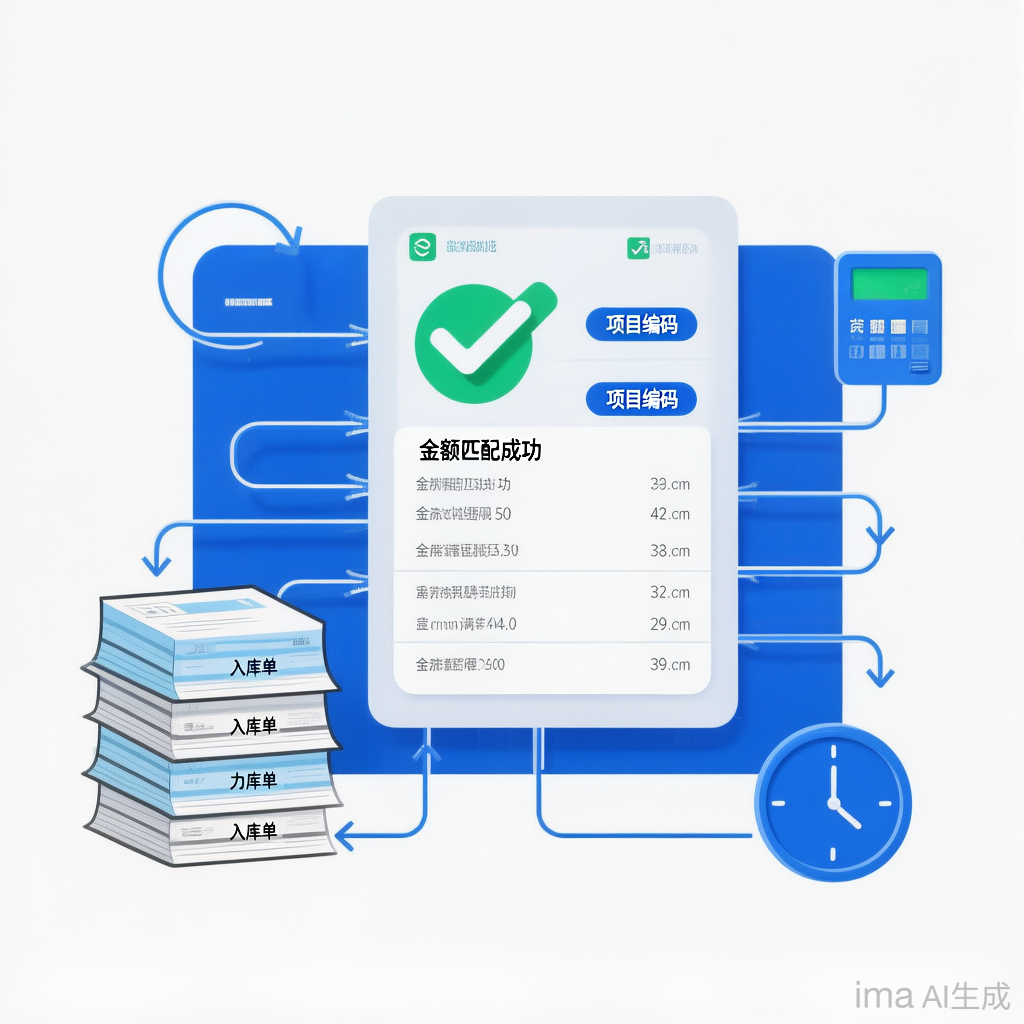
Setting the Record Straight: Tedious Purchase Reconciliation Is Inherent to the Non-Standard Industry
Many owners fire their finance staff the moment reconciliation goes wrong, when in fact non-standard automation comes with reconciliation challenges built in from day one:
Highly customized BOMs: materials rarely repeat across projects, there is no fixed reconciliation pattern, and every single transaction must be verified individually;
Partial deliveries as the norm: manual ledgers often miss received quantities, leaving buyer and supplier telling two different stories;
Multi-project supply overlap: one supplier feeds materials to several projects at the same time, and manual allocation easily mixes items up or records them against the wrong project;
Dynamic price fluctuations: purchase prices for the same material may vary between batches, and manual orders that are not updated in time cause totals to mismatch.
These problems stem from the nature of the business. Even a seasoned accountant with ten years of experience, hunting for data and piecing amounts together day after day, is highly likely to make mistakes.
Root Cause Analysis: Disconnected Front-End Data Means Reconciliation Is Forever Patching Holes
The reality at most non-standard manufacturers looks like this: engineering produces the BOM → purchasing manually copies it into Excel to place orders → the warehouse keeps its own separate ledger → at month end, finance chases all three parties for data to piece the numbers together. With mismatched formats, codes, and timestamps, how could the numbers ever line up?
The solution is not adding headcount to finance, but linking the data together from the very first step of procurement creation. Moges PMS9, for example, uses the BOM as the core that drives the entire workflow:
When a BOM is released, purchase requisition details are generated automatically, with each material carrying its project code and material code;
Purchase orders are generated from requisitions and inherit all source information;
Every receipt is automatically bound to the corresponding purchase order, updating receiving status in real time;
At reconciliation time, all information is aggregated under the purchase order, cutting 80% of the time spent hunting for data.
Under this model, finance no longer has to beg for data from every corner, and reconciliation becomes a natural, effortless step.
3 Practical Actions to Cut Reconciliation Time from 3 Days to 2 Hours
You do not have to switch systems overnight—implement these three actions first and you will see a clear difference:
1. Every purchase order must be linked to a project and a material code
Never rely on material names alone! The same name may correspond to different specifications and prices. Once items are linked to projects and codes, statements can be filtered by supplier or project with one click, with no need to manually piece together materials across projects. This single step alone saves half the time. Even for small shops, standardizing codes for commonly used materials beats having none at all.
2. Record every receipt as it arrives, and always link it to the corresponding purchase order
Stop batching entries until month end! If partial deliveries are recorded as one, quantities will inevitably be wrong. Even with Excel, register received quantities against the purchase order every time a batch arrives. At month end you simply run the totals—no more digging through piles of delivery notes line by line.
3. Send your own statement to suppliers first—don't wait for theirs
Turn passive into proactive! Generate your statement from your own receiving records and send it to the supplier; if there is an issue, they point out which line is wrong instead of you hunting for discrepancies. If your data chain is connected (e.g., with Moges PMS9), you can directly export all "received but not yet invoiced" line items for a given supplier over any period, with unit prices and amounts calculated automatically—a statement ready in minutes.
After putting this into practice, a Suzhou-based non-standard new energy equipment manufacturer cut reconciliation with more than 20 suppliers from 3 days to under 2 hours, reduced the discrepancy rate below 5%, and now settles most months in a single pass.
Pitfall Guide: These Two Misconceptions Waste Money and Solve Nothing
Misconception 1: buying a reconciliation tool without changing front-end processes. Purchasing and the warehouse still keep separate books, so you keep exporting and importing data at reconciliation time—just one more step added. The root of reconciliation problems lies in front-end purchasing and receiving; if the source is wrong, no amount of fixing downstream will help.
Misconception 2: forcing full-batch purchases for easier reconciliation. Materials originally delivered in three shipments are demanded in one go so they can be reconciled at once, leaving the warehouse full of dead stock that ties up cash flow. The extra inventory cost far exceeds the labor cost of reconciliation—penny wise, pound foolish.
Conclusion: The Time You Save Is Your Real Profit
The non-standard industry runs on high variety and small batches, so chasing zero discrepancies is unrealistic. The goal is not to eliminate every difference but to eliminate the repetitive labor of hunting for data and piecing amounts together, freeing finance to spend time on more valuable work such as cost analysis and supplier negotiation.
Compared with spending three or four days reconciling accounts over a few thousand yuan in differences, saving that time to follow up on one more project or refine one more process delivers far greater returns. With the right approach, reconciliation is no longer a nightmare but the starting point of lean, fine-grained management.