A Guide to Avoiding Pitfalls in Choosing a Production Management System for Sheet-Metal Fabrication Plants: Small and Mid-Sized Shops Must Not Fall Into These 5 Fatal Misconceptions
2026-06-30 08:02:04
Last week an owner of an automotive sheet-metal parts supplier in Kunshan came to me to complain. His plant has annual output over RMB 30 million, and on a friend's recommendation he had spent RMB 180,000 on a "general manufacturing ERP". After nearly a year of implementation it was still half manual and half system: when a customer asked about order progress, someone had to walk halfway around the shop to answer; outsourcing reconciliation took three or four days a month and still often went wrong.
He was puzzled: "The functions looked complete when we chose it, so why does it not work in my plant?" Choosing an ERP for a sheet-metal plant is indeed deep water, and many small and mid-sized shops have fallen into similar traps. Today, drawing on 14 years of industry IT experience, I summarize the 5 most fatal misconceptions small and mid-sized sheet-metal shops fall into when choosing a system to help you avoid wasting more than RMB 100,000.
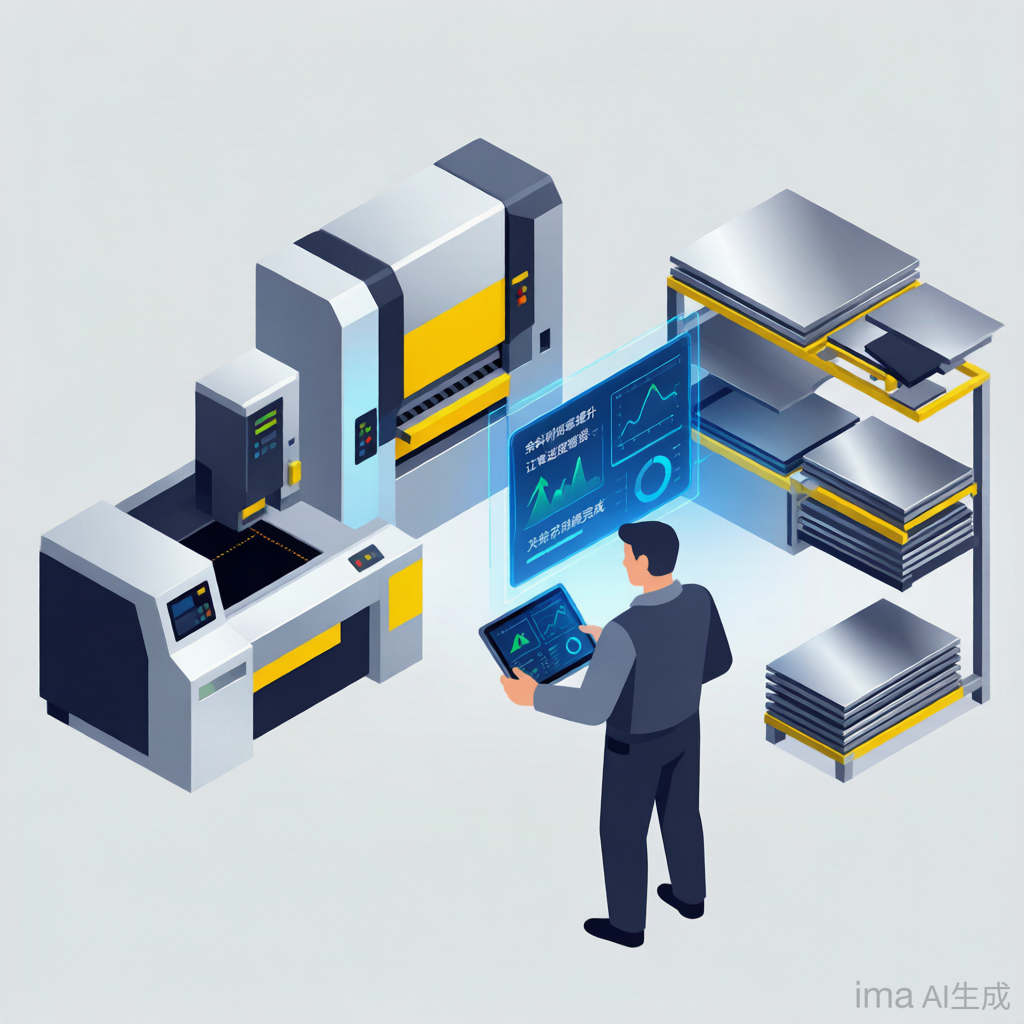
Misconception One: Do Not Choose a "General ERP" to Make Up the Numbers; It Must Match the Special Characteristics of Sheet Metal
The first trap many small and mid-sized sheet-metal shops fall into is choosing a general manufacturing ERP to save money or chase a brand name. The salesperson pledges that "we can do any industry", but in reality the underlying logic of general ERP is designed for "standard batch production" and simply cannot fit the actual production scenarios of a sheet-metal plant.
Conflict between multiple production modes: a sheet-metal plant takes both one-off outsourcing jobs and long-term batch supply for customers, and may even have its own mold machining department. One moment it is project-based and the next batch production, and a general ERP struggles to switch between the two logics.
Extremely cumbersome ad-hoc order changes: custom sheet-metal orders are many, and customers changing material or dimensions at short notice is normal. Changing a BOM in a general ERP means layers of approval and parameter edits, taking most of a day and seriously delaying production.
Outsourcing management in name only: cutting and surface treatment (such as painting and electroplating) in sheet metal are mostly outsourced. How much was sent out, how much came back, how much was lost and whether the accounts balance? The outsourcing module of a general ERP cannot track the full process, and in the end you still reconcile by hand in Excel.
Pitfall-avoidance tip: the first step in selection is to confirm whether the system was developed specifically for the sheet-metal industry, whether it supports both project-based and batch production, and whether it has strong closed-loop outsourcing management capability.
Misconception Two: Do Not Try to Have Everything at Once; Solving 80% of the Core Pain Points Is Enough
Many owners are led along by sales and, seeing hundreds of functions such as BI dashboards and intelligent decision-making, think they are all useful and buy the lot. They end up paying double and actually using under 20%. Frontline staff find it too complex and collectively resist, and the system ends up as an ornament.
For sheet-metal shops with annual output from RMB 10 million to 500 million, 80% of the value comes from 20% of the core functions. As long as the following core pain points are solved, the ERP is qualified:
Transparent progress: when a customer asks about an order you do not have to run to the shop; the step each order has reached (laser cutting, bending, welding) is clear at a glance.
Accurate cost: how much each batch of orders and each part earned is crystal clear, so no one discovers a loss only when the year-end accounts are totaled.
Remnant material management: the pain point unique to sheet metal; the system can search and call on remnant material first, greatly reducing raw material waste.
Outsourcing reconciliation: what was sent out, what came back and what was deducted for defects are all clear, with a statement generated at month end in one click.
Minimalist work reporting: easy for frontline staff, with operation flow completed by scanning a code, and no need to learn complex computer operations.
Misconception Three: Do Not Compare Only Software Features; an Implementation Team That "Knows the Business" Matters More Than Anything
"Three parts software, seven parts implementation" — I have said this for over a decade, yet many owners compare only price and choose whoever is cheapest. They buy cheap software, and once the money is paid there is only an online support agent sending videos for self-study. Most frontline employees have limited education and cannot even work out how to log in, and in the end the money is all wasted.
| Comparison Dimension | Ordinary Software Vendor | Moges Industry Experts |
|---|---|---|
| Implementation team | No industry experience, reciting from a script | Deeply rooted in the sheet-metal and mold industry, understanding both process and management |
| Go-live strategy | Overturns everything and stalls production | Five-step implementation, piloting core operations first and going live smoothly within 3 months |
| After-sales service | Remote support with slow response | Implementation consultants on site, with two-hour on-site service in nearby areas |
A good implementation team knows how to help you organize master data and how to guide employees step by step to accept the new way of working. Only a team that can achieve an implementation success rate above 95% can truly get the system "running" for you.
Misconception Four: Do Not Ignore the Underlying Architecture; Stability and Security Are Lifelines
Many small shop owners think: "I only have a few dozen people; any Windows-based system will do." In reality, small and mid-sized shops have no dedicated IT team, and if the system fails or catches a virus, data loss can be catastrophic.
I once saw a customer who had used a small vendor's Windows system; the server caught ransomware, years of order and drawing data were lost, and the loss was severe.
Pitfall-avoidance tip: many excellent vertical-industry systems now use a native Linux architecture, whose advantages are very few viruses and high stability, with performance that does not degrade even after ten years of continuous running. In addition, mobile support (phone and tablet) is essential: an owner out meeting customers or on a business trip can open a phone and see production progress and inventory. This is standard for a modern ERP.
Misconception Five: Do Not Treat System Adoption as "The Department's Job"; Without the Owner Leading, It Will Most Likely Fail
The last trap is the most fatal. Many owners buy a system, hand it to the production supervisor or the IT department, and walk away. In reality, adopting a system is a "top-leader project", and when the owner does not lead, 9 out of 10 fail.
Frontline employees have done manual bookkeeping for over a decade and are reluctant to change. If the owner does not keep an eye on it, everyone will "avoid trouble" and the new system simply will not move. Every factory I have seen go live successfully had the owner personally watching for the first month, checking reporting data every day and solving problems on the spot. Within half a month employees form the new habit, and after that it runs completely smoothly.
Conclusion: Choose the Right System and Small Shops See Clearer Cost Reduction and Efficiency Gains
Choosing an ERP for a sheet-metal plant comes down to finding a solution that fits your current stage of development. Do not blindly chase big brands, do not try to have everything at once, and first solve the immediate core problems of "remnant material waste, black-box progress and muddled outsourcing accounts".
Many small and mid-sized shops think digitalization is the preserve of big plants. The opposite is true: with thin order margins, small and mid-sized shops need cost and progress calculated clearly even more so that they earn with clarity. Choose a system that understands the sheet-metal industry, and the ROI (return on investment) of cost reduction and efficiency gains is often even more striking than at a big plant!