Where Does Digital Transformation of a Machining Shop Start? A 3-Step Practical Guide to Low-Cost Adoption for Small and Mid-Sized Shops
2026-07-01 08:31:35
Many machining shop owners want to digitalize but do not know where to start: they are afraid the money will buy something nobody uses, and afraid it is too complicated for the workers to learn. Last month I met a machining owner in Zhangjiagang with annual output over RMB 20 million. Last year a friend told him digitalization was the way to go, so he spent several hundred thousand yuan at once on a full system and rolled it out across the whole shop. More than half a year later the workers still reported work by hand, half the system data was wrong, progress was still unclear, the money was spent with no visible result, and he now gets a headache whenever digitalization is mentioned.
I have seen this far too often. It is not that digitalization is useless; the entry point was wrong from the start. For a small or mid-sized machining shop, transformation does not require a huge all-encompassing project. Start from the pain points and go step by step, and you can succeed at the lowest risk.
1. Do Not Spread a Huge Table at the Start; Lock In Your Core Pain Point First
Many people misunderstand digital transformation, thinking it means buying a full system at once and replacing a pile of equipment with smart devices. For a small or mid-sized machining shop with annual output from RMB 10 million to 500 million, that approach will most likely end up unfinished.
Take a notebook and list the problems the shop runs into every day, then rank them: are you hunting for order progress all day? Can cost not be calculated at month end? Do outsourced jobs often go missing? Pick the pain point ranked first, and solve only one core problem at a time. We have seen too many factories try to solve progress, cost, quality and equipment all at once, and end up with so many functions that the workers cannot learn them. It is enough to follow the rule that 80% of the problems are solved by 20% of the functions.
2. Three Key Steps to Low-Cost Adoption at a Small or Mid-Sized Shop
Step One: Sort Out the Basic Data, Without Aiming for Perfection
Many people skip this step and go straight live, and end up with "garbage in, garbage out". But you do not need to spend months building a complex standardization system like a big plant; a small or mid-sized shop only needs one or two weeks to sort out the most basic information:
Unify operation names: for the same roughing operation, do not have some people call it rough milling and others call it roughing. One name across the shop is good enough.
Standardize material naming: a round bar of the same specification is named uniformly as "specification plus material", so one search brings it up.
Give each machine a fixed number: one fixed number per machine, enough to match it to a person and to the machining record.
Get the basic data usable first, and optimize slowly after it is running. Chasing perfection from the start only drags you down.
Step Two: Pick One Operation as a Pilot, Get It Running, Then Roll Out
Once the basic data is organized, do not rush to go live across the whole shop. Pick the operation with the most obvious problem and pilot there first. This carries the lowest risk, and it lets the workers see the benefit for themselves.
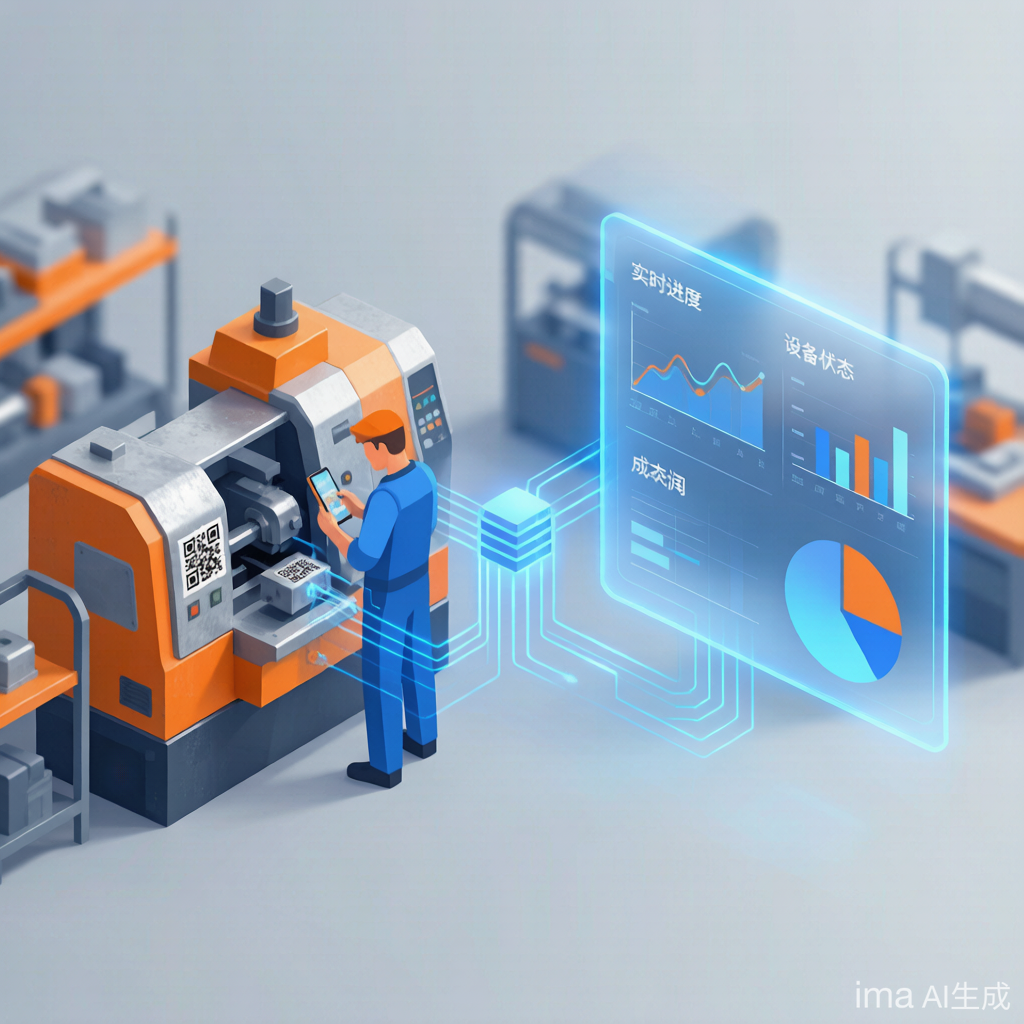
If the core pain point is invisible progress, start with the milling team. Work reporting is now done by scanning: the worker takes a phone, scans the QR code on the workpiece, taps start and finish, and it is done in 10 seconds. When Moges implemented a system at a precision machining plant in Kunshan, it piloted the outsourcing operation first. Previously, sending out outsourced work relied entirely on the team leader writing it in a notebook, and reminders were often forgotten, causing delays. After one month of the pilot, the system automatically reminded of outsourcing due dates, and delivery delays fell by 70%. Seeing the benefit, the team leader asked to roll it out to the other operations.
Step Three: Get the Core Process Running First, Then Expand Functions Slowly
Many factories turn on quality, equipment and inventory all at once when they go live, and the workers get so intimidated by the process that they quietly go back to the old method. The right approach is to first get the process that solves the core pain point running:
| Core Process Node | Specific Problem Solved and Benefit |
|---|---|
| Order entry → operation scheduling | Production progress is shared across the plant, the dispatcher no longer has to run to the floor chasing jobs, any blocked operation is visible at a glance, and equipment and manpower can be adjusted in advance. |
| Scan-to-report → progress tracking | The owner can see all production on the phone while traveling, instead of taking a dozen calls a day asking about progress, freeing up time to develop business. |
| Cost accounting | Hours, material and outsourcing fees for every operation are tallied automatically. Profit or loss on each job is clear at a glance, and unprofitable orders are no longer taken. |
Once the shop is used to it, add quality traceability, AI scheduling and other functions half a year or a year later; there is no rush at all.
3. Three Parts Software, Seven Parts Implementation: Knowing the Industry Matters More Than Having Many Functions
A word of reminder: finding an implementation team that understands the machining industry matters far more than choosing software with every function. Many systems have plenty of features but no understanding of how one-off machining parts are produced, and using them is awkward at every turn.
After all these years, Moges has kept its implementation success rate above 95%. The core reason is that we came out of the mold and machining industry ourselves, so we understand the daily headaches you face, rather than being a pure IT company forcing a process onto you.
Conclusion: Transformation Is About Solving Headaches, Not Collecting Buzzwords
In fact, many small and mid-sized machining shops think about digital transformation in far too complex a way. The purpose of transformation is simply to solve the headaches you run into in the shop every day. You do not need to launch a huge project at once; as long as you find the problem that hurts most and start by solving it, you are on the right track.
Suggested action: walk through the shop today and think about which problem made you angry in the past half month. That is the best starting point for the digital transformation of your machining shop.