A Selection Guide for Small and Mid-Sized Discrete Manufacturers: How to Choose Full-Process Management Software Without Losing Money
2026-07-06 08:31:58
Has the Full Process Never Been Straightened Out? Small and Mid-Sized Discrete Manufacturers Bleed Hidden Money Every Day
If you are searching for "full-process management software recommendations for discrete manufacturing", chances are that tracking progress by hand and calculating costs in Excel have simply stopped holding up: mold deliveries slipping again and again, month-end unable to tell which job made money, outsourcing reconciliation always going wrong... These seemingly trivial problems can swallow RMB 100,000 to several hundred thousand of profit a year.
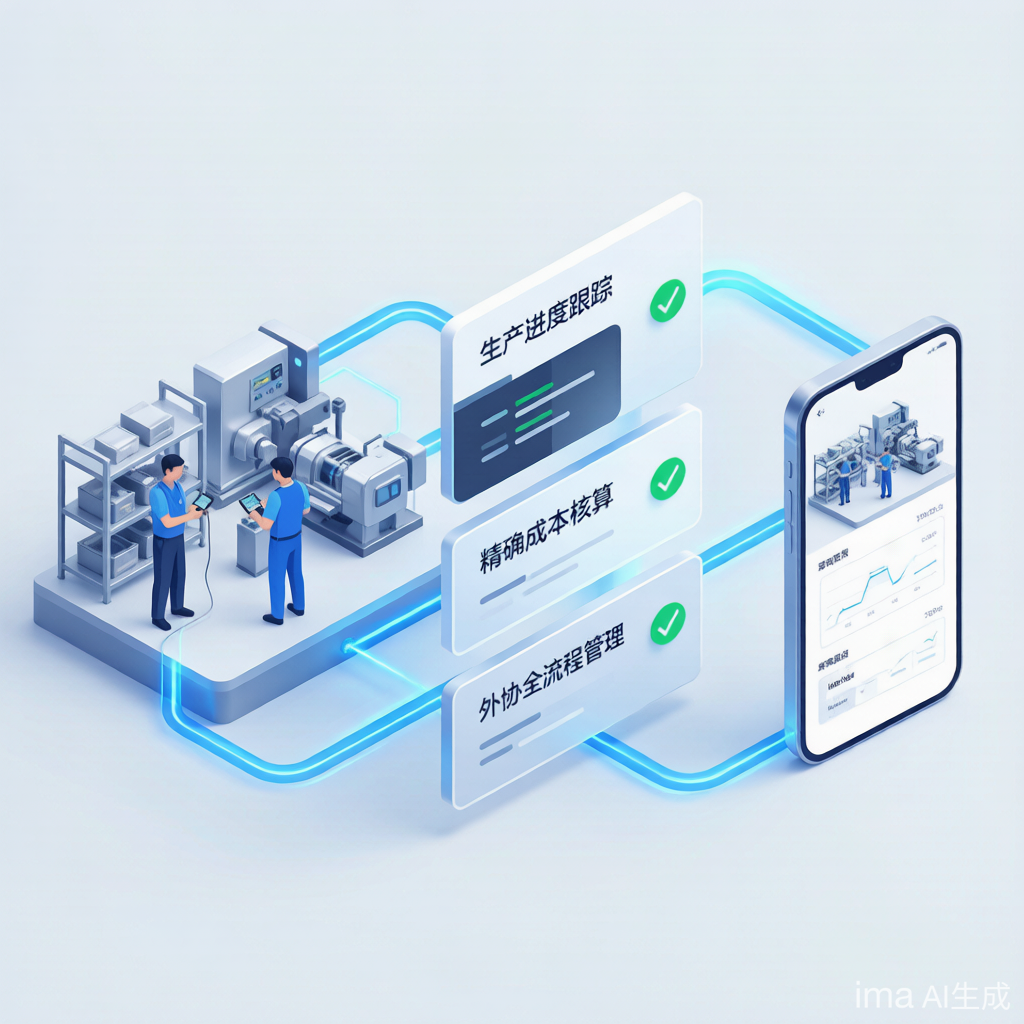
Discrete manufacturing (molds, precision machining) means many operations, every job different, and frequent outsourcing - hidden costs run extremely high:
Progress black hole: supervisors spend most of their time running through the workshop asking about status; salespeople quote delivery dates by guesswork, and a wrong quote loses the order
Muddled cost accounts: steel usage, offcut utilization, labor hours, and outsourcing fees all jumbled together - half a year without knowing profit or loss
Out-of-control outsourcing: jobs sent to three or five different shops, with return times and quantities tracked through chat logs; overpaying or missing deadlines goes unnoticed
Four Hard Selection Criteria: Fit Matters More than Fame
| Criterion | Key Point | Pitfall-Avoidance Tip |
|---|---|---|
| Industry fit | Must understand the mold/machining niche and support mixed project-based plus batch production | Customizing generic software costs hundreds of thousands and still disappoints; prefer a vendor with 14 years focused on this track |
| Core feature focus | Covers progress tracking, scan-based reporting, precise costing, outsourcing management, and mobile access | 80% of problems are solved by 20% of the core features; reject the flashy extras |
| Implementation capability | An industry-savvy implementation team, piloting core operations before rollout, live in 3 months | "30% software, 70% implementation" - be cautious with vendors offering no on-site service |
| Stable and secure architecture | Native Linux architecture: fewer viruses, higher stability, better performance | Windows-based systems are prone to viruses and crashes, with high long-term maintenance costs |
Three Common Pitfalls: 90% of Small and Mid-Sized Factories Have Stepped Into Them
Pitfall 1: Blindly chasing the expensive and the big
Systems built for factories of ten thousand plus carry 90% redundant features and require an in-house IT team to maintain. Small and mid-sized factories with annual outputs of RMB 10 million to RMB 500 million should choose lightweight tools - digitalization is not a big-company privilege.
Pitfall 2: Rolling out every module at once
Finance, HR, and supply chain all together means large process changes and strong frontline resistance, with a high rate of stalled projects. The right approach: start with the core modules for production, progress, and cost, then expand once they run smoothly.
Pitfall 3: The boss acting as a hands-off owner
Adopting a system is, at its core, changing management habits, and frontline staff naturally resist moving from manual to digital. If the boss doesn't lead the push, nine out of ten projects fail.
Conclusion: Sort Out Your Pain Points First, Then Match Them to the Selection Criteria
For small and mid-sized discrete manufacturers, full-process management software is not about becoming a "digitalization benchmark" overnight - it is about solving the three specific problems that hurt profit and delivery most today.
Stop and sort it out: what hurts most in your factory? Choose tools against the criteria above rather than chasing buzzwords. Choose right, and the hidden waste you eliminate is genuine net profit.