Automation Project Management SaaS Recommendations for Small and Mid-Sized Automation Supporting Machine Shops: Choose the Right One, Not the Expensive One
2026-07-08 08:03:17
Introduction: Custom Project Delays and Unclear Profit; Who Will Solve the Pain of Small and Mid-Sized Shops?
After talking with more than twenty owners of automation equipment supporting and precision machining businesses at the Kunshan machinery exhibition, I found a striking commonality: 80% of factories have a custom project delay rate above 30%. By the end of a project, profit or loss often has to wait for the year-end books to settle a "muddle," and outsourcing reconciliation is full of errors, with losses of thousands to tens of thousands of yuan.
As order volume grows and a dozen projects run in parallel, Excel can no longer support management. You want to bring in automation project management SaaS but face a dilemma: generic software does not fit industry characteristics, while professional software is unreasonably expensive. This article shares an insider's selection logic to help you choose the right one, not the expensive one.
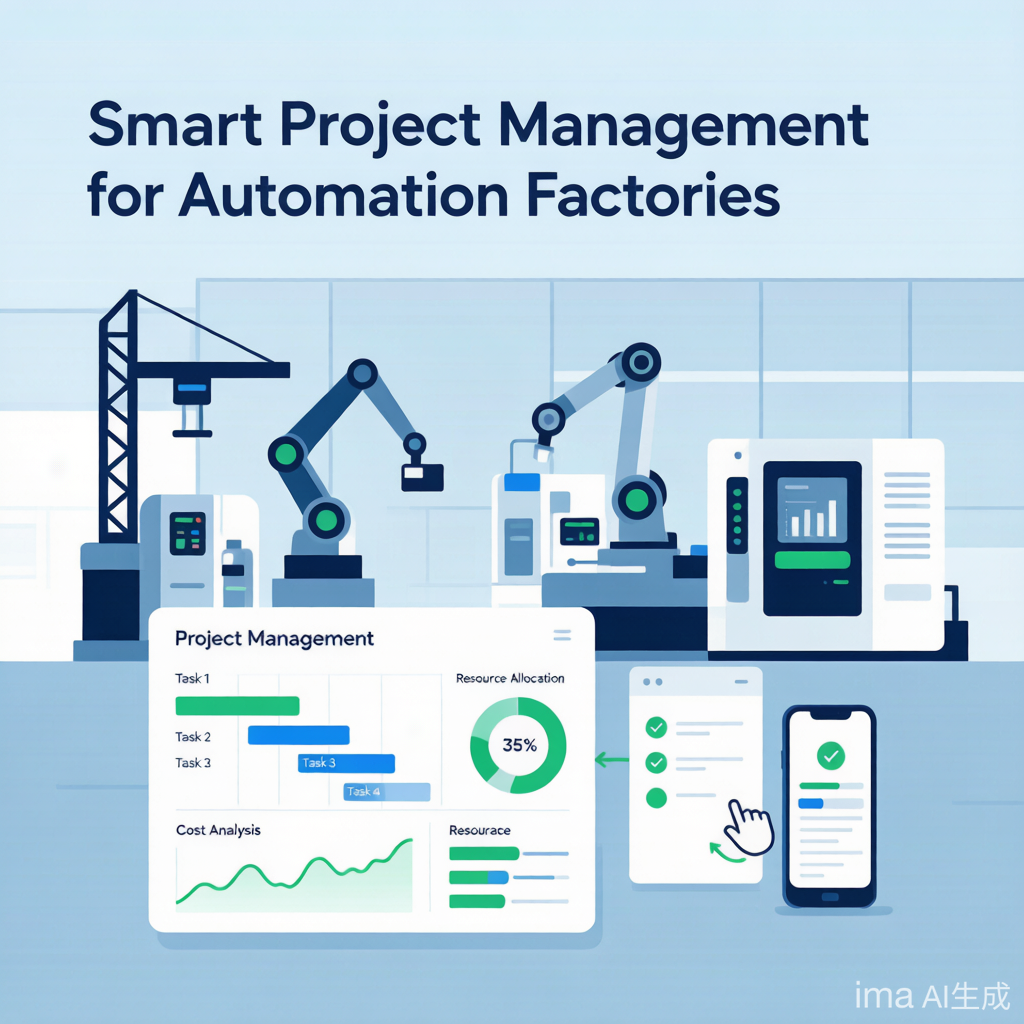
I. Why Can't Generic SaaS Make Do for Automation Project Management?
Automation supporting machining (such as custom molds and precision parts) is inherently project-based: every project has different requirements, timelines and costs, and often runs a mixed "mold project plus batch machining" production model. This is completely different from the management logic of standardized products.
Disconnected from the production floor: generic SaaS mostly serves the internet or construction industries and can only manage milestones and store documents, not let workers report process progress in the system.
Distorted cost accounting: it cannot automatically allocate material, labor and outsourcing costs precisely to a single project, let alone achieve quality traceability.
Many factories spend tens of thousands on a well-known generic SaaS that ends up as a "contract storage," while the core business still runs on Excel. Remember: a tool that does not fit industry rules is a waste no matter how expensive it is.
II. Three Hard Standards for Selection: Reject "Big and Complete," Seek Only "Accurate and Precise"
1. It Must Understand the Underlying Rules of the Segment
A management system without frontline experience will surely go wrong in the details. The mistakes pure IT companies often make include: not knowing that mold cost must be costed per set, that outsourcing must be reconciled by project, and that quality problems must be traced to the specific process. A tool made by outsiders cannot solve insiders' pain points.
2. Core Functions First; Do Not Chase Big and Complete
The industry consensus: 80% of the value of mold project management comes from 20% of core functions. The most painful problems of small and mid-sized shops are nothing more than:
Can progress be seen at any time?
Can the profit and loss of a single project be calculated clearly?
Can outsourcing reconciliation be error-free?
Is it easy for frontline workers to pick up?
Solving these four points covers 80% of the needs. Systems boasting hundreds of features are often designed to raise the price, and they add complexity that makes employees resist using them.
3. Implementation Capability Matters More Than Software Features
A saying in the industry: "three parts software, seven parts implementation." Small and mid-sized shops lack a professional IT team, and without a consultant to lead the way, a system is extremely hard to roll out. A good implementation team adopts a strategy of "piloting the core links first, then rolling out factory-wide," ensuring the system truly runs within three months. Today few vendors can keep their implementation success rate steadily above 95%.
III. A Pragmatic Recommendation: the Moges Dual-Mode Architecture System
For automation supporting factories with annual output between RMB 10,000,000 and RMB 500,000,000, Moges PMS offers a highly targeted solution:
Industry DNA: 15 years focused on the mold and precision machining industry, with a founding team from Foxconn and a deep understanding of frontline pain points.
Dual-mode architecture: one system supports both "project-based automation mold management" and "batch machining production," avoiding data silos and saving the cost of two systems.
Directly addressing pain points:
Transparent progress: full tracking of production progress, with the process and station of a project clear at a glance.
Accurate cost: labor, material and outsourcing costs allocated automatically, with the profit of each mold set clearly visible.
Closed-loop outsourcing: full-process records from material issue to return reconciliation, ending unclear accounts.
Minimal operations: process reporting is done by scanning, and the owner on a business trip can control the whole picture from the phone.
Robust technology: native Linux architecture, more stable and secure than Windows, fewer viruses and no slowdown over long use.
IV. Pitfall-Avoidance Guide: Do Not Step on These Two Common Landmines
Do not believe the more expensive the better: systems costing hundreds of thousands are mostly designed for plants with tens of thousands of users, with complex features and high maintenance costs that small and mid-sized shops can neither afford to buy nor maintain. A lightweight, practical tool suited to your own scale and industry is the value choice.
Do not hand the system rollout entirely to subordinates: deploying a system is a "boss project." If the boss does not lead, department managers who fear trouble will easily shirk it. The boss should personally watch the core links run through in the first three months, after which the system enters a virtuous cycle.
Conclusion: A Small Investment Solves Big Pain Points
Many small and mid-sized shops do not lack management tools; they have been burned by big, empty concepts. As long as you pinpoint the one or two most painful problems and choose a tool that understands the industry, a small investment can bring real cost reduction and efficiency gains. Digitalization is not the preserve of big plants; small and mid-sized shops need lightweight, practical weapons even more.