What problems does the machine processing workshop production reporting system actually solve? A guide to avoiding pitfalls for small and medium-sized enterprises when selecting.
2026-07-09 08:32:58
When you search for "CNC workshop production reporting system," you'll likely find that most workshops still rely on paper-based reporting and manual data collection by team leaders, requiring them to spend one to two hours each day compiling data, which often leads to errors.
I have 14 years of experience in the mold machining industry, and I have worked with over 100 small and medium-sized factories. Many owners initially think that "just recording labor hours is sufficient, there is no need to spend money on a system," but they only realize the need for a reliable tool when they suffer losses. Today, we will discuss how a labor reporting system can help solve "hidden losses," and how small and medium-sized factories can choose the right one.
1. Without specialized reporting tools, you will incur these "hidden losses."
Many people haven't considered the true cost: manual reporting leads to significantly more waste than the initial investment in tools. I've seen countless pitfalls firsthand:
1. Lack of visibility into progress, inability to clearly assign responsibility for delayed deliveries.
High volume of machining orders with diverse parts, workers not reporting completion promptly, leading to outdated progress data (typically two to three days old). When customers call to inquire about the status of their orders, the production supervisor has to physically go to each workstation, from the milling machine to the grinding machine, to manually check the progress, which takes approximately 30 minutes. Critical bottlenecks are not identified in a timely manner, resulting in missed deadlines, customer dissatisfaction, and internal finger-pointing. It is impossible to determine who is responsible for the delay by simply reviewing paper records.
2. Frequent time errors and inaccurate order costs.
Paper-based records are prone to being lost or miswritten. When calculating salaries at the end of the month, workers claim to have worked 8 hours, while the finance department only records 5 hours, leading to endless arguments and the need to compensate workers. More critically, cost accounting for orders relies on guesswork, with no accurate record of the actual hours worked or which operations exceeded their allocated time. This leads to inaccurate pricing and potential losses when orders are completed, making it difficult to accurately quote prices for similar orders in the future.
3. Significant internal inefficiencies, with core personnel performing tasks outside their core responsibilities.
Many small and medium-sized factory supervisors and workshop managers spend one-third of their workday collecting on-site progress data and verifying working hours. Instead of focusing on quality control, capacity optimization, and resolving production issues, they are essentially acting as part-time data collectors, which is a significant and often overlooked waste of time and resources.
II. A good machine processing work order system must meet these 4 key requirements.
Many factories are misled by overly complex systems, but for small and medium-sized enterprises, the key is a system that effectively addresses their specific needs. Here are the key criteria to look for:
Standard 1: Extremely simple operation, allowing frontline workers to complete tasks in just 5 seconds.
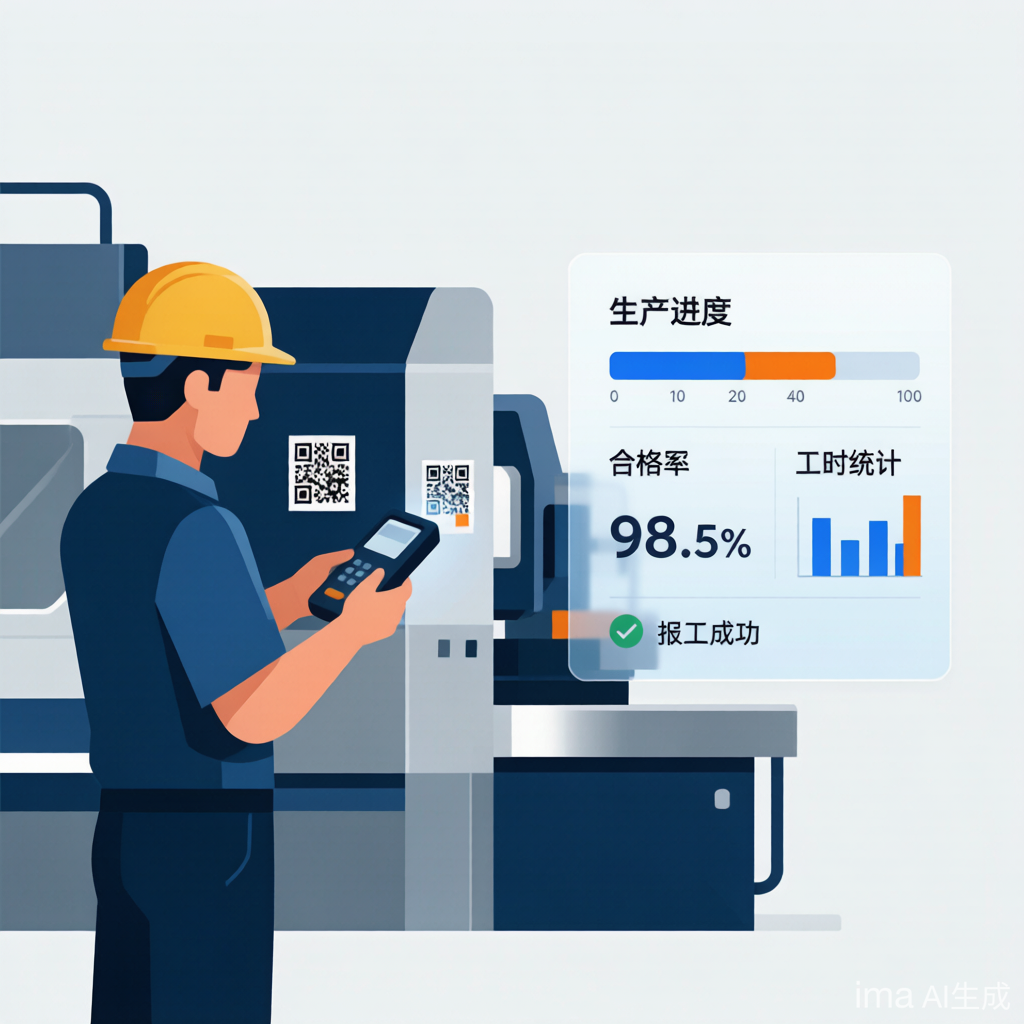
Absolutely avoid systems that require operators to manually enter a large number of parameters on a computer. A good system should be designed to align with the operator's workflow, allowing them to simply scan a code to record their work. After completing a task, the operator can use a mobile phone or scanner to scan the work process QR code and mark it as complete, which takes only a few seconds. For example, Moges' work process recording is designed this way, allowing new employees to quickly learn the system and avoid the common problem of systems failing after implementation.
Standard Two: Match mixed production modes without requiring multiple system switches.
Most small and medium-sized enterprises operate in a mixed mode: they handle both discrete manufacturing and mold projects, and some also take on large-volume orders. A good system should be able to support multiple production modes simultaneously, with a single solution that meets all needs, automatically consolidating data and eliminating the need for manual data entry.
Standard Three: Real-time data synchronization, allowing the boss to monitor progress at any time.
The core purpose of the work order system is to enable managers to have real-time visibility into progress. Once a worker completes a task, the progress in the system must be updated immediately. Whether the manager is on a business trip or in the office, they can open their phone and see exactly where each order is in the process, which operations are awaiting materials, and which external vendors have not yet returned, and they can immediately make adjustments if any issues arise.
Standard Four: Automatically aggregate data and directly reuse for payroll calculation.
All work hours and progress data are automatically stored in the system. Salary calculations and order cost calculations can be directly exported and verified at the end of the month. The system automatically calculates the amount of time spent on each operation, which previously took a whole day to complete, can now be done in just a few minutes without errors.
3. When deploying the work reporting system, be sure to avoid these 3 pitfalls.
Choosing the right system is just the first step; avoid these common pitfalls during implementation:
Don't be apathetic: Implementing a new system requires changing ingrained habits, and workers will inevitably resist. The boss must lead the way. Years of experience have shown that: implementing a new system is a "boss's project." If the boss doesn't take the lead, it will almost certainly fail.
Don't aim for immediate perfection: First, implement a pilot with a single team, then gradually expand to the entire workshop. Start with the core features of work reporting and progress tracking to solve 80% of the problems. This approach minimizes risk and allows for a quick implementation.
Don't just focus on software prices and ignore implementation services: software is 30%, implementation is 70%. You absolutely need to find a team that can be on-site for implementation and has expertise in your industry (such as Moges, which has been focused on the mold machine processing field since 2014), guiding you from basic data organization to official launch step by step, to avoid project failure.
Summary:
Take just ten minutes today to calculate: How many people in your workshop are currently performing work-in-progress (WIP) accounting? How much has your delivery schedule been delayed each month due to lack of transparency? How much revenue have you lost due to incorrect cost calculations? These hidden costs are actually a significant expense. By changing your approach, you will save money, which is essentially earning money.