FAQ
Q: Our machining workshop's basic data is incomplete. Can we still carry out digital transformation?
A: Absolutely. You do not need to organize all historical data, only two core sets: basic equipment information (number of machine tools, processes, machining range) and process information for the workpieces you commonly run (the workpiece processes and standard work hours of the last 3 months). That is enough to start, and you keep refining it as you use the system.
Q: Are general-purpose CAD automatic quoting plugins reliable?
A: There is a risk of loss. General-purpose plugins use standardized parameters and cannot adapt to a factory's actual processes (for example, an in-house coating line costs less than outsourcing, or surplus material offsets). This easily leads to quotes that are too high and lose orders, or too low and lose money.
Q: How do I build a cost accounting system for non-standard equipment projects?
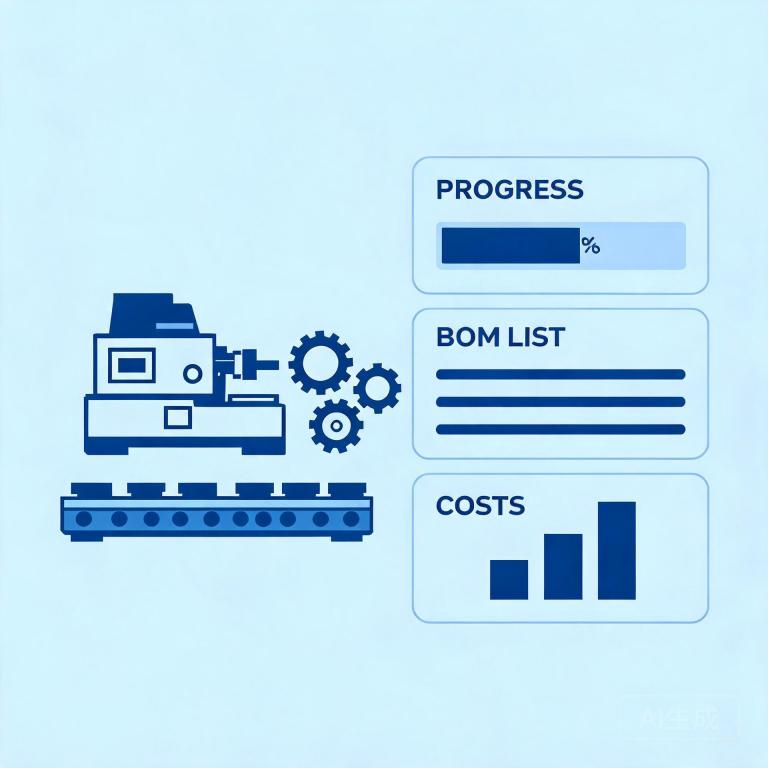
A: The first step is to set up accounts by project, treating each machine as an independent project and creating a project master record with the customer, equipment name, delivery date, owner and contract amount. Then split the cost categories around the project: material cost (standard parts, purchased parts, machined parts, sheet metal parts, electrical parts), process cost (machining, assembly and commissioning hours), subcontracting cost (sending out, return to plant, inspection, reconciliation) and exception cost (rework, scrap, quality issues). All data must hang under the same project number.