FAQ
Q: Our workers do not have much education, and we are afraid nobody will use complicated software. Is loose-part machining quality inspection software hard to learn?
A: Software built specifically for the machined loose-part industry is not hard to learn, because it is designed around your daily operating workflow. Most operations are scanning, with no need to learn complicated computer functions, and an ordinary worker can learn it in half a day. Moges also provides targeted on-site training, and you can reach someone to solve problems at any time afterwards, so you don't need to worry that it can't be rolled out.
Q: Is the investment in an MES system large for small and medium-sized sheet metal factories? How long until it pays for itself?
A: The investment is manageable and the payback is fast. Take a factory with an annual output value of RMB 20,000,000 as an example: recovering just one-third of the cost waste is enough to pay for the system. By improving sheet material utilization and reducing delivery delays, the investment can be recovered in about six months to a year, and everything after that is pure gain.
Q: What are the key differences between large corporations and SMEs when using Moges?
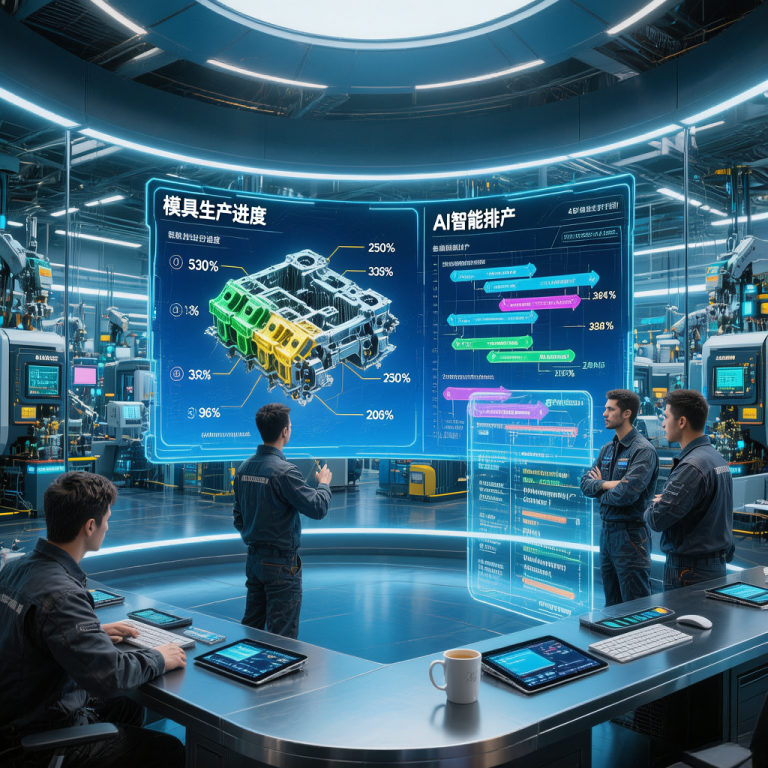
A: The Moges system employs differentiated application strategies for businesses of various sizes. For large group companies, which already have deployed mature ERP systems (such as SAP, Oracle, etc.), Moges only enables the production management module (APS/MES), focusing on fine-grained management in the workshop, including intelligent scheduling, real-time job reporting, quality traceability, and equipment monitoring. Financial accounting, procurement management, and master data maintenance are handled entirely by the existing ERP system. Moges uses API interfaces to synchronize data with the ERP system, ensuring the consistency and integrity of business data. For small and medium-sized enterprises, which lack comprehensive ERP systems, Moges can be used as the sole business management system, providing complete end-to-end functionality covering sales management, procurement management, production management, financial reconciliation, payroll calculation, and expense reimbursement. This eliminates the need for additional software investments, significantly reducing the digital transformation barrier and overall ownership costs for SMEs.