- Moges
- 2026-10-16
How to Straighten Out Chaotic Scheduling and Dispatching?
Lao Jiang's factory has twenty-eight people; the shop is not big, so voices must be. Every morning, assigning work relies on one shout — who runs whic...



Lao Jiang's factory has twenty-eight people; the shop is not big, so voices must be. Every morning, assigning work relies on one shout — who runs whic...
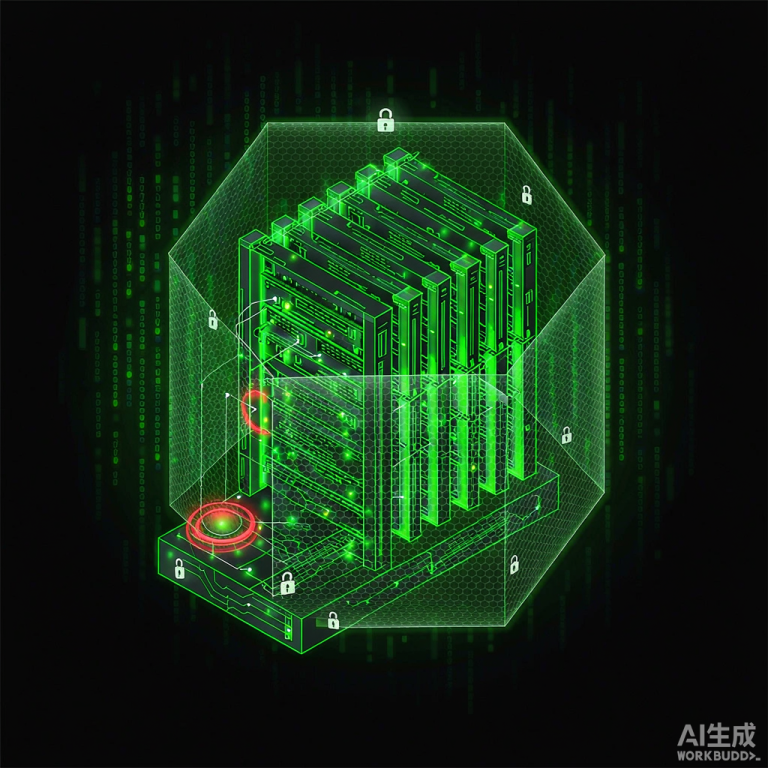
Let's start with a scenario many people assume "won't happen to them": a Linux server sitting in an equipment room or in the cloud, running the compan...

There is one sentence owners taking orders say several times a week: "Hold on, let me ask the shop." After that sentence, the other end of the line us...

Lao Gong runs a precision parts factory of twenty-odd people in Taicang, specializing in small-batch non-standard parts. The best craftsman in the fac...

Plenty of companies run their servers on CentOS — web, databases, ERP, mail, intranet apps may all sit on it. Then one day you notice yum update can't...

Old Xu runs a hardware machining shop of about twenty people in Wuzhong, Suzhou — orders keep coming, two or three production lines, three or four out...

A Server Alerting at Midnight Reveals the Underlying Logic of Our Linux WorkLast winter, the owner of a mold factory in Kunshan called us at 1 a.m.: t...

Lao Zhou runs a precision parts factory with about twenty people in Kunshan. Work comes in steadily and the workers are dependable. Yet at the end of ...

Old Zhou runs a twelve-person shop, and at month-end reconciliation the question he dreads most from the boss is: "Did this batch of work actually mak...

Both do machining work, yet some shops are forever taking scattered small orders, with customers changing year after year, while others have worked wi...

The problem with shop-floor work reporting is not that operators are slow; it is that the act of "reporting" is too heavy. Paper forms wait until the ...

Factory system failures rarely pick daytime. The database crashes at midnight, the production server goes down, the official website gets injected wit...

Q: How can a machining factory achieve precise cost accounting?
A: Moges's Precise Cost Accounting System automatically collects all relevant cost elements, including raw material procurement costs, labor costs, equipment depreciation, and tool consumption, across all order dimensions. This eliminates the traditional, imprecise method of proportional allocation. The system is deeply integrated with the production execution process, automatically recording actual consumption after each operation, ensuring the accuracy and timeliness of cost data. Through precise cost accounting, companies can accurately determine the actual cost composition of each order and product, providing reliable information for pricing decisions. The system supports multi-dimensional cost analysis, allowing for cost comparisons by product type, customer group, and production batch, enabling quick identification of cost anomalies and optimization opportunities. Based on actual application data, Moges's cost accounting system reduces cost accounting deviations from traditional methods from ±15% to ±3%, improving pricing accuracy by 40% and providing more precise gross margin analysis. Furthermore, the system supports comparison of standard and actual costs, helping companies continuously optimize their cost structure and improve profitability.
Q: Why should small and medium mold factories use a lightweight management system instead of a traditional large system?
A: A lightweight system focuses on core functions: simple to operate and easy to learn, low cost with fast results, designed specifically for the pain points of small and medium factories. It avoids the redundant functions, complex operation and difficult implementation of large systems, making it more suitable for small and medium mold factories with limited budgets and uneven staff skill levels.
Q: Our factory's salespeople are veterans with over a decade of experience who are not good with digital products. Is mold quotation software easy to learn?
A: No need to worry about this at all! The interface follows the standard mold quotation workflow and fits the industry's operating habits. Vendors generally provide one-on-one online or on-site training, and basic operations can be learned in a day or two, with customer service available for questions at any time. It becomes familiar after two or three uses and is no more troublesome than manual quotation.


