Why We Make Backup and Baseline Protection Default Actions When Building Sites for Customers

A factory's official website, product site, or even the page used for outward quotations gets no attention in normal times, but once it is hacked, eve...

When the Headquarters and the Outsourcing Plant Cannot Connect: How We Opened Up the Production Scheduling Data

Many manufacturing companies do not have just one plant. The headquarters sits in an office building, the workshop is in a town, the subcontracting pl...

Before Putting AI to Work in Manufacturing, We First Draw a Clear Data Red Line for the Customer's Factory

Factory owners today have a love-hate relationship with AI. They love that it can genuinely help look up information, draft proposals, and read drawin...

We Have Managed Process Documents for Hundreds of Jiangsu Factories for 14 Years; Building a Private Knowledge Base Just Moves That Work onto AI

Over the past two years, quite a few factories have come to us asking whether their veteran technicians' process know-how, quality inspection standard...

Why Our Production System Ships with Off-Site Backup and Restore Drills by Default

In the 14 years we have been building factory production systems, what most often gets us called in by customers in the middle of the night is usually...

14 Years, Hundreds of Jiangsu Manufacturers' Linux Server Problems All Solved by Us: An Operations Record

Starting from the First On-Site Server Since Moges was founded in 2012, what we do has in fact never changed: installing production management softwar...

Why Our Production Management System Has Run on Linux Since Day One

Manufacturing customers in Kunshan often ask us why no one can back them up when their servers run into trouble. The truth is that our own production ...

Our Website Was Hacked and Its Homepage Rewritten: How We Recovered Within Two Hours, a Website Attack Emergency Response

A factory's official website was infected with malware in the middle of the night; opening the homepage showed gambling and pornographic links, and al...

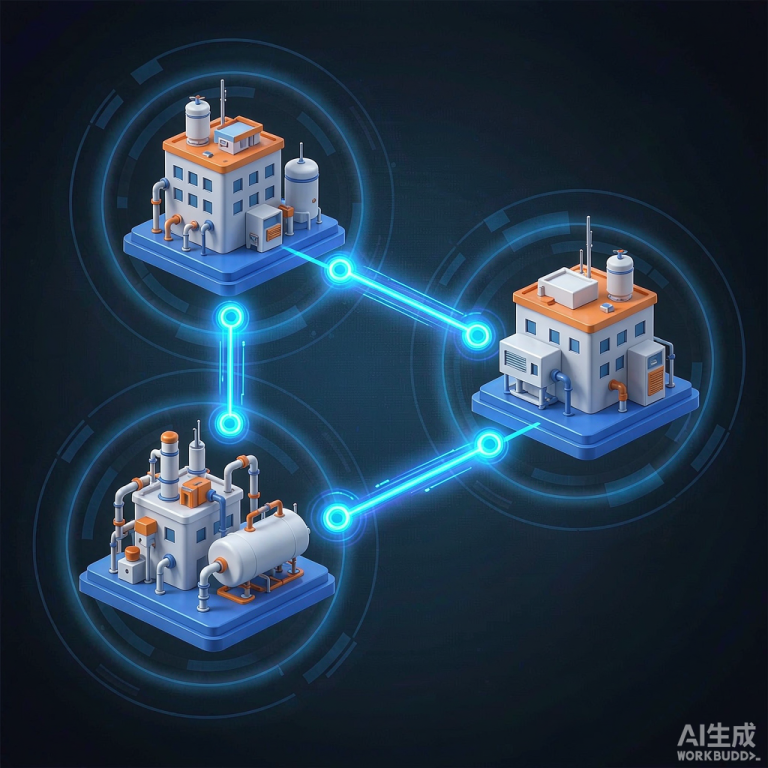
Headquarters and Subcontractor Systems Cannot Connect and Scheduling Data Does Not Match: A Cross-Site Networking Overhaul

One customer had factories in two locations and several long-term subcontractor plants. The headquarters MES and the subcontractors' systems each ran ...

An Employee Fed Drawings to AI and the Factory's Process Secrets Leaked: A Security Audit of AI Usage

A while ago, a machining plant received a call from a customer asking why the drawings it had sent had appeared online. After investigating, it turned...

The Production Line System Went Down at Midnight; How We Brought It Back in Minutes: Notes on Disaster Recovery for Linux Production Environments

Last winter, a customer's MES server crashed in the middle of the night. It was not a software error; the motherboard of that three-year-old server ha...

Feeding a Veteran Master's Process Expertise into a Private Knowledge Base: Notes on RAG Implementation at a Factory

A while ago, a precision machining customer approached Moges, saying that the most valuable asset in the factory was all in the veteran masters' heads...

Contact Us

Now
Contact Us

We deliver professional solutions tailored to our customers' needs. Or share your valuable suggestions so we can improve and grow together!

Contact
Product & Service Inquiry

Free Online Consultation on Products & Solutions

Get a Quote

FAQ

Q: How to ensure seamless information synchronization between planners and workshops.
A: Information gaps between planners and workshops are a common challenge in manufacturing. The Moges system completely solves this problem through a real-time data synchronization mechanism. The core of the system is seamless integration between the production plan board and workshop job reporting: when a planner adjusts the production plan, the changes are automatically pushed to the mobile app of the relevant workers, allowing them to immediately see the latest task assignments. Conversely, when a workshop encounters issues such as equipment failures, quality problems, or material shortages, workers can instantly report these issues to the planner through the barcode job reporting system, allowing the planner to see real-time alerts and respond quickly. This two-way real-time communication mechanism has increased information transfer efficiency by more than 90%, significantly reducing production chaos and resource waste caused by information delays. Furthermore, the system supports the classification, processing, and tracking of exceptions, as well as the assignment of responsibilities, ensuring that every issue can be resolved promptly and effectively. Moges has been successfully applied in more than 300 manufacturing companies in Kunshan, Suzhou, Shanghai, and Hangzhou, helping companies achieve high coordination between planning and execution.

Q: How can subcontracting costs be managed as a closed loop?
A: Subcontracting cost must be tied to the project and the part from the moment it is sent out, and return to plant, inspection, warehousing and reconciliation all follow the same record. Avoid three situations: parts sent out with no one following up, parts returned as inspection failures with no cost recorded, and month-end reconciliation that knows only the supplier's total amount but not which project it belongs to. The key is to keep the chain of "send out, receive back, reconcile" unbroken so that each project's subcontracting cost is accurately collected.

Q: Our factory has had a lot of misassembly and missed assembly recently, and the customer return rate stays high. Can this solve it?
A: This is exactly the core role of automated assembly management software. It performs error-proofing verification for every assembly step, and if something is assembled incorrectly or a step is skipped, the system immediately alarms and locks the line. It helps you reduce misassembly and missed assembly at the source and cuts customer return losses.

Latest News

Online Subscription