FAQ
Q: How can loose parts be given a fixed identity so that parts that "look alike" are not mixed up?
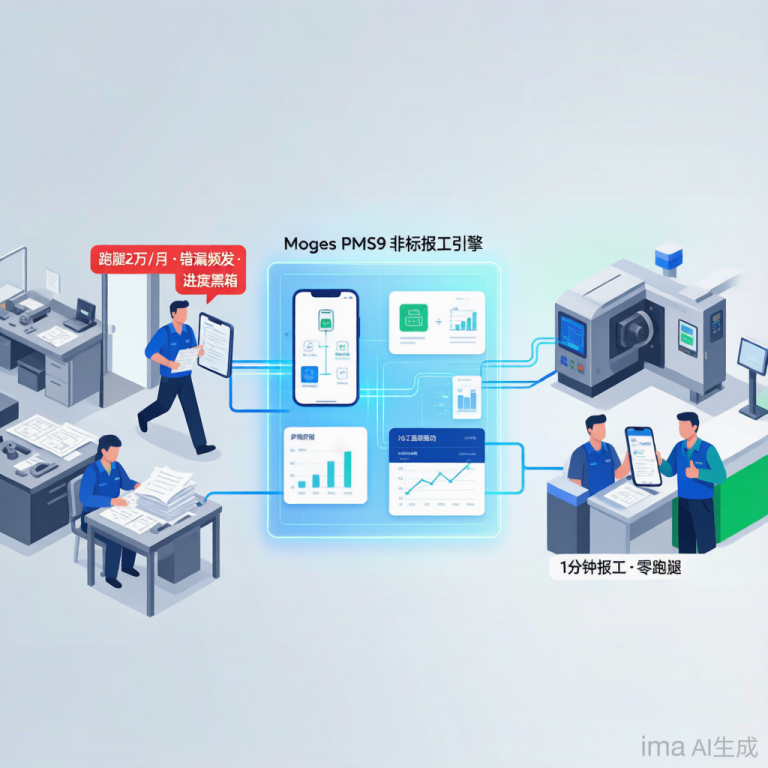
A: Giving a loose part a fixed identity means including the order number, drawing number, name, quantity, process, state and batch or project ownership. On the shop floor these can be carried by labels, barcodes or tote box cards. The key is that "the person leaves but the part's information stays", so a veteran's leave, a new employee taking over or a night shift handover can all be understood. If you use a system, we recommend reporting by code scan: the employee scans once after finishing an operation and the part's state updates automatically.
Q: How to scientifically predict mold lifespan
A: Predicting mold lifespan is a critical aspect for mold shops to reduce costs and improve efficiency. The Moges mold lifespan prediction system utilizes advanced data analysis algorithms to integrate historical mold data, repair frequency records, material properties, and processing parameters, building a scientific lifespan prediction model. The system can monitor the mold's usage status in real-time. When abnormal wear trends are detected, it automatically sends a warning notification 15 days in advance, reminding production managers to schedule maintenance and repairs promptly, effectively preventing production disruptions and emergency repair costs caused by sudden mold failure. After practical validation in over 200 mold shops in Suzhou, Kunshan, and other areas, mold shops using the Moges lifespan prediction system have seen an average mold lifespan increase by more than 20%, saving tens of thousands of yuan per year in mold replacement costs. Furthermore, the system establishes a complete mold history record, documenting mold parameters, repair records, and replacement parts, creating a valuable knowledge base to support new employee training and process optimization.
Q: If we already have an ERP system, can we still use Moges?
A: Of course. Moges provides standard API interfaces and can integrate seamlessly with mainstream ERP systems such as SAP, Yonyou and Kingdee, focusing on workshop-level fine management such as scan-based work reporting, machine utilization, process flow and exception alerts, so that ERP truly "lands on the shop floor".