FAQ
Q: I run several non-standard projects at once and chase the designers for progress every day until I am tired of asking. Is there a better way?
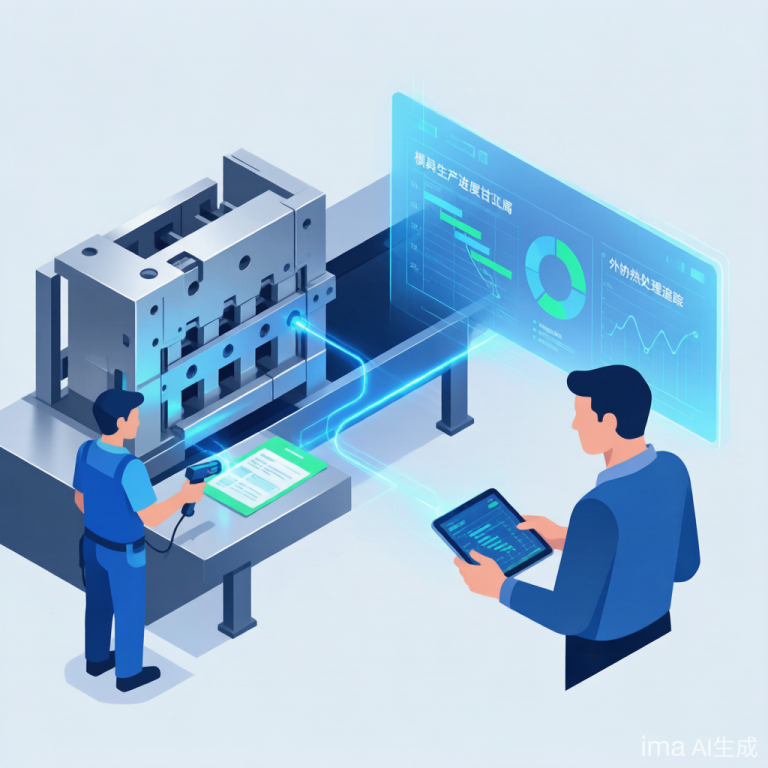
A: The core problem is that progress information is not transparent. Simply set up a shared progress dashboard and have the designers update their own progress. When you open the dashboard you can see at a glance which step is stuck, without asking each person individually. Coordinating resources directly at the bottleneck is far more efficient than chasing people every day.
Q: We only find out about production progress when we ask. Is there a way to see it on a phone?
A: What bosses and supervisors fear most is that no one can say clearly which step an order has reached, and they only discover it is stuck at some process when the customer chases. A low-cost management tool should show where each order currently is, who is working on it and when it should be finished, at least making progress transparent. The shop floor does not necessarily need anything complicated; scanning codes, mobile reporting and process reporting are all options, but you need to check whether the operations are simple for workers. Never end up with something that looks nice in the office but nobody on the shop floor uses.
Q: How to digitally assess mold DFM (Design for Manufacturing)
A: Moges DFM (Design for Manufacturing) Digital Review System completely transforms traditional mold design review processes. The system integrates industry-standard DFM check lists, covering over 200 key items, including wall thickness uniformity, draft angles, radius, rib design, and sprue location. Engineers can open 3D models online and directly annotate problem areas, and the system automatically highlights potential risk areas, providing optimization suggestions and reference cases. During the review process, all modification comments, discussion records, and decision-making criteria are completely stored in the system, forming a traceable review archive. After the review, the system automatically generates a professional DFM review report, including a list of issues, severity levels, improvement suggestions, and estimated cost impacts, which can be instantly synchronized with the customer for confirmation. The entire review process, which traditionally took 2-3 days, is now completed in 4 hours, increasing communication efficiency by 60% and reducing design rework rates by 45%. The system also supports the accumulation of historical review data, creating a company-specific DFM knowledge base, helping new employees quickly learn and continuously improve design quality.