Selection Guide for Mold Machining Historical Data Recording Tools: Three Core Requirements and Pitfall-Avoidance Practice

Preface: The Cost of Not Finding Old Data Is Far More Than Wasted TimeIf you are searching for mold machining historical data recording tools, you hav...

Foreword: The Real Daily Life of a Small or Mid-Sized Sheet Metal Stamping Mold Shop Owner

Foreword: The Real Daily Life of a Small or Mid-Sized Sheet Metal Stamping Mold Shop Owner Yesterday I was having tea with an owner of a 120-person sh...

Looking for a Tool to Reduce Mold Defect Rates? Understand These 3 Core Questions First to Avoid Pitfalls

Introduction: Have You Calculated the Profit Quietly Eaten Away by the "Defect Rate"?When you start searching for "a tool to reduce the mold defect ra...

How to improve the chaotic mold workshop management? 5 breakthrough methods summarized by a 14-year veteran.

Introduction: Where do the problems in mold workshops really originate?Search for "How to improve mold workshop management chaosThose who are truly co...

How to choose the right tools to reduce mold defects? A practical selection guide and avoidance strategies for small mold factories.

I. Why Manual Management Can't Reduce Defects: Three Hidden Profit LeaksMany owners spend their days in the workshop, but the defect rate remains high...

How to Choose a Good Mold Machining Historical Data Recording Tool? A Practical Guide for Mold Factory Managers

Searching for a mold machining historical data recording tool, are you running into these troubles right now: a quality problem needs traceability, bu...

The core standard for the Moges mold production management system: not focusing on extensive functionality, but rather on native adaptation for high-end, low-volume production.

Wake up! I've been in the mold industry for 14 years, and I've seen dozens of mold factories with annual sales exceeding 10 million, investing tens of...

After one year of apprenticeship, are you still only performing basic tasks? How can newcomers in the mold industry quickly develop and become independent? | Moges Talent Development

After one year of apprenticeship, are you still only performing basic tasks? How can newcomers in the mold industry quickly develop and become indepen...

Mold design updated to version 18, but customers are still not satisfied? How to accumulate design experience so that it doesn't disappear with personnel turnover | Moges Knowledge Base

Introduction: Design revised in version 18, where are the issues?At a mold factory in Suzhou's Xiang District, the design supervisor, Mr. Zhao, recent...

In-depth analysis of the core value and five key implementation points of mold project management.

Introduction: Project Management – The Key Engine for Mold Companies to Win in the Digital AgeIn the mold industry, where "multi-variety, small batch,...

Expert Insights: 5 Key Success Factors and Implementation Guidelines for Mold Document Management

Introduction: Document Management – The Cornerstone of Digital Transformation for Mold CompaniesIn today's highly competitive mold industry, "fast, ac...

Contact Us

Now
Contact Us

We deliver professional solutions tailored to our customers' needs. Or share your valuable suggestions so we can improve and grow together!

Contact
Product & Service Inquiry

Free Online Consultation on Products & Solutions

Get a Quote

FAQ

Q: Is it necessary for small machining shops to implement MES?
A: Small machining shops with fewer than 50 employees especially need the support of a digital management system! Many small factory owners believe that MES systems are expensive and complex to implement, but this is a misconception. Moges' lightweight MES system is specifically designed for small machining shops, with monthly fees starting at just a few thousand yuan. It focuses on three core essential functions: production scheduling, work order reporting, and customer progress tracking, and can be quickly deployed within 3 days. Through digital management, small shops can achieve transparent production progress, timely response to issues, and significantly improved customer satisfaction. More importantly, the return on investment (ROI) is typically realized within 6 months: reducing penalties for delayed orders, lowering communication costs, improving equipment utilization, and reducing material waste. Moges has already served over 200 small machining shops in the Yangtze River Delta region, including micro-enterprises with as few as 3 employees, all of which have successfully undergone digital transformation. The system supports mobile operation, allowing owners to stay informed about the entire factory's operations even when they are away, achieving a high return on investment with minimal initial investment.

Q: Our company has no dedicated IT administrator. Can we maintain this system?
A: Absolutely. Moges provides managed operations and maintenance services covering routine monitoring, backup, security updates and fault handling. You only need to manage mailbox accounts through a web interface, with no Linux technical background required.

Q: How can the machining workshop achieve paperless job reporting?
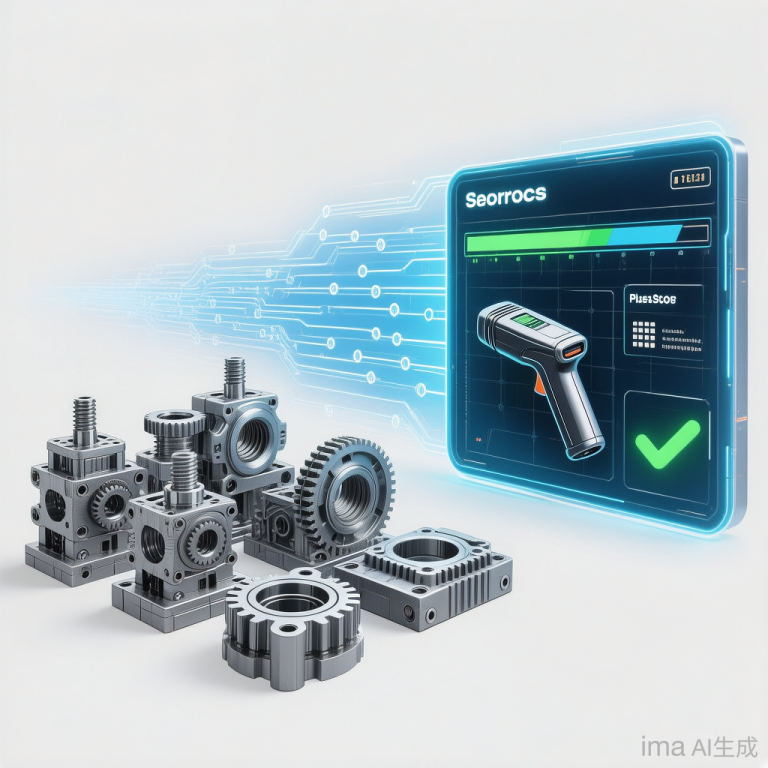
A: Moges' paperless job reporting system completely transforms traditional paper-based management, allowing job reporting to be completed simply by scanning with a mobile phone, tablet, or industrial PDA. The system automatically generates standardized electronic job orders, including complete data such as operation information, operator, start/end time, and good quantity, while also automatically generating quality inspection records and time statistics. This system completely eliminates the cumbersome and easily lost issues of paper forms, and more importantly, it achieves real-time data synchronization and improves accuracy. Workshop managers can view production progress at any time, and planners can promptly adjust production schedules, while customers can also obtain real-time order status through a dedicated port. Based on actual application data, the Moges paperless job reporting system achieves a data accuracy rate of 99.9%, improves job reporting efficiency by more than 60%, and simultaneously reduces 80% of paper-based document management costs, making it an essential tool for the digitalization of modern machining workshops.

Latest News

Online Subscription