FAQ
Q: Does the system support operations using local dialects?
A: The Moges Production Management System fully considers the regional characteristics and practical needs of Chinese manufacturing, and innovatively supports multi-dialect voice reporting functionality. The system is equipped with an advanced voice recognition engine that can accurately recognize Mandarin, Wu (Suzhou dialect, Shanghai dialect), Cantonese (Guangdong dialect), and Minnan dialects. Workshop supervisors can simply speak "completed," "start machining," or "equipment failure" into their phones, and the system will automatically complete the reporting process, without the need for complex typing or clicking. This functionality is particularly suitable for supervisors with older ages and limited familiarity with smartphone operation, significantly reducing the barrier to using the system. After on-site testing in Kunshan, Dongguan, Wenzhou, and Xiamen, the Moges dialect voice recognition accuracy exceeds 95%, and it maintains stable recognition even in noisy workshop environments. In addition, the system supports customized voice commands, allowing companies to set their own exclusive reporting passwords based on their preferences. The Moges dialect support functionality has helped over 100 manufacturing companies successfully achieve digital transformation, allowing every worker to easily enjoy the convenience brought by technology.
Q: What is the essential difference between a retail AI agent and an ordinary chatbot?
A: An ordinary chatbot only does keyword matching: you ask about "sizes" and it jumps to a size chart, but phrase the question differently and the answer misses the point. A retail AI agent is fully customized to fit the business: it can ingest all product parameters, campaign rules and inventory data, pull out accurate information no matter how the user asks, and connect to business processes to automatically handle complex operations such as orders, returns and exchanges.
Q: We frequently insert rush orders and change the scheduling sheet every day. Is there a method suitable for small factories?
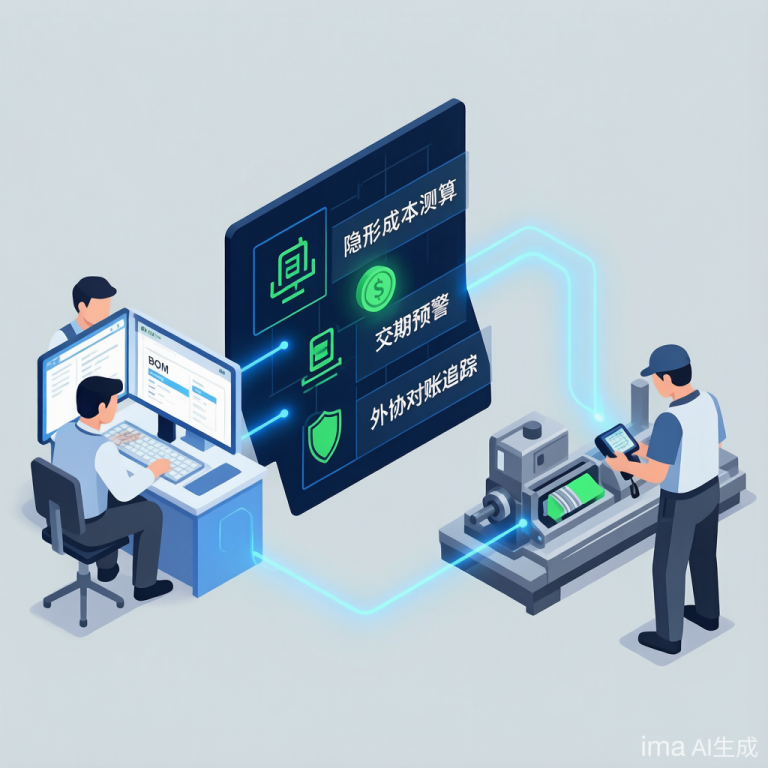
A: Rush orders are very normal for small discrete manufacturing plants. The problem is not that you cannot insert them, but that no one calculates who is affected after insertion. A scheduling tool should at least let you see each order's delivery date, process load and occupancy of key equipment, so that plan changes have a basis. Small factories should not pursue one-step, perfectly accurate automatic scheduling; it is already valuable if supervisors can adjust quickly and employees know what to do today. If you look at Moges or other systems, focus on asking whether scheduling adjustments are convenient, so that after buying it is not harder to change than Excel.