How to Set Up a Shop Floor Big Screen: Progress on the Wall, Announcements Scrolling

Many factories' big screens end up as "a PowerPoint hanging on the wall": lively for a day at launch, then three months without an update and nobody l...

Whether Each Order Actually Makes Money — the Boss Needs a Clear Account

Many small factory owners work all year only to open the ledger at year end and "see clearly" for the first time: several orders actually did not make...

Firefighter Captain vs. Composed Boss: Two Mornings in the Same Small Factory

In the same machining factory of about thirty people, on the same Monday, with the same amount of work, two bosses can experience a whole day's worth ...

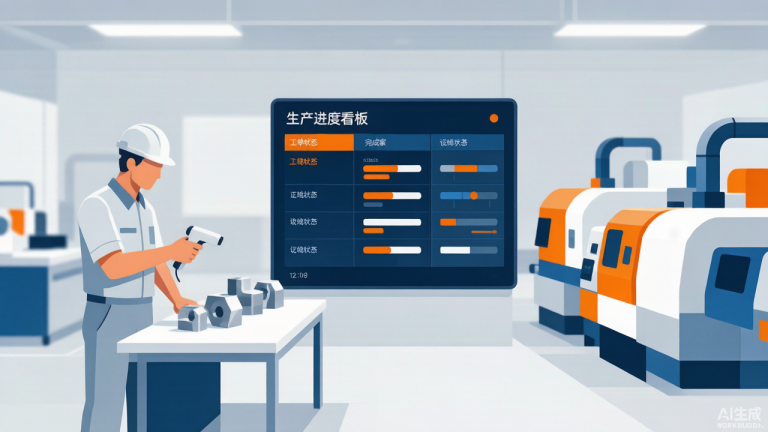
How to Track Production Progress in Real Time? One Dashboard Explains Progress Management for Machining Factories

To track production progress in real time, the key is not asking a few more people but turning every job report on the shop floor into progress that s...

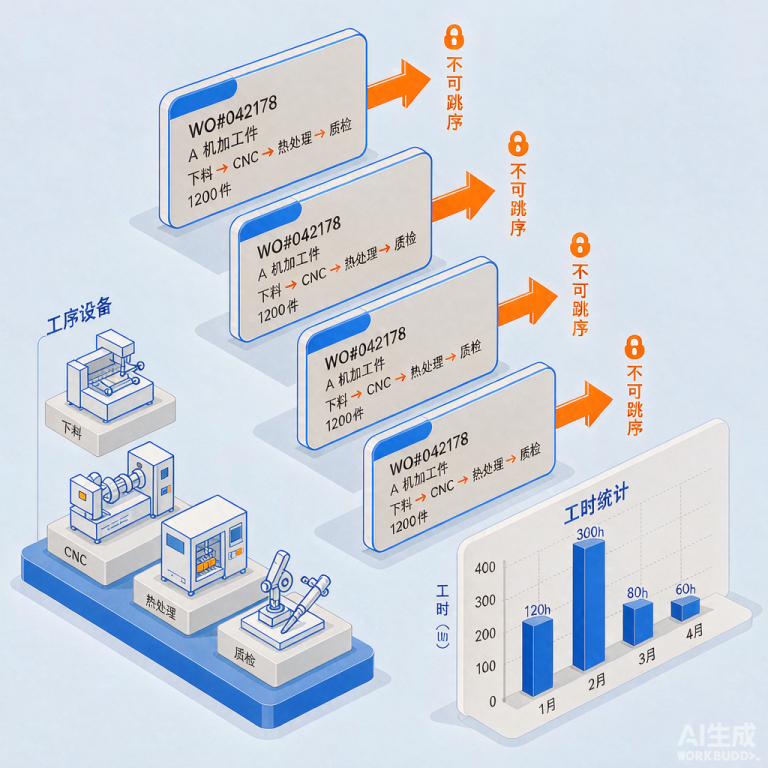
One Order, End to End: One Work Order Number from Customer Order to Shipment and Payment

A customer calls and asks: "Where has that batch of work I placed last week got to?"Quite a few machining shop owners cannot answer that question. The...

Production Progress Dashboard: The Whole Factory on the Boss's Phone, Ending the Black Box of Machining Progress

What worries the boss most on the shop floor is not whether the machines are running, but "where is that order now". In the paper job-ticket era, this...

What Does Work Order Management Actually Manage? Core Functions of Machining Production Management Explained

In many machining factories under 50 people, production progress and accounts often fail to reconcile. Moges PMS5 is a lightweight SaaS production man...

What Is Moges PMS5? Understanding This Machining SaaS Production Management System in One Article

Many machining owners face the same dilemma: with a few dozen people in the factory, work reporting relies on paper and pen, progress on WeChat groups...

Is your mold factory management chaotic and unprofitable? How can a lightweight mold management system solve your core pain points?

Challenges in managing small and medium-sized mold factories: Hidden losses are eroding your profits.When you enter the majority of small and medium-s...

Contact Us

Now
Contact Us

We deliver professional solutions tailored to our customers' needs. Or share your valuable suggestions so we can improve and grow together!

Contact
Product & Service Inquiry

Free Online Consultation on Products & Solutions

Get a Quote

FAQ

Q: We currently use Excel to track cutting tools and fixtures. Is it worth switching to dedicated software?
A: When volumes are small, Excel is workable. Once volumes grow, mismatched tool records and unclear wear costs become routine. Dedicated management software can organize the whole flow of receiving and issuing, stocktaking, and tool-life alerts, saving a lot of wasted time hunting for items and reconciling records. Many customers have cut tool consumption noticeably after switching.

Q: Is your software hard to learn? Our warehouse keeper is older and cannot use complex software. What should we do?
A: Rest completely assured. We focus on lightweight operation: the interface follows industry processes, the buttons use plain language, and there are no fancy designs. Our engineers also provide on-site one-on-one training and teach until you have got it; usually you can operate it proficiently in about half a day, and basically anyone who can scan a code can use it.

Q: Can this software manage cutting tools, fixtures, and gauges at the same time? Our plant has all three, and managing them separately is a hassle.
A: Certainly. This kind of software is built for the cutting tool, fixture, and gauge industry, so all three categories can share unified classification coding, receiving and issuing, and stocktaking management. You do not need to buy several systems and juggle them, which also saves software costs and integration hassle.

Latest News

Online Subscription