Digital Maintenance Record Management Tools: Moving Mold Factory Equipment Maintenance from Paper to Structured Data

Maintenance management at mold factories has long sat in a gray zone. How many repairs were done, what parts were replaced, who performed the work, an...

Intelligent management system to reduce equipment damage: Practical solutions for mold factories, saving tens of thousands of dollars per year.

What is the most expensive thing in a mold workshop? Many owners' first reaction is CNC machines and EDM (Electrical Discharge Machining) machines, wh...

How to Choose a CNC Machine Remote Maintenance Management Platform: Functional Modules, Architecture Design and Real-World Cases

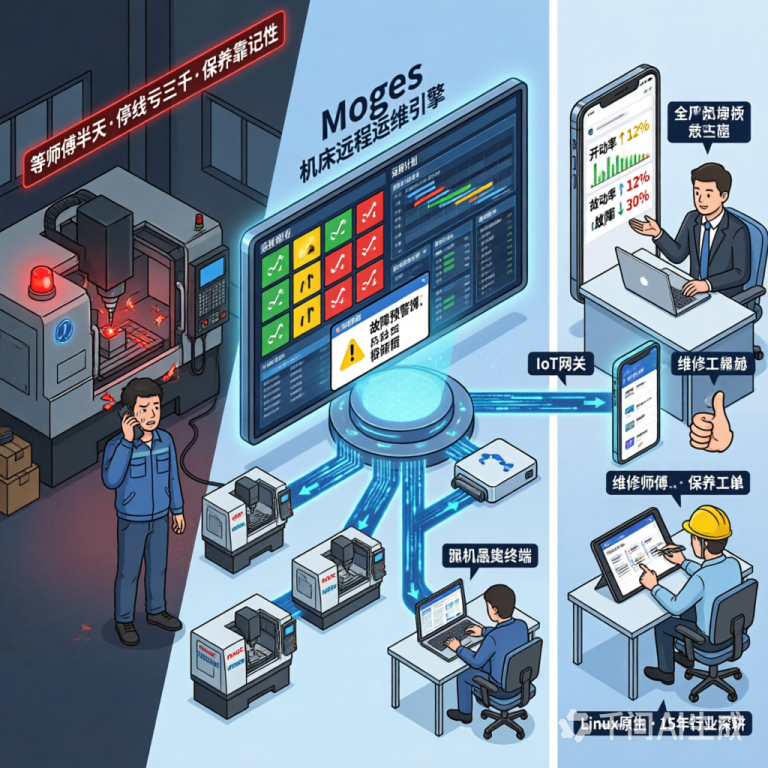
1. What Is a CNC Machine Remote Maintenance Management Platform? A CNC machine remote maintenance management platform, put simply, is a digital system...

CNC Machine Remote Maintenance Management Platform Selection Guide: Raising Utilization and Avoiding Pitfalls

Foreword: One Day of Machine Downtime Costs RMB 3,000 - Your Profit Is Being Eaten by Waiting for the RepairmanDoes your factory often run into this: ...

CNC Machines Always Down at Your Mold Shop? A Remote Maintenance Management Platform Cuts Losses and Boosts Efficiency

Introduction: Don't Let "Hidden Losses" Eat Your ProfitDoes this scene look familiar? A CNC machine alarms and stops in the middle of the night; the m...

Is mold factory equipment maintenance management chaotic? How can digital tools completely solve the problem of maintenance record management?

Current Status: Current state of equipment maintenance management in mold factories: The fatal pain points of traditional methodsWhen you enter the wo...

Remote Maintenance Management Platform for CNC Machines: A Practical Solution for Reducing Costs and Improving Efficiency for Small and Medium-Sized Mold Factories.

Four major pain points in equipment maintenance for small and medium-sized mold factories: Hidden losses of tens of thousands of dollars per year.For ...

Which Custom Automation Equipment Quoting Solution Is Best? An In-Depth Analysis and Selection Guide from 14 Years of Industry Experience

Introduction: Why Is Custom Automation Equipment Quoting So Important?In the custom automation equipment manufacturing industry, an accurate, professi...

From Device to Cloud: How Moges IoT Management System Restructures Manufacturing Enterprise IT Infrastructure

IT challenges for manufacturing companies: Isolated islands, data dormancy.In traditional manufacturing factories, ERP, MES, equipment monitoring, ema...

Mold Management System Software: An Intelligent Solution for Efficiently Managing the Entire Mold Life Cycle

I. Why do you need a professional mold management system? In manufacturing, molds are the "mother of industry," and their condition directly affects p...

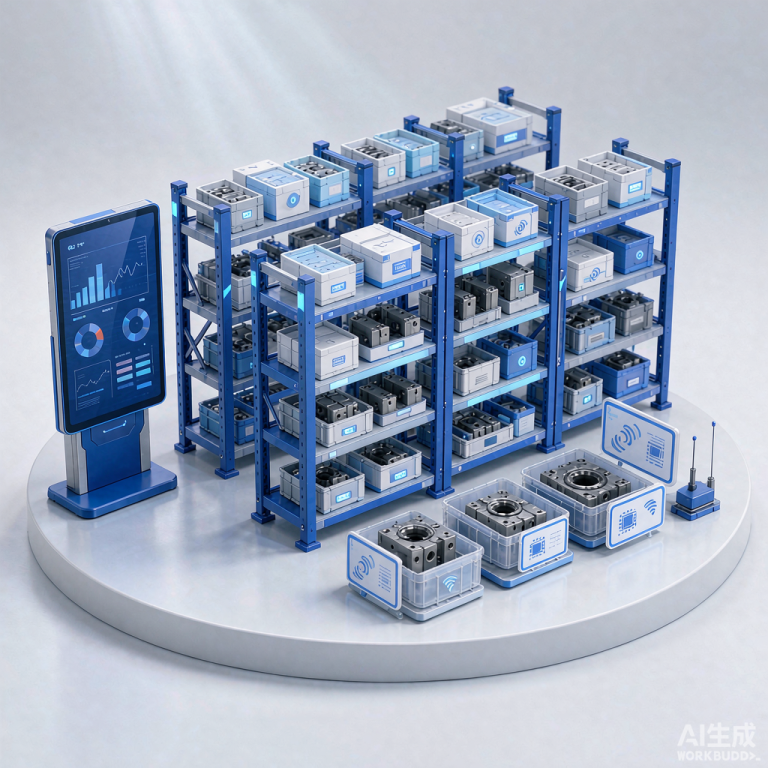
mold industry RFID warehouse management solution

[Industry Management Features] In the manufacturing process, molds often require one or more outsourced processes to complete the final product. This ...

Contact Us

Now
Contact Us

We deliver professional solutions tailored to our customers' needs. Or share your valuable suggestions so we can improve and grow together!

Contact
Product & Service Inquiry

Free Online Consultation on Products & Solutions

Get a Quote

FAQ

Q: What are the three most common types of loose-part inventory chaos, and how can they be identified quickly?
A: The most common problems in loose-part inventory are the big three: finding parts, missing parts and wrong parts. Finding: the order is due for assembly but the key part cannot be located. Missing: the system shows stock but the shop floor searches for ages and finds nothing. Wrong: rework parts and accepted parts are stored together, so the wrong one is picked during assembly. A quick way to identify the problem is to look at what the boss asks most often every day: where is the part, why is it not there, and did we pick the wrong one.

Q: What production management software is suitable for small-batch, single-piece production?
A: Traditional ERP systems are too complex. Moges' production management system is specifically designed for single-piece, low-volume production: no BOM creation required, flexible scheduling, and item counting by operation. Go live in 3 days, starting from just a few thousand yuan per month. The system supports a no-BOM mode, allowing you to assign tasks directly by operation. This is particularly suitable for the characteristics of single-piece, low-volume production. The process route library helps companies accumulate and reuse typical processes, improving order creation efficiency. The flexible scheduling engine supports intelligent order assignment, allowing for flexible handling of urgent orders and design changes. The customer progress portal enhances customer trust, allowing customers to view order progress and quality inspection reports at any time. The cost accounting function automatically allocates all costs by order, supporting accurate quoting. The interface is simple and intuitive, and employees can independently operate the system after just 1 hour of training. Currently, over 300 single-piece, low-volume production companies have successfully implemented the Moges system, with an average increase in production efficiency of 25% and a reduction in management costs of 35%.

Q: What are the main reasons mold software implementations fail?
A: Implementation failures mainly come from choosing generic software that does not understand molds, features that are too complex for workers to want to use, and the lack of professional implementation services. Choose a software company with a mold industry background, adopt a pilot-first-then-scale approach, and make sure the system is in use within 3 months so your investment is not wasted.

Latest News

Online Subscription