- Moges
- 2026-10-27
Why General ERP Struggles to Manage the Machining Shop
I. First, Give Credit Where Due: What ERP Is Good At Before arguing it "can't manage" the shop, we must acknowledge what it manages well — otherwise t...



I. First, Give Credit Where Due: What ERP Is Good At Before arguing it "can't manage" the shop, we must acknowledge what it manages well — otherwise t...

Many shops do month-end costing like this: dig out the warehouse ledger, the payroll sheet and the outsourced reconciliation statements, then assemble...

The drawing is on its fifth revision while the shop still machines per version two — work wasted, material wasted. Such accidents sound far-fetched, b...

A customer brings one part and asks: when was this made, who made it, and what changed along the way? Answering on the spot is capability; digging thr...

The reason a stocktake feels like a trial is usually an unsolved technical problem: the books keep moving during the hours of the count. Materials are...

In shops where nonconforming products are managed chaotically, the problem is not that "nobody is responsible for quality"; it is that the five gates ...

The "quality records" of most shops look like this: someone says a sentence on WeChat, posts a few photos in a group chat, and verbally calls out for ...

The first stumbling block in quality improvement is not technology but language: an issue found in-house is called a "ding", an issue coming back from...

The root of reconciliation pain is always the same: inconsistent basis. This article skips the preaching and goes straight against Moges PMS5's purcha...
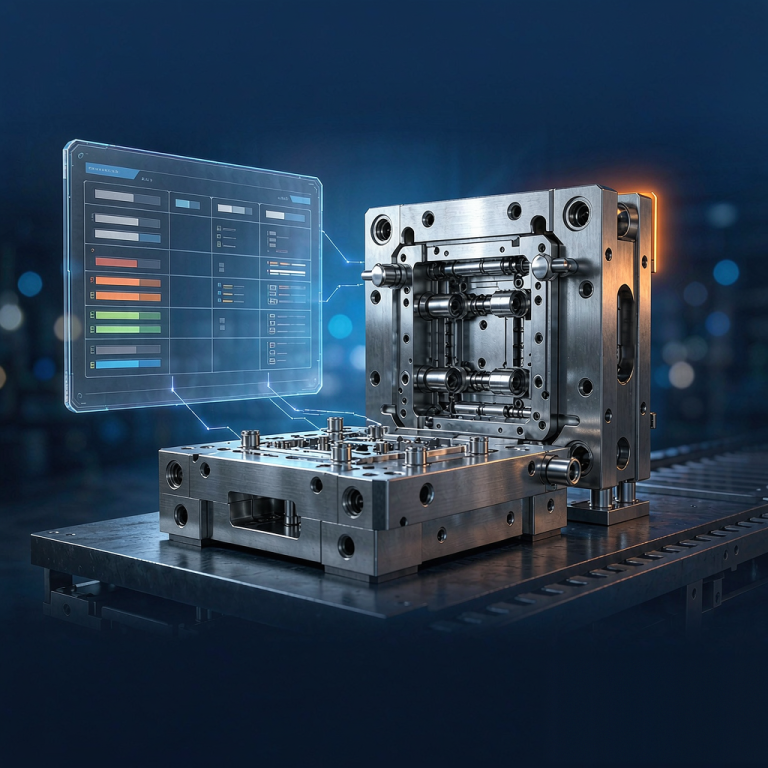
In Qiandeng, a town in Kunshan, there is a shop that makes precision injection molds, with around 20 people. The owner did not know us before. He was ...

The progress of a non-standard automation equipment project is often harder to track than expected. From project initiation to delivery, a customized ...

Real-time mold machining progress tracking software is a digital tool that collects the progress of every process in a mold, from order intake, cuttin...

Q: What kind of cost management software suits a small or medium mold factory?
A: A small or medium mold factory should choose professional software focused on the mold industry rather than going for a big all-in-one suite. Focus on whether it supports project-based cost accounting, whether it understands mold production processes, and whether it fits the factory's scale. Moges has focused on the mold industry for 15 years and designs for small and medium mold factories with annual output value of RMB 10,000,000-500,000,000; it offers high value for money and is easy to implement.
Q: Our factory is not big, with only a few dozen sets of gauges. Is full lifecycle management really necessary?
A: Actually many small and medium-sized factories have asked this question. Even with a small quantity, after two or three years of use it is very easy to end up with gauges that cannot be found or duplicate purchases. A custom gauge costs at least several thousand yuan, so losing one set wipes out the profit on it, and it also delays order delivery. The investment is actually very low, and standardizing management early can save you a lot of hidden costs.
Q: For Jiangsu sheet metal processing quoting software, can you just buy it and use it directly?
A: It is generally not advisable to apply templates directly from day one, because every factory's equipment, labor, loss, and outsourcing prices differ. In the early stage it is best to first organize your existing quoting rules, material prices, and process unit prices. Quoting systems like Moges usually also recommend configuring them to the company's own process standards first, then letting sales and technical staff run trial calculations on a few orders together.


