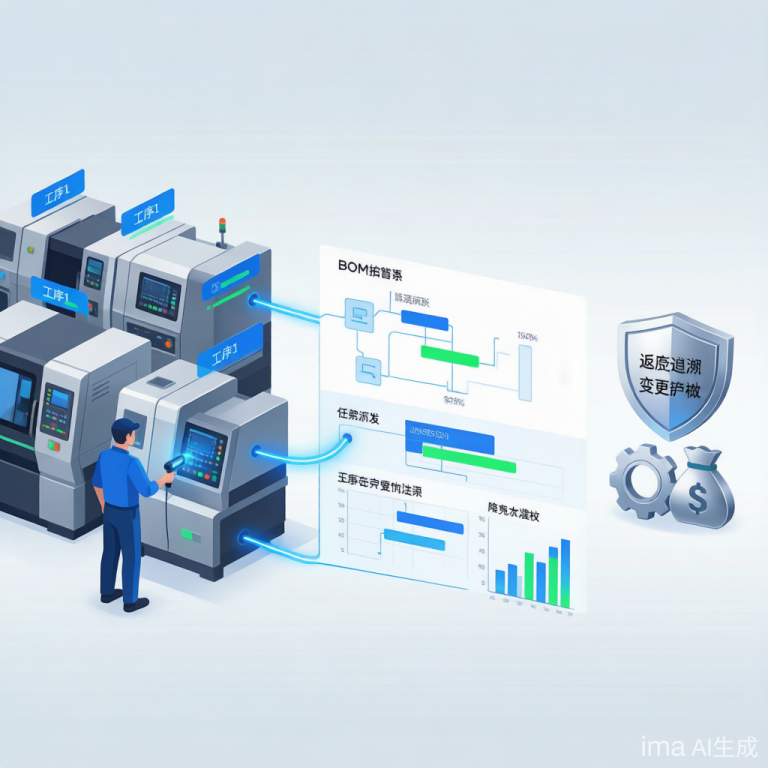
How to Manage Progress on Non-Standard Automation Projects? A Full-Chain Tracking Guide from Kanban to Process Job Reporting

The progress of a non-standard automation equipment project is often harder to track than expected. From project initiation to delivery, a customized ...

  • Moges
  • 2026-09-26

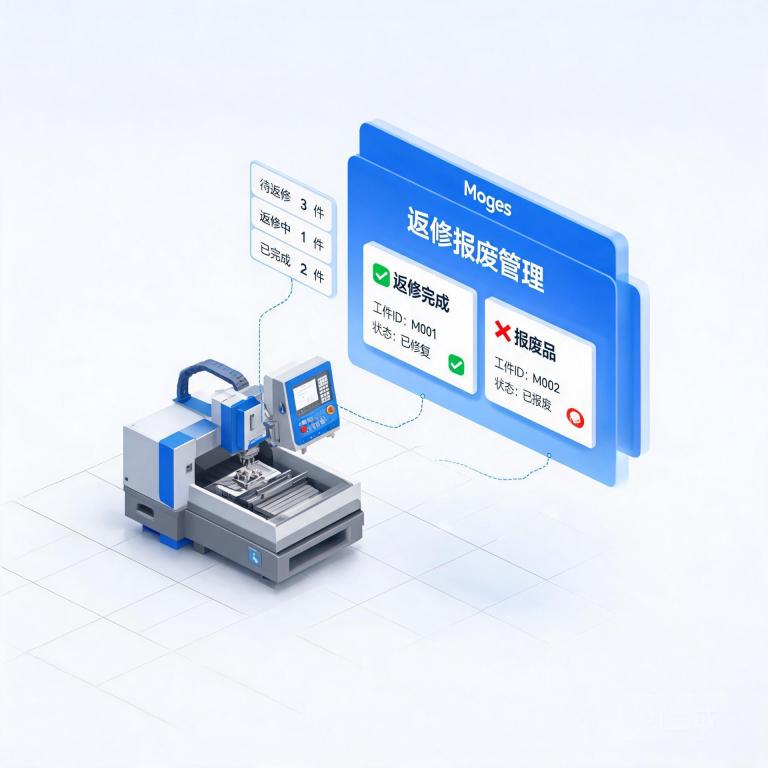
How to Choose a Rework and Scrap Management System for Machining? Real-World 2026 Solution Comparison from Machining Shops

I. Why Can't Machining Rework and Scrap Be Controlled? In custom automation equipment manufacturing and precision machining workshops, rework and scra...

Custom Shop Losing Tens of Thousands a Year on In-House Machining? 3 Cores + 4 Details — A Practical Kunshan Machining Management Guide

We've worked deep in the custom automation industry for 14 years, serving 200-plus manufacturing enterprises, of which Kunshan local customers account...

Pitfall Guide for Choosing Software for Non-Standard Machining Plants: Work Out the Hidden Waste Account and Select by 4 Core Functions Without Stepping on Mines

Real Pain Point: An 18% Gross Margin at Quotation Becomes Only 10% at SettlementLast month I had tea with the owner of a machining plant supplying non...

Which Machining Production Management Software Is Best? Selection Pit-Avoidance and Practical Guide for Non-Standard Automation Factories

Last month, while compiling Kunshan Moges' loyal-customer revisit data, we discovered a startling fact: among the 200-plus non-standard automation equ...

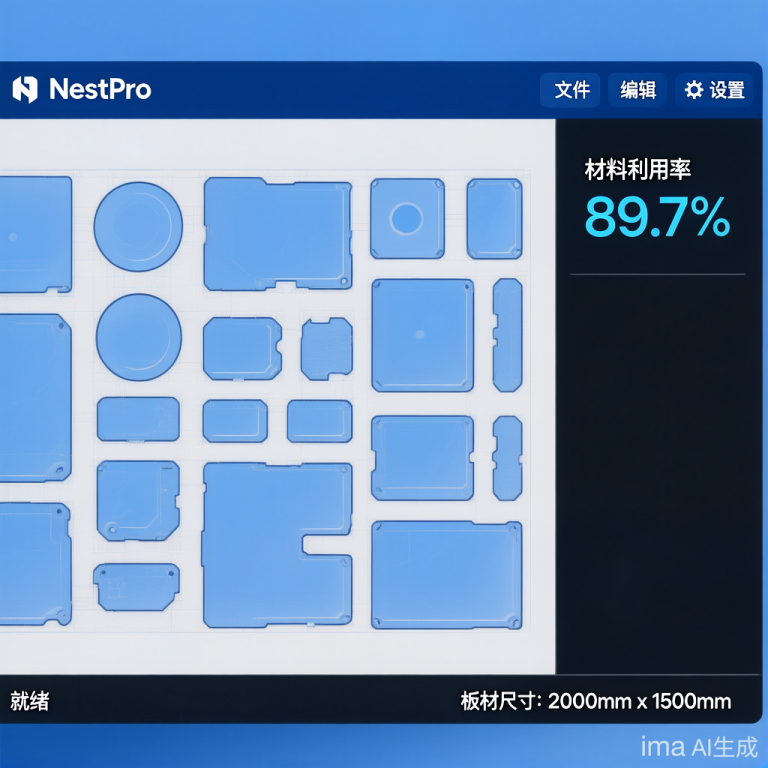
Unveiling the Pricing of Automated Sheet Metal Layout Software: A Guide for Small Sheet Metal Factories to Avoid Pitfalls and Achieve ROI

Introduction: With shrinking profit margins, why are small sheet metal workshops focusing on the pricing of nesting software?Recently, I visited sever...

Machining Quality Management System: Do Not Just Watch Inspection Sheets; Out-of-Control Processes Are the Real Pain Point

Introduction: The "Invisible Black Hole" of Non-Standard MachiningAnyone making non-standard automation equipment is absolutely familiar with the phra...

How to manage laser cutting scrap? Practical methods for sheet metal factories to avoid losing tens of thousands of yuan.

Introduction: The shocking cost of laser cutting scrap wasteLast month, I visited a sheet metal fabrication factory in Kunshan with an annual turnover...

Sheet Metal Layout Software Selection Guide: Beyond Material Utilization, Focusing on Full Process Management Value

Introduction: Where does the true value of sheet metal sample software lie?Many sheet metal factory owners often hear more specific problems in the mo...

Sheet Metal Laser Cutting Material Package Software: Don't just save on sheet metal; calculate the total cost of the entire production process.

As anyone involved in sheet metal fabrication knows, material costs account for 60% to 70% of the total cost. Therefore, many owners purchase sheet me...

Alternatives to Excel Management for Sheet Metal Fabrication: The Top Pain Points for Small Sheet Metal Fabrication Shops That Need to Be Addressed First

Last week, I visited a sheet metal fabrication factory in Suzhou with an annual turnover of 30 million, where the owner pulled me aside to a corner of...

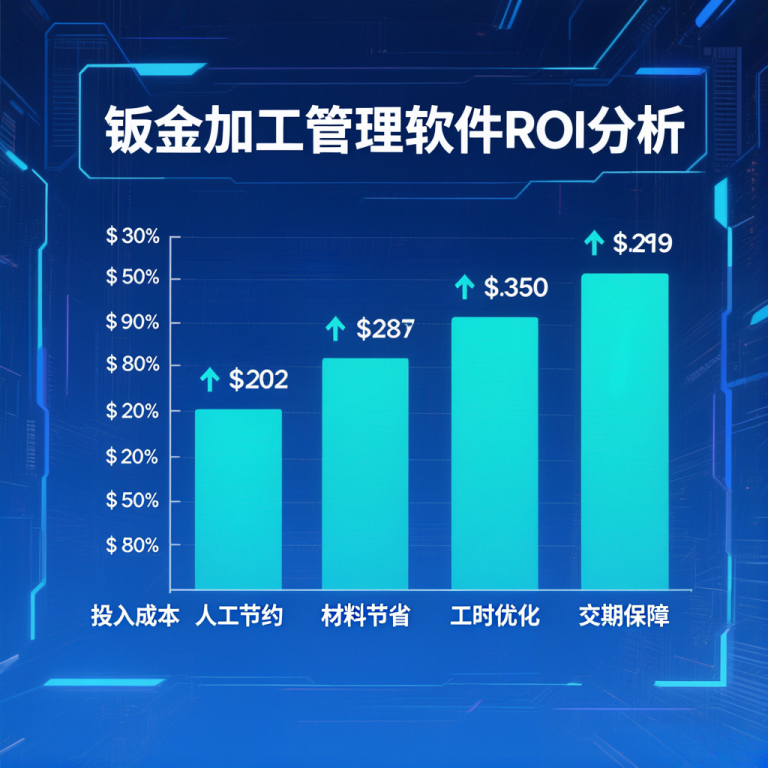
Sheet Metal Fabrication Management Software ROI Analysis: Validated Real-World Data Based on 14 Years of Industry Experience

Introduction: Digital investment requires careful planning, not blind spending.In the sheet metal manufacturing industry, digital transformation has b...

Contact Us

Now
Contact Us

We deliver professional solutions tailored to our customers' needs. Or share your valuable suggestions so we can improve and grow together!

Contact
Product & Service Inquiry

Free Online Consultation on Products & Solutions

Get a Quote

FAQ

Q: How should work hours be tracked so that they are accurate?
A: Work hour tracking cannot rely on month-end estimates; it must be reported by process. For example, a machined part goes through milling, drilling and grinding, and when each process is finished you record the person, the machine and the time used; assembly and commissioning are recorded by stage. We recommend reporting by scanning a code, so employees record progress and hours with one scan, reducing the omissions and errors that come with handwritten forms. If work hours are not captured in time, cost accounting will always lag behind.

Q: How much does it cost to build a custom AI agent tailored to our business in Beijing?
A: Unlike ordinary chatbots that can only handle basic greetings, our AI agents are fully custom-developed to your business needs. Our enterprise AI customization in Beijing starts at just 2999 yuan, we promise delivery in 3 days, and you get a full refund if you are not satisfied with the results.

Q: How to implement barcode job reporting in a machining workshop.
A: Moges generates dynamic QR codes for each operation, allowing workers to complete job reporting simply by scanning with their mobile phones. The system automatically calculates working hours, good product count, and equipment efficiency, with zero data latency. The system supports multiple job reporting methods: mobile/tablet scanning, which takes only 3 seconds; voice reporting, where skilled workers can simply say "completed" to automatically report, with a voice recognition accuracy exceeding 95%; and PDA scanning, which supports offline mode, allowing workers to scan and report even in areas without network connectivity. The job reporting data is synchronized in real-time to the planning dashboard, allowing planners to respond instantly to any issues. The system automatically calculates key metrics such as working hours, good product count, and equipment efficiency, with accuracy reaching 99.9%. The component wage statistics function automatically records the completion quantity, good product rate, and difficulty coefficient for each operation, generating a component wage table with a single click at the end of the month, reducing disputes by 90%. After being used by over 500 machining factories, the Moges scanning job reporting system has increased data collection efficiency by 90%, significantly improving worker acceptance, and increasing workshop management efficiency by 40%. The system interface features an industrial-grade design with high-contrast colors and large buttons, ensuring clear visibility even in bright light, allowing for precise operation even with gloves on.

Latest News

Online Subscription