- Moges
- 2012-08-13
The History and Future of KVM Virtualization Technology
In September 2008, Red Hat acquired a small Israeli company called Qumranet, thereby gaining access to a virtualization technology called KVM (KVM, sh...



In September 2008, Red Hat acquired a small Israeli company called Qumranet, thereby gaining access to a virtualization technology called KVM (KVM, sh...

Online marketing sells goods through a new marketing approach, so it naturally comes into conflict with traditional marketing. How does online marketi...

Introduction to Hadoop: a distributed system infrastructure developed by the Apache Foundation. Users can develop distributed programs without knowin...

MOGES Mold Production Management Software Test Platform Officially Launches, Helping Mold Enterprises Experience the New Paradigm of Intelligent Manuf...

Enterprise informationization, simply put, is the digitization of business processes such as production, logistics, transaction processing, financial ...

Carrying out enterprise informatization is a complex systems engineering undertaking. It requires not only heavy investment in software and hardware e...

Recently, Steve J. Felice, President of DELL Consumer Business, publicly stated that DELL is undergoing a global business strategy transformation, aba...
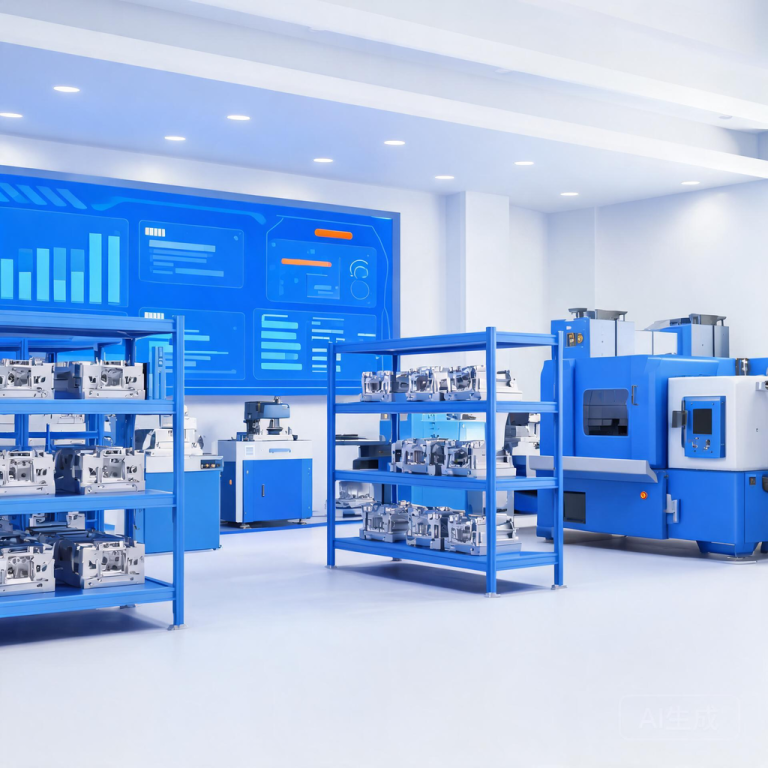
On June 27, 2012, Kunshan Moges Information Technology Co., Ltd. was officially registered and established. The company, which focuses on providing so...

Q: What should be noted when counting loose-part inventory, and how does it differ from ordinary inventory counting?
A: Counting loose-part inventory is not just counting quantities; you must check three things: the record, the physical item and the state. For example, the record shows 10 pieces and the shop floor has 10 pieces, but 2 of them are awaiting rework and 1 is awaiting inspection, so those cannot be counted as usable stock. When counting, work with four dimensions: quantity, location, state and responsibility. Frequency need not be the same for all loose parts: count high-value parts, parts with tight delivery dates and parts that often go wrong frequently, and count ordinary parts on a fixed cycle, which keeps the focus on what matters without exhausting the shop floor.
Q: I have an event next week. If I outsource custom Android app development now, can it be ready in time?
A: As long as you give us the core requirements in advance, custom development can produce a finished product the same day at the earliest, so it will fit your event schedule. Pricing starts at RMB 999, we keep revising until you are satisfied, and you can still get a full refund if you are not, so there is little risk.
Q: If requirements change halfway through the project, how is the schedule usually adjusted?
A: First, we sort out clearly which already-scheduled milestones the change will affect and calculate how much additional time is needed. After adjusting the new schedule, we send it to you for confirmation at the earliest opportunity, with the new delivery date and the items requiring your coordination clearly marked, so there is no information gap.


