- Moges
- 2012-08-13
The History and Future of KVM Virtualization Technology
In September 2008, Red Hat acquired a small Israeli company called Qumranet, thereby gaining access to a virtualization technology called KVM (KVM, sh...



In September 2008, Red Hat acquired a small Israeli company called Qumranet, thereby gaining access to a virtualization technology called KVM (KVM, sh...

Online marketing sells goods through a new marketing approach, so it naturally comes into conflict with traditional marketing. How does online marketi...

Introduction to Hadoop: a distributed system infrastructure developed by the Apache Foundation. Users can develop distributed programs without knowin...

MOGES Mold Production Management Software Test Platform Officially Launches, Helping Mold Enterprises Experience the New Paradigm of Intelligent Manuf...

Enterprise informationization, simply put, is the digitization of business processes such as production, logistics, transaction processing, financial ...

Carrying out enterprise informatization is a complex systems engineering undertaking. It requires not only heavy investment in software and hardware e...

Recently, Steve J. Felice, President of DELL Consumer Business, publicly stated that DELL is undergoing a global business strategy transformation, aba...
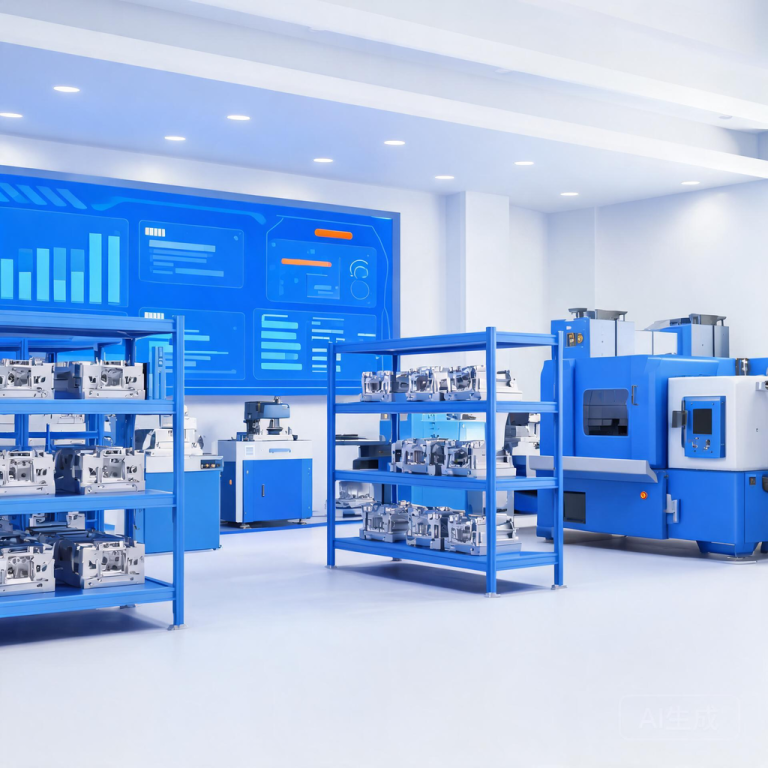
On June 27, 2012, Kunshan Moges Information Technology Co., Ltd. was officially registered and established. The company, which focuses on providing so...

Q: In custom automation design, how can we anticipate schedule risks in advance? We are always caught off guard by problems.
A: You can leave reasonable buffer time for each key milestone and hold a simple weekly schedule review. During the review, check which step is behind and whether it is short of resources or the design itself has problems. Finding a problem a week early lets you coordinate in advance, so issues do not pile up into a major problem at delivery time.
Q: Our mold workshop is very oily and workers' hands get dirty. Will scanning codes in this system easily cause problems?
A: You don't need to worry about that at all. The system itself supports both mobile devices and industrial fixed control terminals, and the matching scanning devices are oil-resistant industrial models. Even if workers operate with oily hands, recognition is not affected. Everything is adapted to the production environment of a mold workshop, so stability is not a problem.
Q: We are just a small discrete parts factory with about ten machine tools. Would a scheduling system be too complex and too expensive?
A: Scheduling systems for small and medium discrete parts factories are lightweight-adapted. You do not need to spend a lot on the full-process modules; buying only the scheduling-related functions is enough. Operation is visual drag-and-drop, so a production supervisor can get the hang of it in two or three days. A modest investment solves the chaotic planning problem, which is very cost-effective for a small factory.


